


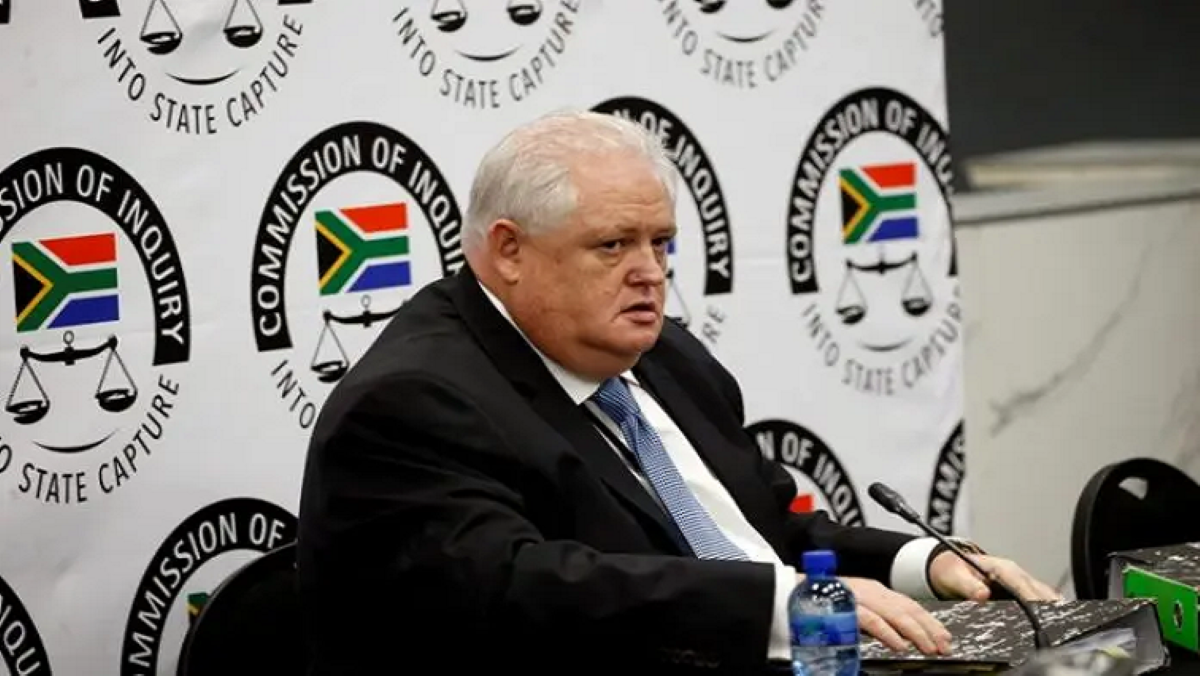
- Angelo Agrizzi has been ordered to repay the State R1.66 billion linked to Bosasa’s corruption activities.
- Judge Mosopa found that Agrizzi benefited from the company’s unlawful activities and failed to fully disclose his assets.
- The order follows Agrizzi’s guilty plea to corruption and money laundering charges in 2025.
The court ordered former Bosasa chief operating officer Angelo Agrizzi to pay the State R1.66 billion in proceeds linked to the company’s corruption network.
The High Court in Pretoria granted the order after the National Director of Public Prosecutions applied to recover money and assets linked to Agrizzi’s criminal activities.
The confiscation enquiry was heard on 30 July 2026, with Agrizzi participating virtually from Italy. The South African Revenue Service and the liquidators of several companies in the Bosasa group also made representations during the proceedings.
Agrizzi admitted to Bosasa bribery scheme
Agrizzi was convicted in November 2025 after pleading guilty to three counts of corruption and one count of money laundering. The charges arose from his involvement in Bosasa’s operations during his time as chief operating officer. His plea and sentence agreement recorded that the company operated a corruption network spanning more than two decades to secure and maintain government contracts.
In his admissions, Agrizzi acknowledged that approximately R75.7 million in bribes was paid between 2000 and 2016 to secure contracts worth about R2.37 billion. The scheme involved cash payments, fictitious and inflated invoices, money siphoned from peripheral operations and ghost employees used to generate illicit funds. He also admitted being personally involved in preparing cash bundles used to pay bribes.
Although Agrizzi did not agree to a confiscation order when he entered into the plea agreement, he indicated that he intended to oppose the application. This resulted in a separate enquiry to determine the financial benefits he had derived from the unlawful activities.
State seeks to recover R1.66 billion
The National Director of Public Prosecutions argued that Bosasa and its subsidiaries had been used as corporate vehicles to secure government contracts through the corruption of senior government officials. The State maintained that Agrizzi had acted alongside other executives in the criminal enterprise and benefited from its activities.
The State placed the value of the unlawful activities linked to Agrizzi at R1 666 582 825.73. Its calculations included his earnings from Bosasa, money held by the curator, estimated personal expenses, cash used for bribes and properties and investments identified during the investigation.
Agrizzi disputed being held responsible for the full value of Bosasa’s unlawful activities, arguing that he was not the only person involved in the corruption network. However, Judge MJ Mosopa rejected this argument, finding that his conviction was based on his participation in the scheme alongside other executives in furtherance of a common purpose.
“I fully agree with the defendant that he was not the only person involved in the corrupt activities of Bosasa, but that on its own does not exonerate him because he was charged and convicted with acting in concert in furtherance of a common purpose,” the judge said.
Judge rejects Agrizzi’s explanation for undisclosed assets
A significant consideration in the confiscation enquiry was Agrizzi’s failure to provide full and frank disclosure of his financial affairs and property. The State identified discrepancies between disclosures made during earlier restraint proceedings and those submitted during the confiscation enquiry, including previously undisclosed bank accounts, investments, annuities, his 50% membership in Spilacraft CC and a R1.75 million loan to his brother.
The State also raised questions about a property Agrizzi owned in Italy, which had been pledged as security for his bail. The property was subsequently sold while its title deed remained in the State’s custody. The judgment records that the proceeds were used to purchase two other properties registered in his daughter’s name, while the remaining money was deposited into her bank account. The curator had not been informed of the sale and independently uncovered the transactions.
Agrizzi attributed his incomplete disclosure partly to frozen bank accounts, the seizure of his MacBook Pro by the curator bonis, difficulties accessing financial records held by the Bosasa liquidators and the passage of time. He also disputed some of the figures used by the State to calculate his benefits.
However, Judge Mosopa was not convinced by his explanations, finding that several matters, including the circumstances surrounding the sale of the Italian property and the source of his bail money, did not require access to the documents allegedly taken from him.
“I am not persuaded by the reasons proffered by the defendant as to why he could not provide full disclosure of his properties,” the judge said.
The judge further found that Agrizzi’s salary, bonuses and other payments could not simply be treated as legitimate earnings because they were connected to his role in Bosasa’s corrupt operations.
Pension benefits and State Capture evidence
Agrizzi also challenged the State’s reliance on evidence from the State Capture Commission, raising concerns about the use of such evidence against him. However, Judge Mosopa found that the confiscation enquiry constituted civil proceedings under section 13 of the Prevention of Organised Crime Act, meaning the evidentiary rules applicable to civil proceedings governed the matter.
The judge also rejected Agrizzi’s reliance on the protection afforded to pension benefits under section 37A of the Pension Funds Act 24 of 1956. Agrizzi argued that his pension benefits were protected against deductions or attachment, but Judge Mosopa found that the money had been generated through his involvement in a criminal enterprise and could not be shielded from confiscation on the basis advanced by his defence.
The court also considered Section 22(3) of the Prevention of Organised Crime Act, which allows certain property held by a defendant at or since conviction to be treated as evidence of benefits derived from unlawful activities, subject to the requirements of the provision.
Judge Mosopa found that Agrizzi had not been frank and honest in disclosing his assets and had concealed properties held both in South Africa and abroad. The judge concluded that the State had established that Agrizzi benefited from unlawful activities and that the confiscation application should succeed.
Agrizzi ordered to pay the State R1.66 billion
Judge Mosopa ordered Agrizzi to pay the State R1 666 582 825.73, together with interest calculated from 29 October 2026 until final payment. He was also ordered to pay the costs of the proceedings, including the costs of two counsel on Scale C. The curator bonis’ fees are to be paid from the money derived from Agrizzi’s realisable property and paid to the State.
The judge emphasised that confiscation proceedings are separate from criminal sentencing. While sentencing punishes an offender for criminal wrongdoing, confiscation is intended to deprive offenders of the financial benefits derived from unlawful activities.
Get your news on the go. Click here to follow the Conviction WhatsApp channel.
