






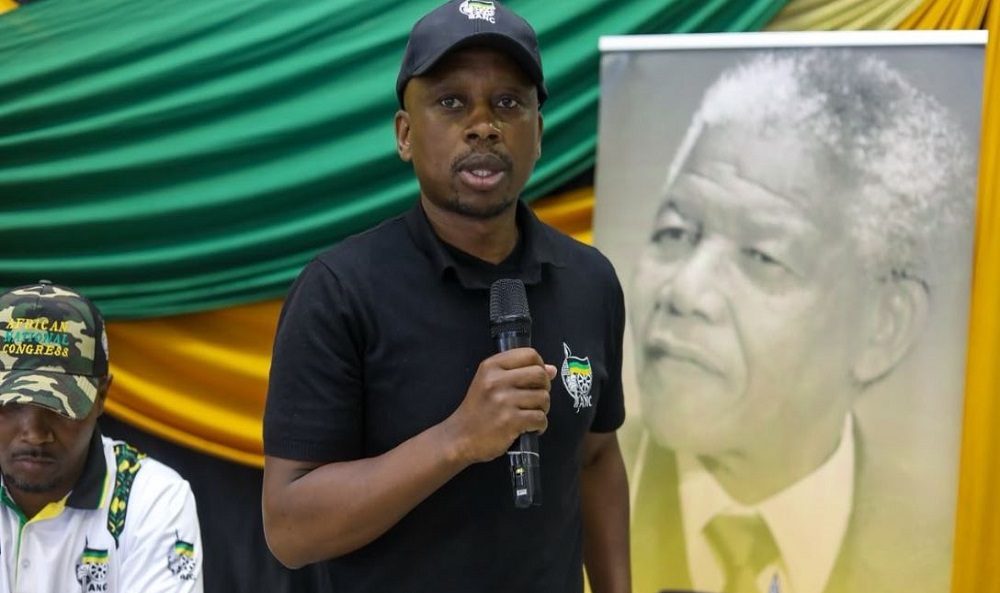
- The High Court in Johannesburg found that the ANC had not shown a lawful basis for removing Andile Lungisa from its Nelson Mandela Bay proportional representation candidate list.
- Clause 10.5.3 of the party’s rules allows removal only when a candidate is disqualified through vetting or voted out by 90 percent of the extended National Executive Committee.
- The court declared Lungisa’s removal unconstitutional and unlawful and ordered the ANC to restore his name to its internal list immediately.
The High Court in Johannesburg found that the ANC’s internal rules did not give Secretary-General Fikile Mbalula unlimited power to remove Andile Lungisa from its candidate list. The court declared the decision unconstitutional, unlawful and invalid.
In a judgment delivered on Friday, 9 October 2026, Judge NP Mali found that the ANC had not shown that Lungisa was disqualified through its vetting process before his name was removed from the proportional representation candidate list for Nelson Mandela Bay.
The judge emphasised that the main question was not whether the court agreed with the ANC’s political view of Lungisa, but whether the person who removed his name had acted within the powers given by the party’s own rules.
Clause 10.5.3 of the ANC’s internal rules was at the heart of the dispute. It states that no candidate can be removed from the lists unless disqualified through vetting or voted out by 90 percent of the extended NEC.
“The Secretary-General’s function is not thereby converted into an unrestricted discretion to amend the final list,” Judge Mali said.
The court found that the ANC’s answering affidavit did not properly explain what the vetting process involved, which requirements Lungisa was said to have failed to meet, when he was expected to meet them or who had the authority to make the final vetting decision.
The respondents also did not show whether a final decision to disqualify Lungisa had been made before his name was removed.
ANC failed to establish disqualification
The ANC argued that Lungisa had not completed the required vetting process. It said he had not attended vetting and relied on alleged outstanding requirements as the reason for excluding him from the candidate list.
But Judge Mali found that the evidence supported Lungisa’s account that he had moved past the relevant stage of the vetting process. The respondents had not clearly shown that he had been disqualified according to the party’s rules.
The judge also found that Lungisa had not been given a real chance to respond to the supposed outstanding requirements before the decision was carried out.
While the principle of audi alteram partem does not mean that every internal decision by a private group must have the same procedural protections as official government action, the court said that fairness had to be judged in the context of the rules, the rights affected and the circumstances of the case.
In this case, the ANC’s own rules set out a clear process for selecting and finalising candidates. Lungisa was entitled to have those rules applied fairly and consistently.
Court orders immediate reinstatement
Judge Mali stressed that this ruling did not mean Lungisa had an automatic right to be chosen as a candidate, nor did it allow the court to take over the ANC’s political decision-making.
Section 19 of the Constitution protects political participation, but it does not give anyone the right to demand selection by a political party, regardless of the party’s rules. The judge said the constitutional requirement was that the party should follow its own candidate-selection rules consistently.
The court declared that removing Lungisa’s name from the ANC’s proportional representation candidate list for Nelson Mandela Bay was unconstitutional, unlawful, invalid and of no force or effect.
Mbalula, the ANC and its National Executive Committee were ordered to take steps to restore Lungisa’s name to the party’s internal list right away.
The order also says that, if the chief electoral officer of the Electoral Commission of South Africa allows the ANC to add to its list under Item 17(1) of Schedule 1 to the Local Government: Municipal Structures Act 117 of 1998, Lungisa’s name must be included in that supplementary list.
The court decided not to hold Mbalula personally liable, finding that the evidence did not give a clear enough basis for a separate finding of personal liability.
The ANC, Mbalula and the NEC were ordered to pay Lungisa’s legal costs on an attorney-and-client scale, including the costs of two counsel on Scale C.
Get your news on the go. Click here to follow the Conviction WhatsApp channel.


