






- Smith says the ruling means Home Affairs cannot simply turn potential asylum seekers away because of their immigration status.
- Applying for asylum does not mean a person will automatically be granted refugee status.
- Smith says administrative failures, including problems with asylum transit visas and refugee reception centres, contributed to the backlog.
The Constitutional Court ruling does not give undocumented foreigners a free pass to remain in South Africa, specialist immigration lawyer Craig Smith says. Instead, it corrected a system that had prevented some people from applying for asylum.
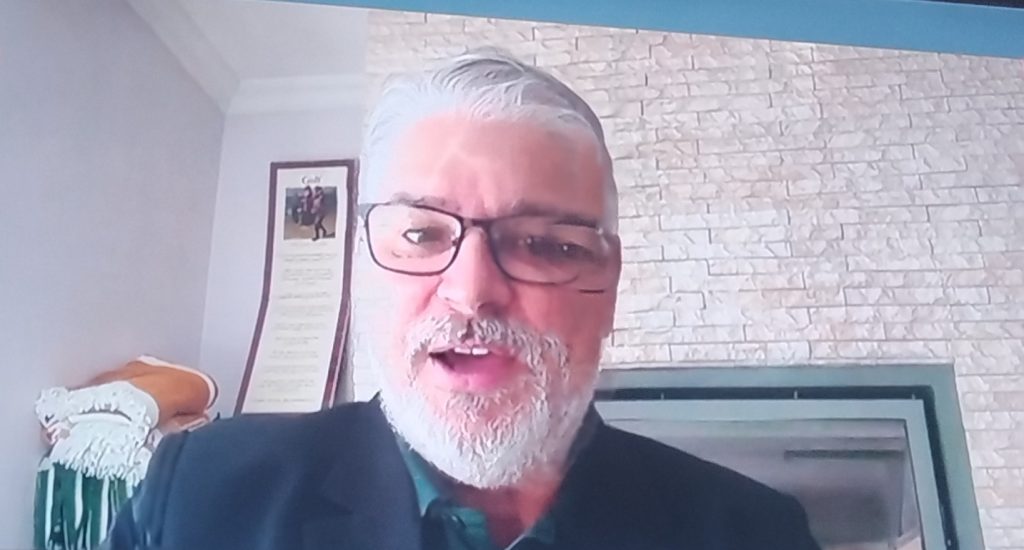
Speaking to Newzroom Afrika, Smith said the distinction between the right to apply for asylum and the right to receive asylum was central to understanding the judgment. His comments come as migrants queue at Home Affairs offices to apply for asylum while South Africans, including groups operating under the banner of March and March and other interest groups, protest over migration and changes to legislation.
The right to apply for asylum
Smith said South Africa became a signatory to international refugee law in 1998, under the new government, and subsequently introduced the Refugees Act. The legislation protects people who can establish that they face persecution, war or public disturbance in circumstances where their lives are at risk.
He said the right to apply was intended to apply regardless of where a person came from or how they entered South Africa. However, amendments introduced by Home Affairs under a previous minister created barriers for people who were already in the country with irregular immigration status.
According to Smith, the Constitutional Court found that Home Affairs could not use those irregularities to prevent potential asylum seekers from accessing the asylum process. He said the court had effectively corrected a position in which people were being turned away because they did not have the required asylum transit visa.
Smith said the judgment brought the position back into line with the rule of law, the Constitution and South Africa’s international obligations. He said Home Affairs had to comply with the international standards associated with the country’s commitment to international refugee law.
Applying does not mean getting asylum
Smith rejected the perception that the judgment means anyone who applies for asylum will automatically receive refugee status. He said an application merely gives a person access to the process, after which the claim must still be assessed to determine whether the applicant qualifies for protection.
“This does not mean that you will get asylum. It means that you have a right to apply,” Smith told the broadcaster. He added that applicants still had to be vetted and that the ruling did not create a shortcut to refugee status.
Smith said the issue had also become politicised and, in his view, “weaponised”, particularly in the context of 2026 local government elections. He said undocumented foreigners were being used as scapegoats for broader problems facing the country and argued that government needed to explain the legal position to the public.
The asylum transit visa problem
Smith said the previous system required potential asylum seekers to obtain an asylum transit visa at a border and then report to a refugee reception centre within five days to make their applications.
He said the system had failed in practice because Home Affairs officials were not always familiar with the transit visa and did not necessarily issue it to people who needed it. Even people who managed to reach refugee reception centres could encounter further problems because the facilities were unavailable or unable to process their applications.
Smith cited the refugee reception centre in Cape Town as an example, saying it had been closed for 10 years. He said this contributed to an inevitable backlog because people who wanted to apply for asylum could be prevented from entering the process and could subsequently become undocumented when their ordinary immigration status expired.
Years of delays have made the problem worse
Smith agreed that delays in processing asylum applications were a major part of the problem. In an ideal system, he said, a person would arrive in South Africa, apply for asylum and remain in the country while the application was considered.
If the application were rejected, the person would have to leave. If it were approved, the person would receive protection. Smith said the reality was very different because applications could take years to resolve.
He said the combination of administrative inefficiency, problems with transit visas and difficulties accessing refugee reception centres had contributed to the backlog and left people in uncertain legal positions for extended periods.
Not everyone seeking asylum qualifies
Smith acknowledged that not everyone standing in Home Affairs queues would necessarily qualify for refugee protection. Some could be economic migrants, while others could have genuine asylum claims.
“There will be economic migrants, but there may also be genuine asylum seekers,” Smith said, explaining that the distinction had to be determined through the asylum process rather than by preventing people from applying.
He said genuine asylum seekers could not simply be returned to countries where they faced persecution or serious danger. The purpose of the asylum process was to establish whether a person fell within the legal definition of someone requiring protection.
Smith said asylum seekers were already a vulnerable group and criticised attempts to deal with migration outside the legal system. He said the public could not simply take the law into its own hands.
Why South Africa attracts asylum seekers
Smith was asked whether South Africa was easier to access for asylum seekers than neighbouring countries such as eSwatini, Namibia, Botswana, Zimbabwe and Mozambique. He said South Africa had a strong “pull factor” because of employment opportunities and the country’s reputation as the “Rainbow Nation”.
People seeking protection could therefore choose South Africa rather than another country, but that did not mean they would automatically qualify for asylum. Smith said the right to seek protection in a country should not be confused with a guarantee that the application would succeed.
Smith also referred to South Africa’s engagement with other African countries about the factors encouraging people to move between countries. He said South Africa’s asylum numbers were not unreasonable compared with other African countries dealing with asylum seekers.
Home Affairs needs to explain the system
Smith criticised Home Affairs for distancing itself from the controversy, pointing out that the department had introduced the Refugees Act in 1998 and had been responsible for administering the system for more than two decades.
He said the minister and government needed to explain to the public and civil society how the country had reached a point where people seeking protection could be prevented from accessing the asylum process. He argued that government also had a responsibility to educate the public about the legal rights of asylum seekers.
Smith said the focus should remain on applying the law while fixing the administrative failures and backlog that have contributed to the current situation.

Get your news on the go. Click here to follow the Conviction WhatsApp channel.


