


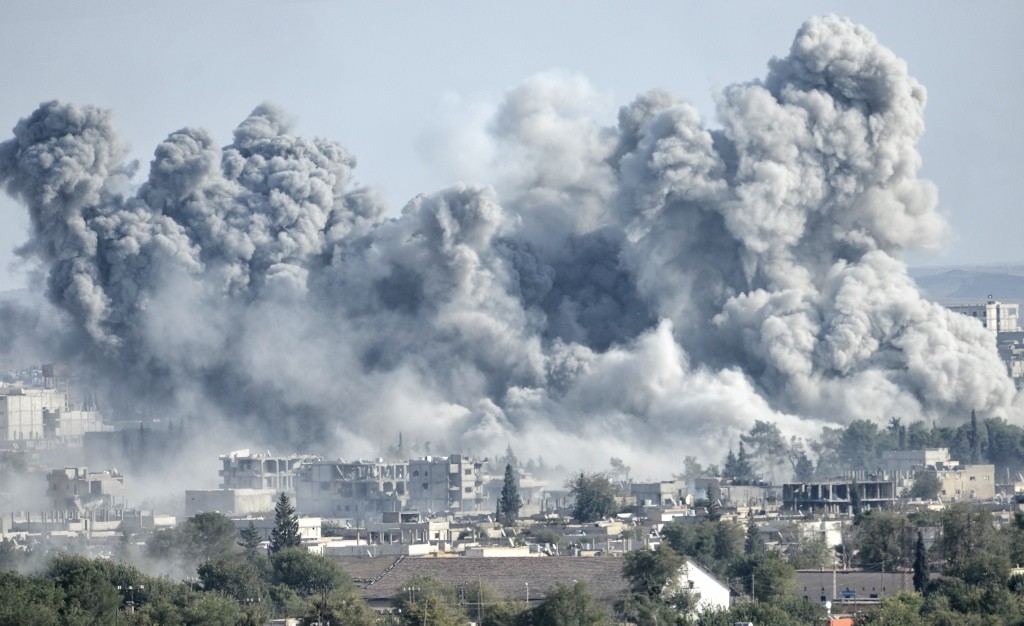
- War causes immediate and long-term environmental destruction that affects air, land and water systems.
- Military activity and infrastructure damage significantly increase emissions and climate instability.
- Environmental harm from war remains largely unregulated and unaccounted for in global climate governance.
When we think of war, our minds instinctively turn to violations of international law, humanitarian crises, geopolitical instability and economic collapse. Yet, rarely do we pause to consider its impact on climate and the environment.
Since the Israel-US-Iran conflict erupted, media commentary has been dominated by the economic pain of war, skyrocketing fuel and gas prices, disrupted supply chains, and financial instability across the global economy. Some observers, particularly UN agencies and human rights watchdogs, have highlighted the humanitarian toll caused by the war, estimating that about 4 million people have been displaced across the Middle East.
But strikingly few voices have raised concerns about the climate and environmental devastation that accompany these conflicts. Modern conflicts are not only reshaping political landscapes but also unleashing ecological disasters that reverberate far beyond the battlefield. Warfare today, with its reliance on advanced weaponry, oil infrastructure and naval power, poisons the environment in ways that could haunt humanity for generations.
War in the skies, smoke, debris and toxic rain
What are the consequences of explosions, burning refineries and advanced missiles striking military and economic targets? One obvious example is the black rain recently reported in Tehran, after Israeli and US airstrikes ignited fires at Iran’s oil refineries.
The destruction of petrochemical facilities sends massive plumes of soot, hydrocarbons and heavy metals into the atmosphere. When these pollutants mix with rainfall, they return as darkened precipitation, contaminating soil and water. This is a clear demonstration of how modern warfare distorts weather patterns and intensifies climate irregularities.
Since the outbreak of war, little attention has been paid to how missile interceptions, aerial bombardments and drone strikes contribute to atmospheric pollution. Each explosion releases carbon dioxide, nitrogen oxides and fine particulate matter. Unlike industrial emissions, which are monitored and regulated, these are sudden, concentrated bursts that overwhelm local air quality.
The human cost is immediate: civilians breathe toxic air, and communities face rising health risks. The environmental cost is long-term, as these emissions accumulate in the atmosphere, adding to the global greenhouse burden and pushing the planet closer to dangerous tipping points.
War at sea, oil spills and marine devastation
Naval warfare magnifies the crisis. When warships sink or tankers are destroyed, thousands of tons of crude oil and fuel spill into the sea. Commercial and military vessels alike lie beneath the waves, leaking toxins and hazardous substances into fragile ecosystems. The Persian Gulf, one of the most ecologically stressed marine environments, faces catastrophic risks.
Oil slicks suffocate coral reefs, poisoning fish populations and stripping coastal communities of their livelihoods. Marine ecosystems can take decades to recover. The death of plankton and small fish ripples up the food chain, threatening dolphins, turtles and seabirds. For countries that depend on fisheries, this is not only an ecological tragedy but also a food security crisis.
Land warfare, soil, water and toxic legacy
Bombs and artillery shells scatter heavy metals, chemical residues and unexploded ordnance across the soil. These toxins seep into groundwater, contaminating drinking supplies and farmland. For farmers, the dangers are invisible but devastating. Crops fail, livestock get sick, and families lose the resources they depend on to survive.
The damage often outlasts the war itself. For instance, the legacy of Agent Orange in Vietnam and Iraq’s contamination from depleted uranium are sobering reminders of how toxic shadows persist for generations. The human consequences are immediate displacement, hunger and forced migration. The long-term consequences are slower but equally destructive.
For instance, steady degradation of ecosystems undermines recovery and resilience. War zones become ecological dead zones, stripped of the capacity to sustain life or livelihoods. Families and communities are left in cycles of loss, facing not only the trauma of war but also the enduring violence of a poisoned environment.
Emissions and climate feedback loops
The US military alone ranks among the world’s largest institutional consumers of fossil fuels, and in conflicts involving multiple nations, the surge in emissions is staggering. These emissions linger, accumulating in the atmosphere and intensifying global warming. The irony is cruel while some nations pledge to cut emissions at climate summits, their wars undo those commitments in real time.
For civilians, the consequences are felt in rising heat, harsher storms and shifting seasons. For humanity, warfare becomes a hidden accelerant of climate change, pushing us closer to extreme weather, rising seas and mass displacement. In this way, the battlefield extends far beyond the front lines, into the homes, farms and futures of people everywhere.
Lessons and critical insights
War acts as a climate multiplier, intensifying vulnerabilities such as pollution and irregular weather while making recovery far more difficult. Smoke from bombed refineries drifts across neighbouring countries, and oil spills in the Gulf disrupt global shipping lanes.
While the immediate chaos is visible in respiratory crises and poisoned air, the deeper collapse comes later, as contamination undermines agriculture, biodiversity and the very systems that sustain life. Perhaps most troubling is the accountability gap. Military emissions and ecological destruction are excluded from most climate agreements, leaving a blind spot in global governance. This allows war to erode the planet’s resilience unchecked, even as nations pledge to protect the environment.
There are hard truths that we must collectively confront as Africans and the global community. War is a poison to the climate and environment. Current conflicts demonstrate that climate, environment and security are inseparable.
Protecting the environment must be treated as a core principle of international law, not an afterthought. This means recognising the seriousness of military emissions within climate agreements, banning deliberate attacks on ecological infrastructure such as refineries, dams and fisheries, and committing to post war ecological restoration as an integral part of peacebuilding.
It also requires elevating environmental monitoring during conflicts, so damage can be tracked and mitigated in real time. Crucially, warring parties have a moral duty to account for the climate damage their actions cause. To ignore this responsibility is to abandon not only the victims of war but also future generations who will inherit poisoned air, degraded seas and destabilised climates.
Wars are fought for territory, ideology and power. But in the process, they scorch the earth, poison the seas and darken the skies. The Russia-Ukraine and Israel-US-Iran conflicts are not merely geopolitical struggles; they are environmental catastrophes unfolding in real time.
If humanity is serious about combating climate change, it must confront the hidden climate costs of war. Otherwise, every missile launched today will echo tomorrow in storms, droughts and poisoned landscapes that define our collective future.
Get your news on the go. Click here to follow the Conviction WhatsApp channel.


