






- The Constitutional Court has ruled that failed asylum seekers cannot submit endless repeat applications once their original claims have been finalised.
- The ruling overturns an earlier Supreme Court of Appeal judgment that had ordered Home Affairs to process fresh asylum claims from two Burundian nationals.
- Home Affairs says the judgment strengthens efforts to restore the rule of law and tackle abuse of South Africa’s asylum system.
South Africa’s highest court has ruled that failed asylum seekers cannot keep reapplying for refugee status. This is a major victory for Home Affairs in its effort to address abuse of the asylum system.
The Constitutional Court found that the Refugees Act does not give failed asylum seekers a clear legal right to submit multiple applications once their original claims have been finally rejected.
The ruling in Director General, Department of Home Affairs and Others v Irankunda and Another overturns a previous Supreme Court of Appeal decision that directed the Department of Home Affairs to process new asylum claims from two Burundian nationals living in South Africa.
The case involved Amina Irankunda and Arava Niyonkuru, who entered South Africa in 2008 and 2012 respectively and later applied for asylum. Their applications were rejected as “manifestly unfounded” under the Refugees Act after the internal review process was completed.
Years later, the two attempted to file new asylum applications, arguing that worsening political violence and instability in Burundi after 2015 had turned them into what international refugee law calls “sur place” refugees.
The Department of Home Affairs refused to process the repeat applications, stating that the Refugees Act does not allow failed asylum seekers to restart the process indefinitely after their claims have already been finally determined.
Court warns against “revolving door” asylum system
Writing for the majority, Justice J Kollapen said the Refugees Act was meant to regulate first-time asylum applications, not endless repeat claims from people whose applications had already been rejected.
Justice Kollapen explained that while international refugee law recognizes protection for people who become refugees after leaving their countries, South African law currently does not create a system for multiple asylum applications after failed claims.
The court emphasised that allowing unlimited repeat applications under the current system could undermine both immigration enforcement and the integrity of the asylum process. Justice Kollapen warned, “There would never be an end to a cycle of asylum applications.”
He further cautioned that the Refugees Act could not reasonably be interpreted in a way that creates a “revolving door” asylum system where failed applicants repeatedly restart the process just to stay in South Africa.
The majority judgment stated that the law currently does not include a system for repeat asylum claims and that courts could not simply create one through interpretation.
Justice Kollapen wrote, “One cannot use an interpretive exercise to improperly achieve that which a constitutional challenge is designed to do.”
The court concluded that Parliament would need to amend the Refugees Act if South Africa wanted to formally acknowledge repeat asylum applications after failed claims.
Home Affairs welcomes major legal victory
The Department of Home Affairs called the judgment a significant step in its broader efforts to restore the rule of law in immigration and refugee management.
According to the department, the ruling enhances ongoing reforms aimed at preventing abuse of the asylum system and improving immigration controls.
The department also linked the judgment to Cabinet’s recent approval of the Revised White Paper on Citizenship, Immigration and Refugee Protection, which introduces the “first safe country” principle aimed at preventing asylum seekers from bypassing other safe countries in favor of South Africa.
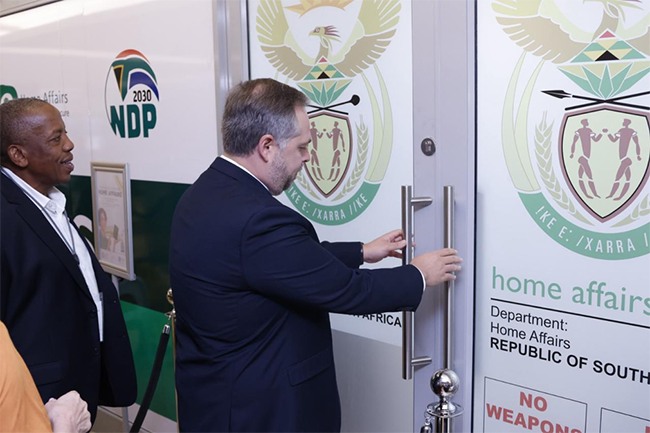
Home Affairs Minister Leon Schreiber welcomed the judgment and said it shows the government’s progress in reforming migration systems within constitutional limits.
Schreiber stated, “This judgment from the highest court in the land affirms the unprecedented progress we are making in restoring the rule of law and addressing abuse in the migration and asylum systems.”
He added, “It further shows that our commitment to systemic reform, not against but rooted in our Constitution, is quickly resolving issues that once seemed insurmountable.”
Court reaffirms non-refoulement protections
Despite ruling against repeat asylum claims, the Constitutional Court reaffirmed the importance of the international law principle of non-refoulement, which prevents countries from returning people to places where they face persecution, torture, or threats to life and freedom.
However, the court stressed that the protection does not last indefinitely once asylum procedures have been lawfully completed.
Justice Kollapen wrote, “The shield of non-refoulement may be lifted only after a proper determination has been completed.”
The majority held that once asylum claims have been fully processed and rejected, affected individuals may then be managed under immigration law as illegal foreigners.
Get your news on the go. Click here to follow the Conviction WhatsApp channel.


