


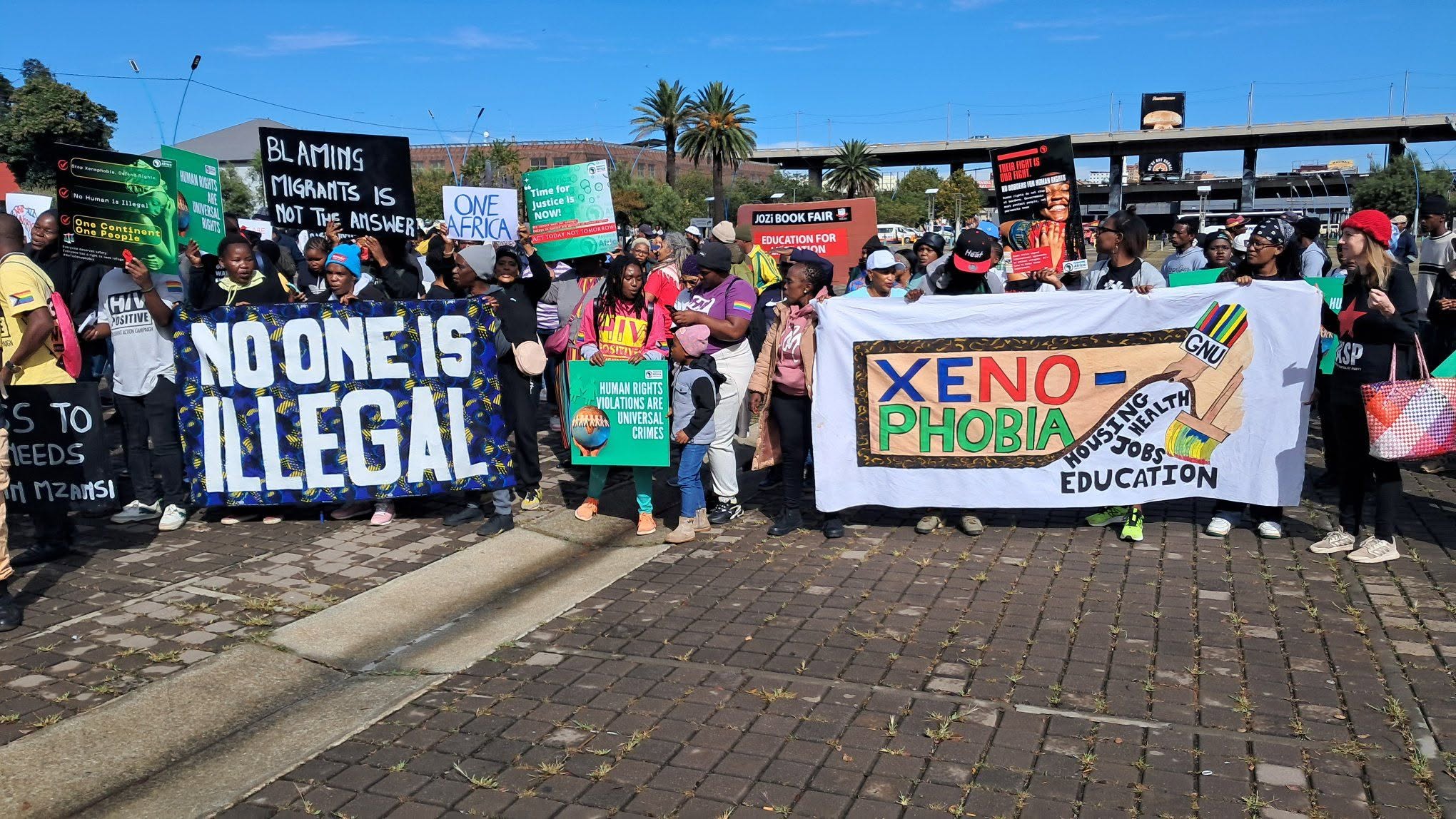
- South Africa has every right to enforce its immigration laws, but that responsibility belongs to the state acting within the law, not to citizens taking justice into their own hands.
- Corruption, weak governance and failed leadership have deepened public frustration over undocumented immigration and allowed communities to become increasingly divided.
- Lasting solutions lie in accountable government, secure borders and functioning institutions, not violence, hatred or attacks against fellow Africans.
I am glad that I am neither a Zulu warrior nor a member of the national defence force. From where I sit, both are instruments of war and destruction.
I say that not to sound clever. But I have watched this country long enough to know what happens when ordinary people are reduced to cannon fodder and are handed the language of war. When this country was freed, Rwanda was in the throes of an ethnic identity war.
Once you call your neighbour an “illegal and undocumented,” it becomes easier to draw spears, throw petrol bombs and set buildings on fire. Once you call a group “foreigners,” it becomes easier to beat them. So let me speak plainly, as a man who loves this country and fears what uncontrolled anger can do to it.
I am sympathetic to the fight against undocumented and illegal immigration. Their presence breaks the law. My prayer is that when the warriors, police and soldiers wake up on 30 June, this encounter remains nonviolent and peaceful.
Upholding and promoting the law must mean something. But this implementation of the law by people who have no legal authority to do so must apply the law with mercy. If not, they will be perpetrators of another kind of violence that breaks the law. Alas, we have come to this point because the soldiers at the border and soldiers on the ground are corrupt and have failed to do their patriotic duty.
This is not just our problem
Over the last few months, I have been thinking a lot about this wave we call the “anti-illegal immigrant movement.” The frustration is real. I see it at the taxi rank, at the clinic queue, in the township where a gogo gives up a house or room for someone from outside to own and run a spaza shop. Yet the young man who grew up in that house on that street cannot find work.
I see mothers ask, “Why does my child not get a school place when someone without papers does? I see fathers who have worked for this country ask Why must I wait 10 years for an RDP house? I hear those questions and concerns, and I do not dismiss them. A patriotic people of a country has the right, the duty, to know who is in it and to enforce its laws. That is not cruelty. That is the order.
But I am also an advocate of peace and nonviolence. Even during the days of the armed struggle, I refused to be used as a pawn by those who pursued self-interest in the name of the liberation movement.
I will not undermine the law in this country here and now
And who are they? Mostly Askari politicians, gangsters, former inmates, apparatchiks and self-seeking leaders who lost sight of the prize. They forgot to serve the people because they have always been on the lookout for their selfish interests.
They are the ones who sell stands that do not exist. They are the ones who take bribes to issue IDs and permits. They are the ones who open the border for votes on Monday and close it for headlines on Friday.
Then they make it easy for the disgruntled and disillusioned to turn to us, the ordinary people, and say, “It is the foreigner’s fault.” That is how the game works. Owners of the economy and those who serve them manipulate and pit ordinary folks against each other.
While we fight over a loaf of bread, they divide the bakery. While we argue about who must leave the country, they sign deals that keep us all poor. This is a universal problem, not only a South African one. Everywhere in the world, when jobs are scarce and services are weak, leaders point at the stranger. It is cheaper than fixing the system.
Not too long ago, Donald Trump was carried into the presidency of the most powerful nation on earth on a wave of xenophobia and anti-illegal sentiments.
I will not be a dog of war
I will not put on a military uniform or Zulu traditional clothes to sing songs of hate. Nobody should ask me to stand on a street corner and shout at a man because of where he was born. Nobody should ask me to burn a shop because the owner speaks a different language. I will not draw lines on the ground and say “this side is for South Africans only” when I know that the same politicians who draw those lines sleep safely in suburbs with private security.
I am tired of the language of war. “Invaders.” “Parasites.” “Clean the streets.” I have heard that language before, from another time in our history. From Rwanda. From Nigeria. From Ghana. From Zimbabwe. It never ended well. Worse, it has not stopped the human migration.
War begets war. Above all, there are no winners in war. The one who wields the whip, waves a panga and throws the first stone also loses something of his humanity. So no, I will not be a dog of war. If a man is here illegally and has committed a crime, let the law deal with him. Let the police arrest him. Let the court judge him. Let Home Affairs deport him through due process.
Above all, his own country must take full responsibility for him. They must be penalised for creating misery and suffering that forces their people to flee. And where is this African Union? What do they do except to be chauffeur-driven to attend gala dinners? But do not ask me to become judge, jury, and executioner on the street. That is not patriotism. That is chaos.
If I risk being accused of promoting mutiny, lack of patriotism, or defiance to new age liberators, then so be it. Yes, the time is long overdue for South African men and women, old and young, to refuse to pick up the weapons of mob justice to attack other African fellow human beings who are also trying to survive.
Yes, we have been failed by the State and its leadership. Of course, we get the leadership we deserve. But, we must desist from using fists, knives, spears, whips, pangas, machetes and petrol bombs to threaten, abuse, rob, beat, and kill so-called foreign nationals and their children in the name of “fighting for jobs, peace, and justice stolen from us.” Or restoring law and order by taking the law into our own hands.
Where the hell are the police? The R600 million should be used to work together with those who want law and order. For me, it is better to be called unpatriotic for refusing violence than to live with the blood of a fellow African on your hands. The war against the African stranger will not bring jobs. It will not build houses. It will only leave us with graves and guilt.
The real question is, what do African leaders do for the little people?
I have asked myself the same question since I saw pictures of the Biafran War as a youngster. Now I ask about African leaders who start wars over power to gain access to resources and wealth. What is it exactly that African leaders do for the little people of this continent?
My father’s generation fought for a South Africa that belongs to all who live and work in it. They went to jail, they went into exile, they died, so that we could have a country based on law and dignity.
Now, 32 years later, with so-called comrades in power, the state cannot issue a birth certificate on time. The municipality cannot fix a leaking pipe. The police take hours to come when there is a crime, if they do come.
And when people get angry, leaders do not say, “Let us work together to fix the system.” They bring out their guns to condemn and threaten boo Jacinta Ngobese-Zuma for allegedly blaming the foreigners for their problems.
That is a failure of State leadership. That is cowardice. This is an abdication of state responsibility. Work and walk with citizens who are self-sacrificing to clean up this increasingly dangerous country. We know that the real enemies of stability and peace are not the poor from Malawi or Mozambique who sell tomatoes. The real enemies of peace are the warlords of corruption who become ministers and mayors to serve their selfish interests.
We have learned that they are not here to satisfy the needs of the people. They are the ones who undermined the law first, by stealing, by delaying, by lying. Worse, by allowing the country to descend into a free-for-all chaos. Then they have the nerve to tell us that those who demand to “defend the law” are breaking the law and undermining the Constitution.
Will the true leaders who put the people first please stand up? One such leader is Ngobese-Zuma. She began by refusing to use people’s pain as a campaign slogan. She began by demanding that Home Affairs fix itself so that documentation is fast and honest. She began by exposing compromised leadership. She began by inspecting every clinic, school and business to determine ownership by South African or foreigners.
Of course, she could not fine those who break the labour law. The farmers and corporate moguls who thrive on exploitation. This is the work of the police. And apparently, they have failed to do their job. To restore this country to the indigenous people begins with building trust in the State and police that do what is right. People are just tired of empty promises.
The South African pain is real, but violence is not the answer
I know the pain is real. I am not blind. I am a product of the working poor. I grew up in a hopeless condition under apartheid. When you have a degree, and you are now 28 but still unemployed, and you see someone without papers running a shop on your corner, anger rises in your chest.
When your child sits on the floor in an overcrowded classroom, and you hear rumours that someone paid a bribe for a place, you feel like a stranger in your own land. That feeling is not madness. It is grief. It is the grief of a promise delayed. A dream deferred.
But grief must not become hate. The 1913 Land Act made my grandparents strangers on their own soil. The aftermath was what saw my father come to Johannesburg as a teenager. We know what it feels like to be treated as less than human. But should we now turn and do the same to another man’s child? Should we become what we fought against?
The Constitution says, “South Africa belongs to all who live in it.” Some people argue that the clause was inserted by liberals and communists in 1955 to dilute the African claim. Maybe. But the principle was also a shield. A shield against a state that said only the white group had rights. If we break that shield now, who will protect us when that group is in power in the Western Cape province and decides we are the outsiders?
African solutions for African problems
I believe in African solutions for African problems. I believed leaders like Thabo Mbeki when they told us the 21st century would be the African Renaissance Century. I was looking forward to a continent where brothers build, not break. Instead, I see the same pattern in leaders who failed to govern. They told us we would have to live in an Africa without law or borders. So they pointed at patriots who love their country as enemies.
Where were our leaders when this anti-immigrant wave was growing? Are they now sitting with communities to explain how the migration law works? Are they clearing the asylum backlog? Are they arresting employers who pay starvation wages to anyone, South African or foreign? Or are they waiting for the next march, the next fire, so they can take pictures and make speeches? To be TV superstars who pontificate.
Some of my family and relatives told me that speaking like this makes me soft. They say I have lived in the suburbs with whites for too long. Thus, I do not understand “the ground.” I’m out of touch with township realities.
But I do understand the ground. I walk on it. I talk to the boy who cannot find work. I talk to the woman from Zimbabwe who fled violence and now cleans homes to feed her children. Both are tired. Both want dignity. Both are being used by people who do not care about either of them.
I am a peace-time soldier
So let me be clear. I am a soldier. But I am a soldier of peace. As for patriotism, it is nothing but love for one’s country and people that makes one want to avoid war at all costs. This country still stands because it avoided war in the early 1990s. Rwanda was tearing itself apart.
A patriot will neither do nor say things that cause war in the streets. A patriot demands that the state work, so that citizens do not have to choose between inequality, unemployment and violence. The only threat to the state comes when democracy is lacking, and the people are neither consulted nor informed about decisions that affect them. Where did this R600 m suddenly come from?
To protect the state, we the people must participate, be involved, and contribute to decision-making. That includes saying “no” when leaders try to turn our anger into a weapon.
We must demand the restoration of power to the people. No government can justly claim authority if it is not based on the will of the people, expressed through law, not through mobs. The will of the people is not “burn the foreign shops.” The will of the people is “give us jobs, give us services, give us justice.” Treat us as a priority in our own beautiful country that we cannot enjoy.
Guns of peace
I was told that to stop illegal immigration, we need “tough action.” Maybe. But tough action without law is just bullying. I would rather see guns of peace. Guns of peace look like this: A border official who implements the law. A Home Affairs office that works.
A labour inspector who visits every farm and factory. A court that hears cases quickly. A school that has space for every South African child, because the budget was not stolen. A police officer arrests the criminal, whether he has a South African ID or not, because crime has no nationality.
Those are the weapons we need. They are not as exciting as a march. They do not make headlines. But they built a country. So I will say this for the last time, as a man deeply concerned about where this wave is taking us I am sympathetic to the demand that the law must be obeyed. Undocumented migration creates real problems.
But my prayer, my plea, is that the response be nonviolent and peaceful. The security cluster must be on the side of indigenous citizens. Do not let politicians make you a pawn. Do not let economic elites make you fight your brother while they count their money.
Africans are tired of senseless wars. We have had enough war in the name of freedom, democracy, and resources. Let this generation be the one that chooses law over looting, courts over kicks, and dignity for all over the destruction of some.
When you think about it, the real work is not in the street with a placard. The real work is in the voting booth on 4 November, in the community meeting, in sitting in the public gallery at parliament and council meetings, and in the demand for accountability. It is boring. It is slow. But it is the only thing that does not end with blood. With Africans killing other Africans.
I am glad I am not a soldier of war. I am a citizen. And as a citizen, I will keep saying enforce the law, yes. Hate your neighbour, no. Demand service delivery, yes. Burn the shop, no. Because when we finish with the foreigner, if we have not fixed the state, we will still be poor. And we will have to find a new stranger to blame. That cycle must end with us.
We need guns of peace. Let the true leaders stand up. And let the people, all the people in March and March, refuse to be dogs of war.
Get your news on the go. Click here to follow the Conviction WhatsApp channel.


