


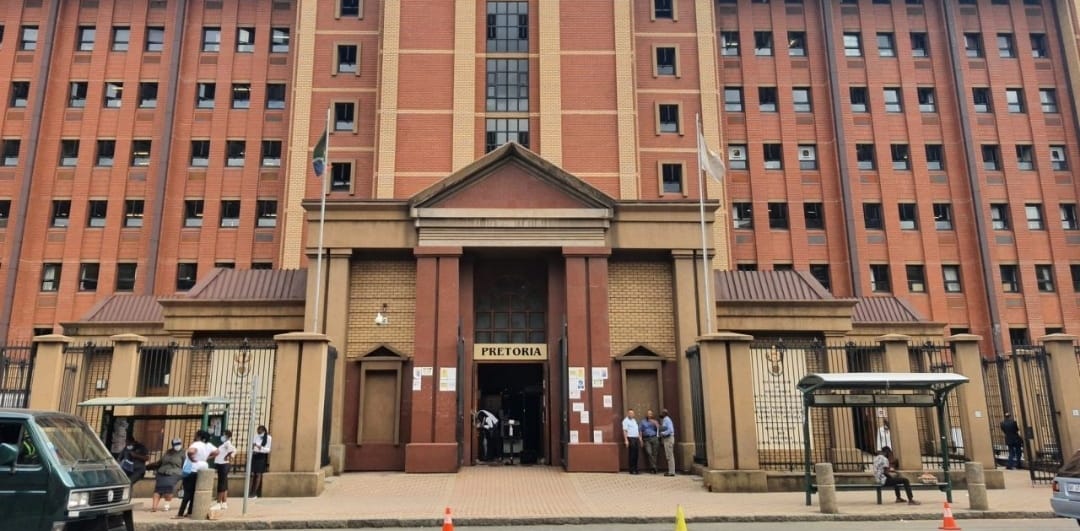
- Gauteng's rule on mandatory mediation stays in place after a legal challenge was dismissed for procedural reasons.
- The High Court in Pretoria did not rule on whether the directive is constitutional or if it falls within the Judge President's powers.
- The applicants were ordered to pay the respondents' costs after failing to follow the rules set out in the Superior Courts Act.
The Gauteng Division's mandatory mediation rule will continue to apply after the High Court in Pretoria dismissed a challenge without considering whether the rule is constitutional.
Instead, the court found that the case brought by the Personal Injury Plaintiffs Lawyers' Association (PIPLA) and several individuals was invalid because they had not received the Chief Justice's consent before suing the Judge President of the Gauteng Division, as required by law.
The unanimous judgment was delivered by Acting Judge President JP Molahlehi, with Judge BA Mashile and Judge P Nkutha-Nkontwana concurring.
Directive introduced to tackle mounting civil trial delays
This case centred on a directive issued by the Judge President on 22 April 2025. The rule requires all parties in civil cases to try mediation and to file a mediator's report before their cases can go to trial.
The court explained that the rule was introduced because the Gauteng Division’s civil trial schedule is under heavy pressure, especially with Road Accident Fund cases, many of which settle before trial. The goal was to make the civil justice system more efficient by ensuring that only cases that really need a judge proceed to trial.
PIPLA, City Lunga Cynthia (on behalf of Banele Lunga), Kedesaletse Dorothy Ngomane, Johanna Hermina Meyer, Salah Uddin, and Khosi Sibongile Motau (on behalf of a minor) challenged the rule. During the case, the Law Society of South Africa (LSSA) also joined as a co-applicant.
Those opposing the challenge were the Judge President of the Gauteng Division, the Minister of Justice and Constitutional Development, the Chairperson of the Rules Board for Courts of Law, the Road Accident Fund (RAF), and the Gauteng Attorneys Association.
Applicants argued directive exceeded judicial powers
The applicants argued that the Judge President had gone beyond the powers given by section 173 of the Constitution.
They agreed that mediation is useful for resolving disputes but argued that making it compulsory before a trial changes the Uniform Rules of Court, adds an unlawful extra requirement before a case can be heard, and restricts the right to access the courts.
They also said the rule would unfairly harm poorer litigants and Road Accident Fund claimants by adding extra costs and causing delays before their cases could be heard.
The respondents disagreed, saying the rule was a reasonable way to manage cases and move them through the courts, not a change to anyone's legal rights. They argued that the Judge President was simply using the court's power to manage its own process and that this was necessary to deal with the severe pressure on the civil justice system.
Court rejects standing challenge
Before looking at the main issues, the court first considered several early objections raised by the respondents.
One objection was that PIPLA did not have the right to bring the case because attorneys do not take over their clients' legal claims just by representing them. Judge Molahlehi rejected that argument.
The court found that the rule directly affects how lawyers do their work, how they handle cases, and could have consequences for them if they do not comply. This meant the applicants had a real interest in challenging the rule.
The court also allowed the Law Society of South Africa to join the case, finding that the organisation is meant to protect the legal profession, promote access to justice, and ensure proper administration of justice. Because the rule affects these interests, the LSSA was allowed to intervene.
Chief Justice's consent proved fatal
Even though the applicants were found to have standing, the case failed because they did not follow Section 47(1) of the Superior Courts Act.
Evidence showed that the case was already filed on 30 May 2025, before the applicants wrote to the Chief Justice on 2 June 2025 to ask for consent to sue the Judge President. The Chief Justice later indicated that her consent was unnecessary in the circumstances.
The applicants argued that this administrative decision remained binding and meant the proceedings could continue. The court disagreed.
Judge Molahlehi held that the statute requires consent before proceedings are instituted and that the Chief Justice's later response could not retrospectively validate litigation that had already commenced.
The court also criticised the contents of the applicants' letter to the Chief Justice, finding it created the impression that the application had not yet been launched when, in fact, it had already been issued.
Judge Molahlehi said, "Consent must be obtained before proceedings are instituted. The requirement is jurisdictional and peremptory. Once proceedings are launched without consent, they are a nullity from the start and cannot be validated.
"Where consent is a jurisdictional prerequisite to the institution of proceedings, the failure to obtain it before launching the application deprives the court of jurisdiction to entertain the matter."
It further held, "Any subsequent steps taken in the purported application, including the later procurement of consent, cannot breathe life into proceedings that were invalid at the moment of their institution."
Court never decided legality of mandatory mediation
This ruling meant the court never reached the main constitutional questions raised by the applicants. It made no finding on whether compulsory pre-trial mediation falls within the Judge President's powers under Section 173 of the Constitution, whether it unlawfully alters the Uniform Rules of Court or whether it infringes the constitutional right of access to courts.
Instead, the case failed only because the proceedings were found to be invalid from the start. As a result, the rule on mandatory mediation remains in effect in the Gauteng Division. Its constitutional validity may still be decided in the future, if another challenge is brought correctly.
Order
The High Court agreed with the respondents’ preliminary objection based on Section 47(1) of the Superior Courts Act, declared the proceedings invalid because of the applicants’ non-compliance, dismissed the case, and ordered the applicants to pay the respondents’ costs, including the costs for two lawyers where used.
Get your news on the go. Click here to follow the Conviction WhatsApp channel.


