


Key points
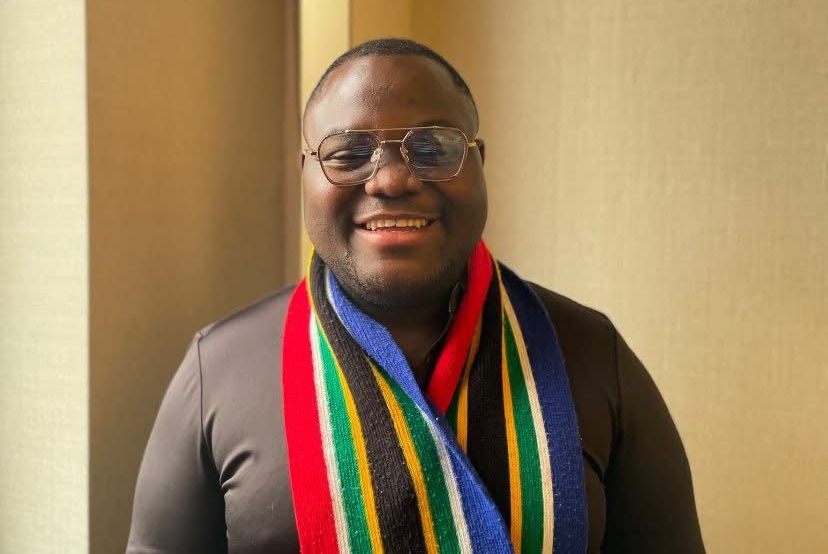
- Michael Mayalo’s memoir turns personal travel into a lens for African identity, youth agency, and global belonging.
- He argues young Africans must show up globally — not as guests, but as equal storytellers and partners.
- The book calls for curiosity and empathy as tools to rewrite divisive narratives and build lasting human bridges.
It wasn’t a thunderclap or a perfect moment that stirred Michael Mayalo to write. It was rain, and a stillness that hung over the streets of Beijing one quiet night as he made his way back to the dormitories after a long day immersed in lectures and cultural exchanges.
The glow of city lights reflecting on slick pavements stirred something deeper than homesickness; it awakened a calling. “I realised: this isn’t just my journey,” he says. “It’s a story that could unlock something for other young South Africans who feel like the world is out of reach.”
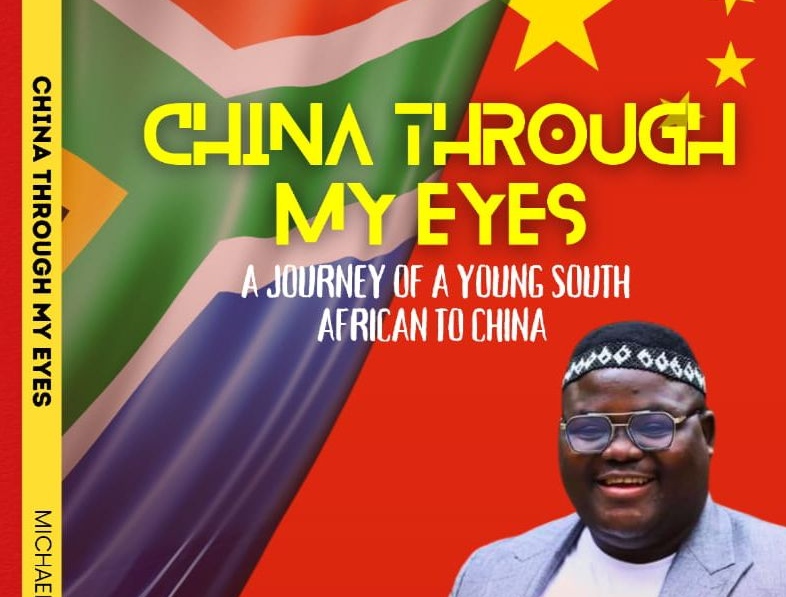
That story became China Through My Eyes, a quietly radical memoir that uses one man’s lived experience to reimagine South Africa’s place in the world, youth potential and the bridge-building power of cultural humility. The book was launched during the China-South Africa Youth Exchange Night in Pretoria on 23 June 2025, attended by among others, Chinese Ambassador to South Africa, Wu Peng.
Through Mayalo’s lens, China isn’t simply a host country. It becomes a canvas, one that reflects back questions of national identity, postcolonial confidence, and the sometimes uneasy posture of African engagement in global spaces. What began as a travel memoir quickly evolved into something more reflective and urgent: a love letter to young South Africans, a critique of inherited narratives, and an invitation to step boldly into the global conversation.
“I wrote this for the dreamers in Khayelitsha, Soweto, Mthatha; for anyone who has ever looked beyond a border and wondered, What if?”
From certainty to curiosity
Mayalo describes China as both disorienting and transformative. The juxtaposition of old and new, century-old teahouses beside AI-powered kiosks, was more than aesthetic. It reflected a cultural depth and strategic clarity that challenged his perceptions of development, especially as they relate to African contexts.
“China taught me that transformation is possible when there’s a shared sense of purpose,” he says. “And that progress doesn’t have to mean abandoning your roots.”
His greatest learning, however, came not from the sights but from the silences, the spaces where he listened, absorbed, and allowed discomfort to reshape him. “I moved from certainty to curiosity. And that inner shift changed everything.”
While Mayalo’s voice is most visible on the page, his impact echoes beyond literature. He is a writer, youth mentor, cultural connector, and advocate for storytelling as a means of shifting mindsets.
When not writing, he facilitates dialogues, mentors students, or explores new languages, always pursuing connection, empathy, and growth. China Through My Eyes is only the beginning. A documentary exploring the experiences of African youth studying abroad is underway, alongside plans for school and university dialogues.
“My goal is to turn this book into a movement,” he says, “one that champions cross-cultural storytelling, travel, and youth empowerment.”

The responsibility of presence
One moment in the book lingers long after the last page: a visit to a rural Chinese school. A young girl approached him to say she dreamed of visiting South Africa one day because of Nelson Mandela. “Are all South Africans as brave as him?” she asked.
That question floored him. “She didn’t see us through headlines,” he says. “She saw us through hope.”
It was a reminder of the quiet diplomacy carried out not by embassies, but by young people daring to be seen and to represent.
The closing note
Mayalo’s reflections are honest about discomfort, strategic about power, and unwavering in their belief that youth are not marginal to global conversations; they are central.
“We are living in a time where division sells, where fear is loud,” he says. “But young people across the world have the power to change the script. If we can truly see each other, not just through our own eyes, but through each other’s, then there’s hope for a future built on understanding, dignity, and shared dreams.”
He adds, “The borders between us are real, but they don’t have to define us, curiosity, respect, and shared humanity can build bridges that last a lifetime.” And in China Through My Eyes, that bridge begins, one rain-slicked street, one page, one perspective at a time.
#Conviction
Get your news on the go. Click here to follow the Conviction WhatsApp channel.


