


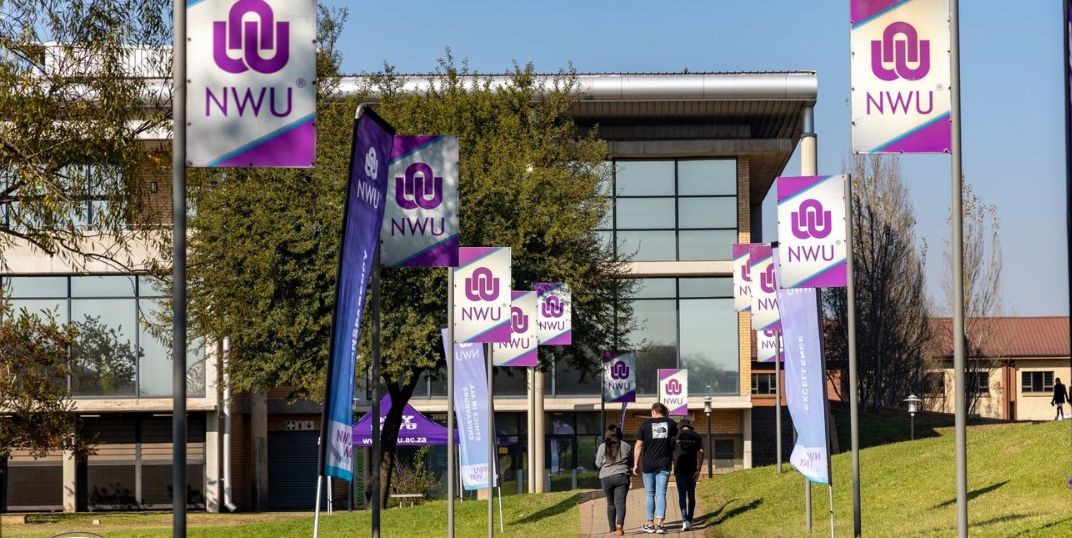
- The High Court in Mahikeng found that Vusimuzi Ronald Nhleko was never validly registered as a PhD student at North-West University.
- Acting Judge T Tsautse ruled that the university had no jurisdiction to pursue disciplinary proceedings against him.
- The court permanently barred the university from continuing with the disciplinary process and ordered it to pay attorney-and-client costs.
North-West University (NWU) had no authority to discipline senior lecturer Vusimuzi Ronald Nhleko over allegations of concurrent PhD registration and self-plagiarism after the High Court in Mahikeng ruled that he had never been lawfully registered as a doctoral student.
Acting Judge T Tsautse declared that the university’s disciplinary committee lacked jurisdiction over Nhleko, reviewed and set aside its jurisdictional ruling, and permanently barred the institution from proceeding with disciplinary action arising from the allegations.
Lecturer challenged the university’s jurisdiction
The dispute arose after NWU charged Nhleko with registering a PhD research title at the University of Johannesburg without obtaining approval for concurrent registration and with submitting the same research proposal to both universities with the intention of deceiving the institutions and committing self-plagiarism.
Nhleko denied that the university had any authority to discipline him. He argued that he had never completed the doctoral registration process at NWU and, alternatively, that he had validly terminated any student relationship before the disciplinary proceedings were instituted.
When the disciplinary committee dismissed his jurisdictional challenge and refused to reconsider its ruling, Nhleko approached the High Court on an urgent basis to stop the hearing from proceeding.
Court finds the matter was urgent
NWU argued that Nhleko had failed to exhaust available internal remedies and that the application lacked urgency. Judge Tsautse rejected both arguments.
The judge found that no effective internal appeal was available because the university’s appeal process only became available after a finding of misconduct, while the disciplinary hearing would proceed regardless of any appeal against the committee’s preliminary ruling.
The court also accepted that compelling Nhleko to face allegations of academic dishonesty before a tribunal that may have lacked jurisdiction would cause irreparable harm to his professional and academic reputation.
Registration was never valid
The court identified the central issue as whether Nhleko had ever been validly registered as a doctoral student. The evidence showed that he presented a research proposal to NWU’s scientific committee in June 2024. The committee found the proposal satisfactory but required refinements before it could be resubmitted.
Nhleko never resubmitted the proposal or completed the remaining registration requirements. Despite this, NWU recorded him as a second-year doctoral student.
Judge Tsautse found that the university had failed to produce any evidence that Nhleko had ever been registered for the first year of doctoral studies, despite its own academic rules requiring that progression.
“The respondents have failed to produce year level 1 registration documentation,” the judge said. “Without a valid registration, the applicant never acquired the legal status of a student of NWU. Consequently, the university’s internal disciplinary committee lacks any jurisdiction over him.”
De-registration ended any remaining relationship
Judge Tsautse held that even if Nhleko had initially been registered, he had subsequently brought that relationship to an end.
After the disciplinary committee’s first ruling, Nhleko formally de-registered through the university’s online portal. Two university officials later confirmed his de-registration in writing. NWU nevertheless argued that de-registration required formal institutional approval before taking legal effect.
The judge disagreed. “When an institution’s own designated officials formally confirm to a student that their de-registration has been processed and completed, the institution is estopped from denying the legal efficacy of that transaction.”
Judge Tsautse ruled that once the de-registration had been confirmed, the university’s disciplinary committee no longer had any lawful jurisdiction over Nhleko.
Charges could not stand
The court also found that the disciplinary charges themselves were fundamentally flawed. Judge Tsautse held that the allegation of concurrent registration depended on Nhleko having been lawfully registered at NWU, something the university had failed to establish.
The judge was equally critical of the self-plagiarism allegation, saying, “It is a concepts-based contradiction to assert that an author can plagiarise an unapproved, unexamined and uncredited working document.”
The court found there was no evidence that Nhleko had gained any academic credit or benefit from the proposal he had presented to NWU, and rejected the university’s reliance on its intellectual property policy.
University permanently restrained
Having found that NWU lacked jurisdiction from the outset, the High Court granted all the relief sought by Nhleko.
Judge Tsautse declared that Nhleko “is not, and has never been, validly registered as a doctoral student” of NWU for the relevant academic period.
The court also declared that the university’s disciplinary committee lacked both personal and subject-matter jurisdiction over him, reviewed and set aside its ruling of 18 February 2026, permanently interdicted NWU and its officials from pursuing disciplinary proceedings arising from the charge sheet, and ordered the university to pay the costs of the application on the attorney-and-client scale, including the costs of two counsel.
Get your news on the go. Click here to follow the Conviction WhatsApp channel.


