


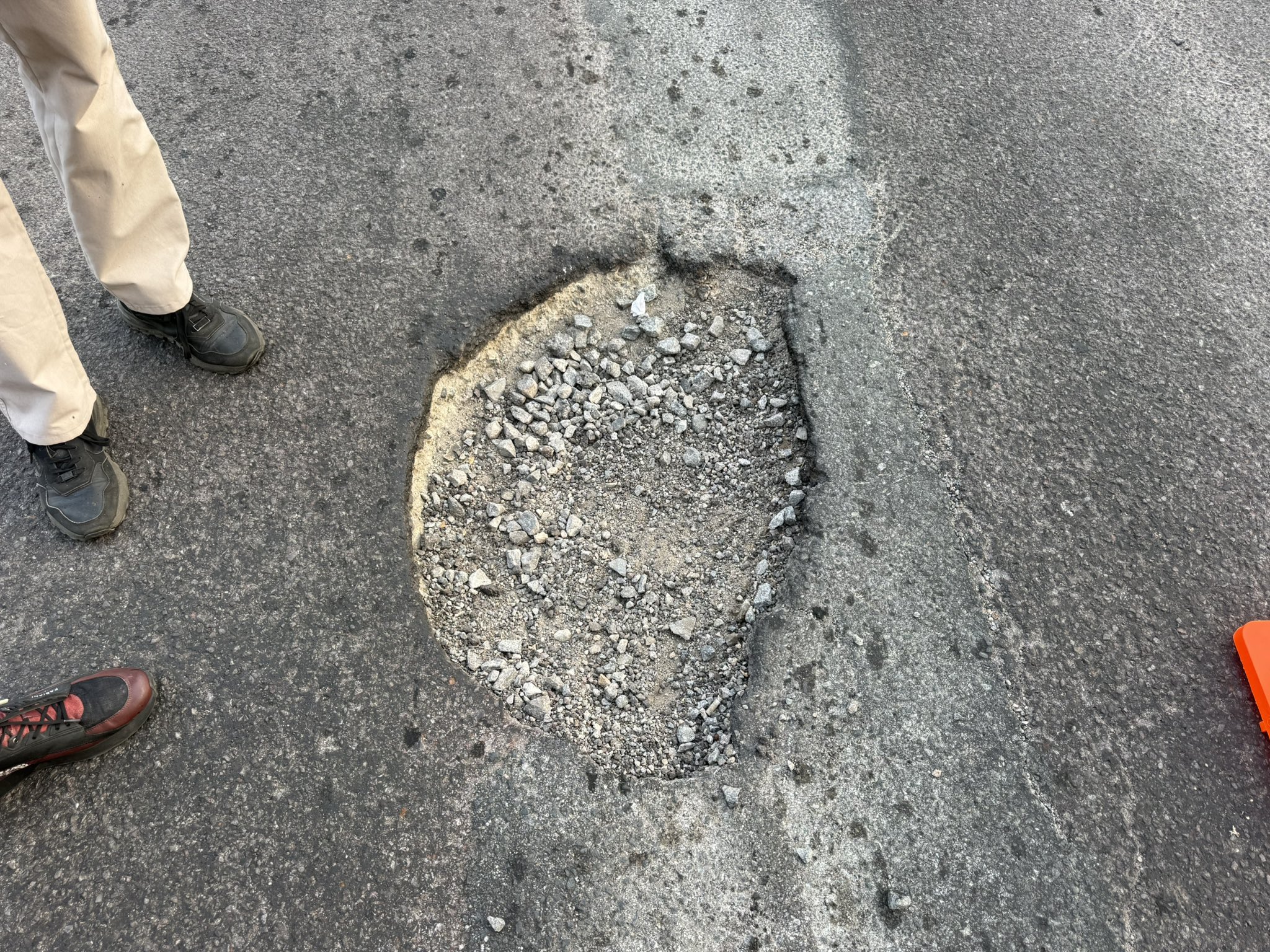
- The Western Cape High Court found that a pothole described as a hidden trap caused a crash that led to the amputation of a motorcyclist's leg.
- The court ruled that authorities failed to repair the road defect or warn road users of the danger.
- The Department of Infrastructure was ordered to compensate the injured rider and pay punitive legal costs.
A pothole that the High Court in the Western Cape described as a "hidden trap for road users" left a George motorcyclist without a leg and resulted in the Department of Infrastructure in the province being held liable for his damages.
Christian Jacobus Van Staden suffered catastrophic injuries after his motorcycle struck a pothole on Main Road 347 between George Airport and Blanco on New Year's Day in 2012. The crash ultimately led to the amputation of his leg and sparked a legal battle that took more than a decade to reach judgment.
Judge C Nziweni found that the pothole was not merely a defect in the road surface but a hidden danger that authorities should have detected, repaired or warned motorists about. Instead, the court found that road users were left exposed to a hazard on a road already known to be vulnerable to potholes and deterioration.
A danger known to regular road users
Van Staden told the court he was travelling home from Glentana Beach when he suddenly felt a severe jolt through the handlebars of his BMW motorcycle. Moments later, he heard the wheel rim scraping against the road, lost control and crashed into a traffic sign before landing on an embankment.
Several witnesses who regularly used the route testified that the pothole had existed for weeks before the accident and had become a frequent topic of discussion because of its size and danger. One witness described it as difficult to spot because it blended into the road surface, while another said she repeatedly warned her children to avoid it because it could damage vehicles.
The court heard that the pothole measured approximately 600mm by 500mm and was between 80 mm and 100 mm deep. Expert evidence showed that a pothole of that size would have taken weeks to develop and could not have formed overnight.
Although the department initially disputed the existence of the pothole, one of its own witnesses later confirmed seeing it at the scene on the day of the accident. The issue eventually became common cause during the trial.
Judge Nziweni found that the evidence overwhelmingly showed that the pothole caused the crash. The court accepted that the impact produced the severe jolt described by Van Staden and that the resulting wheel damage, tyre deflation and loss of control were consistent with a collision with the road defect.
"The pothole in question constituted a hidden trap for road users," Judge Nziweni found.
Failure to repair or warn
The judgment highlighted that the road was already nearing the end of its design life and was known to be susceptible to potholes and surface deterioration. Despite this, no warning signs were erected to alert motorists to the danger.
The court found shortcomings in the inspection and maintenance systems relied upon by the authorities. Judge Nziweni concluded that a diligent road authority carrying out proper inspections should have detected and repaired a defect of that magnitude.
The court also accepted evidence that the pothole was not easily visible to approaching motorists and that authorities either failed to identify it or failed to take appropriate action once it had developed.
Judge Nziweni concluded that the omission to repair the pothole or warn road users was both wrongful and negligent. "Plainly, there was fault on the part of the defendant; as a result, negligence has been proven," the judge said.
The judgment further found that the risk of harm to road users was entirely foreseeable and that reasonable steps to prevent the accident were not taken.
Court criticises conduct of case
The court was also critical of the manner in which the litigation was conducted. Van Staden argued that the defendant unnecessarily prolonged the proceedings by contesting issues that later proved not to be genuinely disputed. Judge Nziweni found merit in those complaints and criticised aspects of the defence's approach to the case.
The judgment noted that the existence of the pothole was only formally conceded during closing arguments despite evidence from the defendant's own witnesses supporting its existence.
Judge Nziweni described aspects of the litigation as "ambush litigation" that delayed the finalisation of the matter and increased costs. The court found that the conduct warranted a punitive costs order.
As a result, the Department of Infrastructure was held liable for Van Staden's proven or agreed damages and ordered to pay his legal costs on the attorney and client scale, including the costs of counsel and expert witnesses.
Get your news on the go. Click here to follow the Conviction WhatsApp channel.


