


Key Points
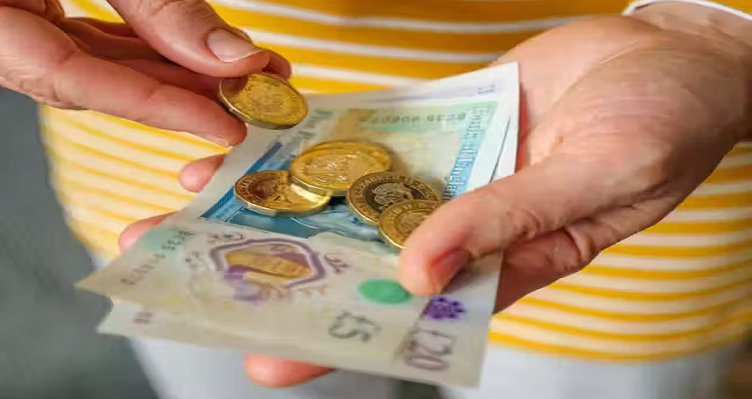
- Unemployment in South Africa is politically constructed—official statistics often exclude informal and survivalist work, erasing millions of black livelihoods.
- Capitec CEO Gerrie Fourie’s “10%” claim, though methodologically flawed, reveals the flaws in how Stats SA measures economic activity.
- Recognising and supporting the informal economy is essential for genuine economic inclusion and effective policy reform.
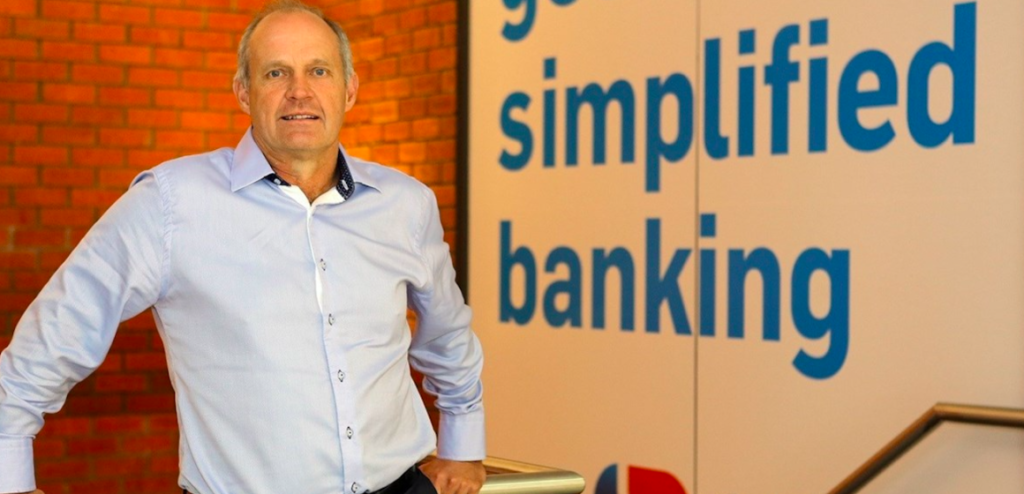
The outcry was swift when Capitec CEO Gerrie Fourie dared to challenge South Africa’s sacred unemployment statistic. “The unemployment rate is probably actually 10%,” he contended, arguing that Stats SA’s headline figure of 32.9% ignores the vibrant informal economy where “everyone is doing something.”
Critics were quick to dismiss him as ignorant, unscientific, even a “denialist,” with former Statistician-General Pali Lehohla lambasting Fourie’s claims as “madness” and “lying,” vigorously defending Stats SA’s methodology. Radio presenter Ashraf Garda, however, noted the excessiveness of Lehohla’s tone, which masked a more profound discomfort: the suggestion that the black working poor might be doing more than merely suffering.
Labour statistics as a tool of power
Lehohla’s reaction, perhaps, was less about statistical integrity and more about guarding his institutional legacy at Stats SA by shutting down uncomfortable debate. His successor, Risenga Maluleke, responded more diplomatically but firmly, stating that it was “incorrect and misleading” to suggest Stats SA fails to count informal work.
Yet Fourie’s provocation, however imprecise, gestures toward a deeper truth: South Africa’s official unemployment rate is not merely a technical measure but a biopolitical artefact. This statistical technology renders millions of economically active people invisible. Michel Foucault’s concept of biopolitics helps us understand the stakes.
Labour statistics are not neutral; they are instruments of governance, determining whose work is visible, valued, and protected—and whose is erased. South Africa’s fixation on the 32.9% figure reproduces a global image of suffering, reinforcing the country’s role as the “world’s orphan,” deserving aid and moral sympathy. However, in doing so, it masks the ingenuity, endurance and labour of millions who survive outside the formal economy.
Global comparisons, local blind spots
Indeed, Capitec’s CEO may not be incorrect. To start, most African countries report unemployment rates below 10%, while informality exceeds 85%, as seen in Zimbabwe (8.76%), Niger (0.4%), Nigeria (4.5%) and Ethiopia (3.34%). Then comes South Africa, with its large formal economy, sophisticated industries and an unemployment rate stubbornly above 30%.
Stats SA estimates that the informal sector accounts for approximately 19.5% of total employment. The ILO, however, places this figure closer to 40%, revealing a discrepancy of 100%. This gap underscores the contested politics of measurement and the ideological implications of rendering informality visible or invisible.
Even China, with over half its workforce in informal arrangements, manages to sustain unemployment figures around 5%. South Africa, by contrast, reports one of the highest unemployment rates in the world despite informal employment accounting for around 40% of its labour force. This disparity stems not from economic realities but methodological choices.
Countries like India and Brazil recognise informal livelihoods—street vendors, family-run shops, gig workers—as economically active. South Africa’s Quarterly Labour Force Survey (QLFS), despite its intentions, adheres to technical definitions that frequently exclude survivalist entrepreneurs like township hairdressers, informal car guards or kasi vendors moving tens of thousands in monthly sales.
A hostile environment for informality
South Africa’s informality differs markedly from that of India or Brazil. Firstly, it is employee-dominated: 66% of South Africa’s informal workers are employees, often precariously engaged in gig work, rather than self-employed entrepreneurs.
Secondly, South African informality is actively suppressed by state practice, through complex bylaws, repressive zoning laws, aggressive policing, and licensing bottlenecks. A UCT-Harvard study found South Africa’s “abnormally low” informality rate, relative to its level of development, stems directly from such policy hostility.
Thirdly, South Africa’s economic structure is hyper-concentrated. Dominated by monopolies such as Woolworths, Pick n Pay, Naspers and the Big Four banks, the formal economy aggressively marginalises micro-enterprises. Township spazas, for instance, struggle against vertically integrated supermarket chains that have scale advantages and control over their supply chains.
Even when informal activity is acknowledged, like in Gauteng’s ‘township economy’ blueprint, policy rarely dismantles the regulatory violence or monopolistic barriers preventing informal traders from scaling. The informal sector is not thriving; it is surviving under siege.

A call for a new measurement paradigm
Fourie’s call to “change the narrative” is not just about perception; it is a policy imperative. South Africa must move beyond statistical formalism to embrace hybrid measurement tools—combining QLFS data with anonymised financial transaction trails, mobile money flows, and digital platform records to more accurately map informal activity.
Capitec’s own data, encompassing over two trillion township transaction points, could support this paradigm shift. More flexible ILO standards—such as those used in Brazil and Mexico, which count self-reported activity as employment—could offer a more inclusive approach.
Crucially, this must be paired with structural reform. Each informal business has a multiplier effect: feeding local economies, creating apprenticeships, and anchoring community livelihoods. The legalisation of informal traders, simplified licensing, dignified trading spaces, and protection from monopolistic pressure are not policy handouts—they are foundational to genuine economic inclusion.
Gerrie Fourie is no statistician, but he struck a nerve, and perhaps for good reason. His ‘10%’ claim may be methodologically weak, but it is politically potent. It exposes the silent violence of a measurement system that erases black labour and equates informality with idleness.
Fourie’s provocation should not be dismissed but re-channelled into a national reckoning: South Africa must see, support and liberate its invisible economy, or remain haunted by the ghosts it refuses to count.
One might argue that if the ANC had engaged Capitec’s CEO earlier, rather than retreating behind denialism and bureaucratic rectitude, it might not be confronting electoral collapse today. Gerrie Fourie’s thesis deserves support—not because it is perfect, but because it demands we engage the political fictions embedded in our most sacred statistics.
It is unfortunate that debates of this nature, including the call for the nationalisation of the South African Reserve Bank, are always met with venom and extreme aggression, dismissing them as “denialism” and “madness” peddled by “barbarians at the gate” to submerge democratic participation. The deeply entrenched nature of some narratives and resistance to questioning foundational assumptions make it difficult to consider new perspectives seriously.
Siya yi banga le economy!
#Conviction
Get your news on the go. Click here to follow the Conviction WhatsApp channel


