


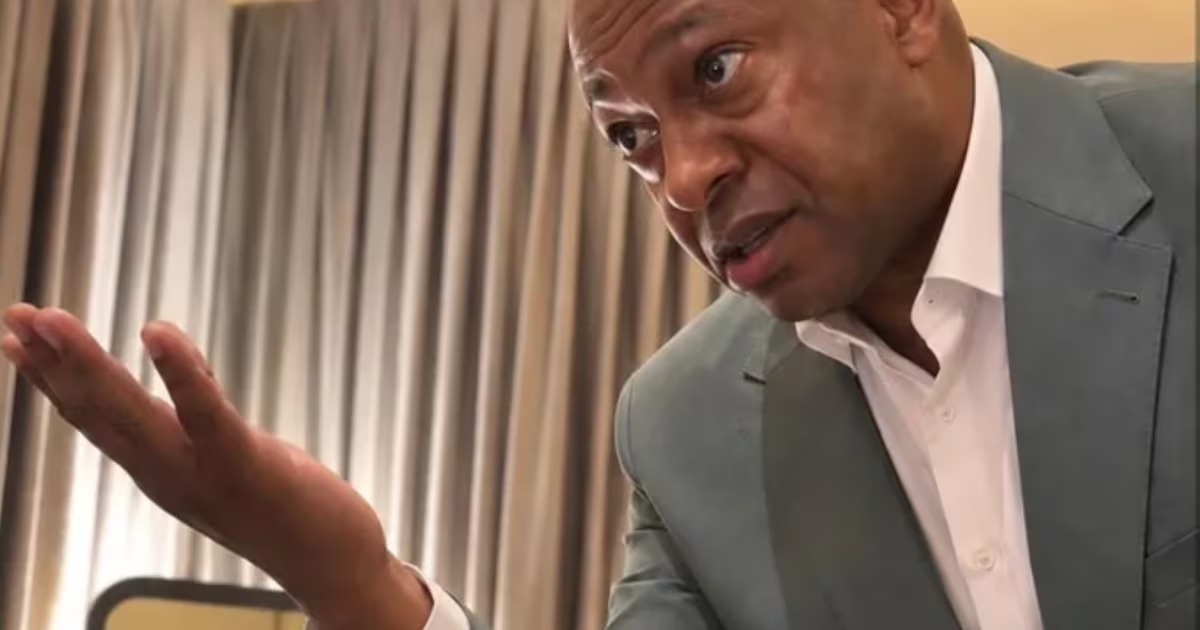
- A man allegedly threatened to shoot and kill women in a Sandton restaurant after they rejected his advances, exposing the violent entitlement behind power and status.
- The writer argues that wealth and political patronage cannot heal deep-seated insecurity, creating a culture where money is mistaken for dignity and intimidation replaces character.
- He calls for equal justice, rejects Big Man Syndrome as a betrayal of the liberation struggle, and insists that women’s right to say no must be protected without compromise.
At a top restaurant in Sandton, a man, supposedly successful, Black, wearing an expensive watch, with a German car parked outside and a driver waiting, threatened to shoot and kill women. Their sin was to reject his advances.
He did not like being told no, so he reached for the language he knows: a gun. “I will shoot you. I will kill you.” Fortunately, this was not in front of waiters or other diners in the most expensive square kilometre in Africa. Worse, it was in a ladies’ room.
This is not an isolated incident. This is a type. And we must name the type honestly. He is the sort of man with a deep-seated inferiority complex who thinks money can buy him respect and dignity and boost his self-confidence. Let us start there. This man does not have confidence. He has cash. And he thinks they are the same.
He grew up, like many of us, with very little. Perhaps he was told he would be nothing. Perhaps he was in a Bantu Education classroom where the teacher said, “Sit down.” Perhaps he was beaten by a system that said, “Black boy, you are less.”
So he promised himself: one day, I will show them. And he did, by getting money. A tender. A deal. A political connection. Suddenly, from nothing to R100 million in a bank. From a matchbox to an estate in Steyn City or Waterfall. But money does not heal the wound that apartheid and poverty left. Money covers it with a bandage made of leather seats and champagne. Underneath, the wound is still raw.
So he walks into a Sandton restaurant. He needs people to see him. He needs women to see him. Because if a beautiful woman in Sandton accepts him, then finally, he is somebody. His self-worth is outsourced to her acceptance.
When she says no, it is not just a no to a drink. It is a no to his entire project. It is Sharpeville, it is Bantu Education, it is Mugabe’s jackboots, it is the teacher and police who said, “You are nothing,” all over again. And he collapses. And because he has no self, only money, he reaches for what money can buy: intimidation. A gun. A threat.
He cannot tolerate rejection and expects to be respected not for who he is but for what he has. This is the definition of a man who has not done the inner work. Respect is not given because you have a Range Rover. Respect is given because you are respectful.
But he never learned that. He learned: if you have, you are. So he says: “Do you know who I am?” That sentence is the most pathetic in modern South Africa. It means: I do not know who I am, so you must tell me by being afraid of me.
A man who knows who he is does not need to announce himself. Mandela never said, “Do you know who I am?” in a restaurant. Steve Biko did not want external validation. He just walked in, and people, and women, knew, because of what he had done, not what he had.
This man wants to be respected for what he has. But what he has is not his. It is a tender. It is a connection. It is not a skill, not a factory he built, not a book he wrote, not a child he raised well. It is a piece of paper that says the State-Owned Entity will pay his company R450 million to build a road that will never be built. Deep down, he knows it. He knows he is not a builder. He is a middleman, and middlemen are insecure.
Big man syndrome: from State House to Sandton
He is a typical Black male who suffers from Big Man Syndrome, like many of the corrupt rulers in this country and continent. Big Man Syndrome is not African culture. It is anti-African. It is Mobutu. It is Idi Amin. It is Mugabe. It is the man who puts his face on the money, builds a palace with marble while children have no desks.
In South Africa, Big Man Syndrome did not die with apartheid. It changed colour. The white Big Man in Pretoria who said, “I am the State,” has been replaced by the Black Big Man in Sandton who says, “I am the Tender.” Such characters are the few Black males who benefit from corrupt tenders and think that they are superior and above other Africans.
Let us be honest: the BEE and tender system created a tiny class of Black men, not Black people, Black men, who are very rich, very quickly, without producing anything. They drive expensive cars and live in exclusive estates. They have cemented class distinction and betrayal of the struggle for justice and equality.
In 1994, we said we were fighting for equality. What equality do we have when one Black man lives in an estate where the grass is watered with drinking water while his cousin in Diepkloof Extension has no water for three days? What equality when his car costs R2.5 million, and the woman he threatened to shoot earns R7,000 as a waitress in the same restaurant? They think they are the exceptional Blacks and do worse things than their oppressor.
The betrayal
The oppressor of old at least had a twisted ideology: white supremacy. He believed he was superior. This new oppressor believes he is exceptional. He is not superior to whites; he is superior to other Blacks. Worse, women are just commodities to him.
He will say: “These other Blacks are lazy; they don’t hustle.” He, who got a tender because he knew the Minister. He, who never created a job, only stole one. He will do worse things than his oppressor because his oppressor at least did not pretend to be his brother. This man says “my brother” while stealing from his brother’s hospital.
He walks around with a delusional clout of “Do you know who I am?” You see him in Sandton, in Rosebank, in the lounges at OR Tambo. Big sunglasses indoors. Two phones. A driver waiting. He shouts at waiters. He shouts at parking attendants. He needs small people to feel small so he can feel big. And women, especially women, are the ultimate test.
A free Black woman in 2026 is dangerous to him. She has her own money, her own degree, her own body. She can say no. Under apartheid, Black women could not say no to white baas. Under patriarchy, Black women could not say no to Black men.
Now, a new generation of women, educated in Protea North, working in Sandton, can say no. And he cannot handle it. Because if she says no, it means his money failed. And if his money failed, what does he have left? Nothing. No character. No kindness. No history that is heritage. Just a gun and a threat.
What should happen
First, the law must act. Threatening to kill is attempted assault, crimen injuria, harassment. He must be arrested, not because he is Black, but because he threatened to kill women. No “Do you know who I am” should protect him. Well, he walked away with a warning, as he promised he would. Where is justice for women?
Second, we must shatter the myth that money is manhood. Real manhood is self-control. Real manhood is accepting no. Real manhood is what our fathers taught us before tenders: indoda ayikhulumi kakhulu; a man does not talk too much; he acts with respect.
Third, women must continue to say no. Loudly. In Sandton and in Pimville. No is heritage. No is what builds a just society. Every time a woman says no to a Big Man, she is doing what 69 people in Sharpeville could not do; she is saying my body is mine.
The supposedly successful Black man in Sandton is not successful. He is poor. He is poor in spirit, poor in character, poor in humanity. And until he learns that money cannot buy him respect and dignity, he will keep walking around with a gun in his heart, looking for a woman to shoot, because he cannot shoot the inferiority inside himself.
Get your news on the go. Click here to follow the Conviction WhatsApp channel.
The opinions expressed in this article are solely those of the author and do not necessarily reflect the views of Conviction.co.za


