


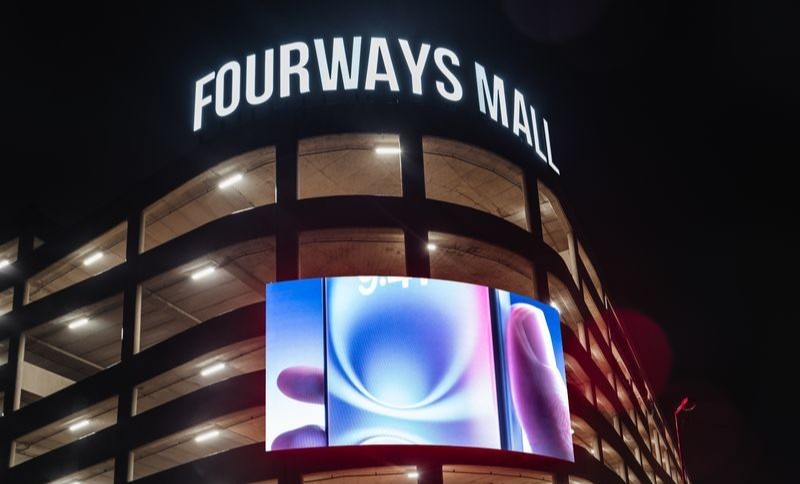
- The SCA rejected an insurer’s attempt to retrospectively remove COVID-19-related business interruption cover from Fourways Mall’s insurance policy.
- The court held that the parties’ true intention was recorded in the final Placing Slip and policy, both of which included infectious and contagious disease cover.
- The judgment reaffirms the strict requirements for rectifying contracts and strengthens certainty for policyholders in similar disputes.
The Supreme Court of Appeal has dismissed an attempt by a major South African insurer to retrospectively exclude coverage for losses arising from infectious and contagious diseases such as COVID-19 in a case involving Fourways Mall.
Delivering the unanimous judgment, Judge SP Mothle wrote, “The wording in the Placing Slip and the insurance contract is the same, and indicates that the parties were of the same intent.”
The dispute arose after Azrapart (Pty) Ltd and Accelerate Property Fund Limited, co-owners of Fourways Mall in Johannesburg North, sought indemnification from their insurers for business interruption losses triggered by the COVID-19 lockdown. The policy, underwritten by a consortium led by AIG South Africa Limited and including Old Mutual Insure, Bryte, Guardrisk, and Insurance Underwriting Managers (IUM), explicitly included cover for infectious and contagious disease under its business interruption section.
However, when the insured parties claimed for COVID-19-related losses, the insurers denied liability, arguing that the cover had been erroneously included and sought rectification of the policy to retrospectively delete this clause.
The High Court’s finding and appeal
The Johannesburg High Court rejected the insurers’ plea for rectification, ruling that the infectious and contagious diseases cover was validly included in the policy. The court held that the insurers had failed to highlight or notify any exclusion of the cover during the negotiation process. This omission breached standard insurance industry practices, which require that any changes or exclusions be clearly marked during contract drafting.
Following this ruling, all but one insurer, IUM, settled with the insured parties. IUM proceeded with the appeal to the SCA, maintaining that the inclusion of the cover was a mutual error and that the contract did not reflect the common intention of the parties.
SCA’s analysis of the negotiation process
In a unanimous judgment authored by Judge Mothle, the SCA examined the negotiation process, which unfolded through a series of Quoting Slips and emails. Early drafts included the cover, and at no stage did IUM raise any objection or propose its exclusion. Notably, IUM never signed the key Quoting Slip that excluded the cover, but did sign the final Placing Slip and the policy itself, both of which included the clause.
The court highlighted that under the industry’s rules, the Placing Slip and final policy wording are definitive, and any deviation requires explicit renegotiation and endorsement. Judge Mothle explained, “Clause 8 of Policy Drafting Rules for Assets All Risks is instructive. It recognises the Placing Slip as the policy wording that must be contained in the insurance contract. Clause 8 provides, ‘the policy must be drafted in accordance with the terms, conditions, exclusions, etc, reflected in the signed Placing Slip. Do not deviate from the Placing Slip without first renegotiating with insurers.”
The SCA found no evidence of a mutual mistake or of a common intention to exclude the cover cover. Instead, the evidence showed a consistent intention to include such cover, especially as the COVID-19 pandemic was precisely the type of event the cover was designed for.
Rectification not established
The SCA reaffirmed the legal requirements for rectification. The party seeking rectification must prove, on clear evidence, that the written contract does not reflect the true, continuing intention of both parties, and that the error was mutual. Citing previous authority, the judgment stated, “It is a settled principle that a party who seeks rectification must show facts entitling him to that relief ‘in the clearest and most satisfactory manner’... In essence, a claimant for rectification must prove that the written agreement does not correctly express what the parties had intended to set out therein.”
The court found that IUM failed to meet this high threshold. There was no proof of a common mistake or that the contract failed to record the parties’ intentions.
Impact and costs
The SCA dismissed the appeal, confirming that the cover formed part of the insurance contract and awarding costs against IUM, including the costs of two counsel. As Judge Mothle concluded, “Therefore, the defence of rectification has no merit, and the appeal must therefore fail. The costs should follow the result.”
Get your news on the go. Click here to follow the Conviction WhatsApp channel.


