





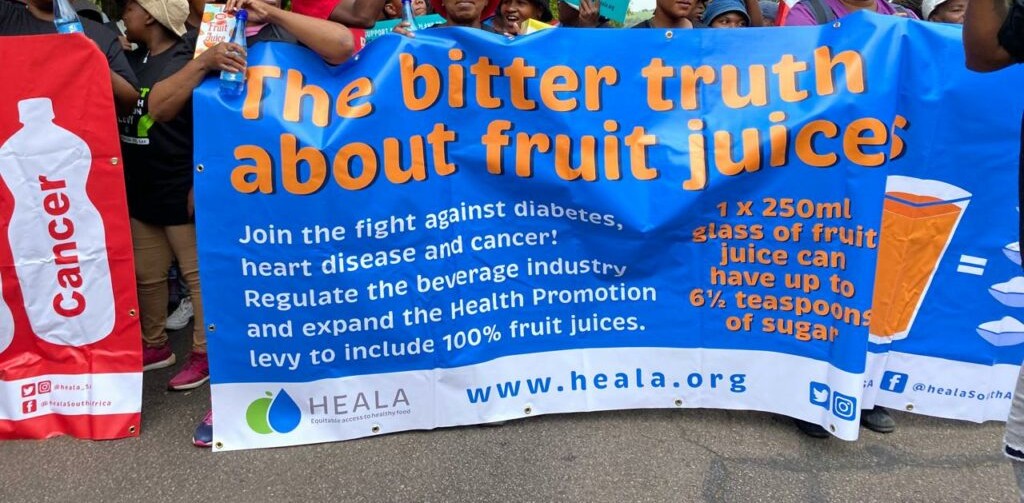
- A father lodged a complaint after his daughter panicked upon hearing a HEALA radio ad about sugary drinks.
- The ad was found to be misleading by the Advertising Appeals Committee.
- The ruling clarifies limits of public health advocacy in advertising, especially when messaging affects children.
It started as a routine school run. The radio played in the background as a father drove his young daughter home. Then came the advert; a grave voice warning that sugary drinks “make our children sick” and cause obesity, heart disease, and diabetes “with every sip.”
The girl stiffened in her seat. “Daddy,” she asked, her voice trembling, “why is my school poisoning us? They give us fruit juice with lunch every day.” That moment of fear sparked not by sugar but by a 30-second public health ad led her father to lodge a formal complaint with the Advertising Regulatory Board (ARB).
What followed was a drawn-out case that has now culminated in a ruling by the ARB’s Appeals Committee confirming that the radio advertisement by the Healthy Living Alliance was misleading.
The committee said the ad went too far in its effort to shock the public, creating a false impression that any consumption of sugary drinks would inevitably lead to chronic illness. That, they ruled, was not just inaccurate, but it was irresponsible, especially when children are listening.
Where the ad went wrong
HEALA.org, a nonprofit focused on raising awareness about the harms of sugar-sweetened beverages, had hoped to inspire civic action with its advertisement. The ad urged the public to sign a petition supporting a stronger Health Promotion Levy, commonly referred to as the “sugar tax.”
But the Appeals Committee found that the message, though well-intentioned, overstated the scientific evidence. According to the ruling, the average listener, especially a child, could reasonably interpret the ad as saying that any sugary drink would cause disease.
“The thrust of the advertisement is that any consumption of sugary drinks will lead to disease, and this is clearly not accurate,” the committee ruled.
HEALA argued that the ad was part of a broader advocacy campaign, and therefore not subject to the same rules as commercial advertising. They likened their message to cigarette warnings like “Smoking Kills,” which don’t include detailed risk thresholds.
But the panel disagreed. They ruled that the ad made definitive statements of fact, not opinion, and failed to provide the necessary context or qualifiers such as “excessive” or “frequent” consumption.
A technical distinction with real-world impact
The ruling hinged on a subtle but important distinction in advertising law, the difference between opinion and fact. Clause 2.4 of the Code of Advertising Practice provides protections for ads expressing opinions on controversial public issues, but only if those opinions are clearly recognisable as such.
In this case, it was found that the HEALA did not present its claims as opinion or interpretation. The advertisement didn’t cite sources or refer to external reports. It simply declared, without nuance, that sugary drinks cause obesity, diabetes, and heart disease.
The committee said that such language fails the legal test for advocacy protection. Unlike political commentary, which is often interpreted through the lens of opinion, this ad was received by listeners, including children, as a statement of fact.
“HEALA’s own response described the ad as being based on robust scientific evidence, not speculation or opinion,” the committee noted. “This undermines their claim that it should be treated as advocacy.”
Children, vulnerability, and the limits of shock messaging
The ruling was especially critical of the advertisement’s potential to mislead and distress young listeners.
Clause 3.5 of the advertising Code warns that children interpret messages more literally than adults and that advertising directed at or likely to influence children must be interpreted narrowly. In this case, the complainant’s daughter was frightened by the ad’s message, believing it meant her school was harming children.
The committee acknowledged HEALA’s important public health mission but insisted that even noble causes must comply with ethical standards in advertising. “We recognise and commend the work that HEALA is doing in the interests of public health,” the ruling said.
“However, a core part of the role of this committee is to ensure that advertising is not misleading to the general public, and the language of this particular advertisement falls short.” The committee stopped short of imposing a fine but ruled that the ad must not be aired again in its current form.
#Conviction
Get your news on the go. Click here to follow the Conviction WhatsApp channel.


