





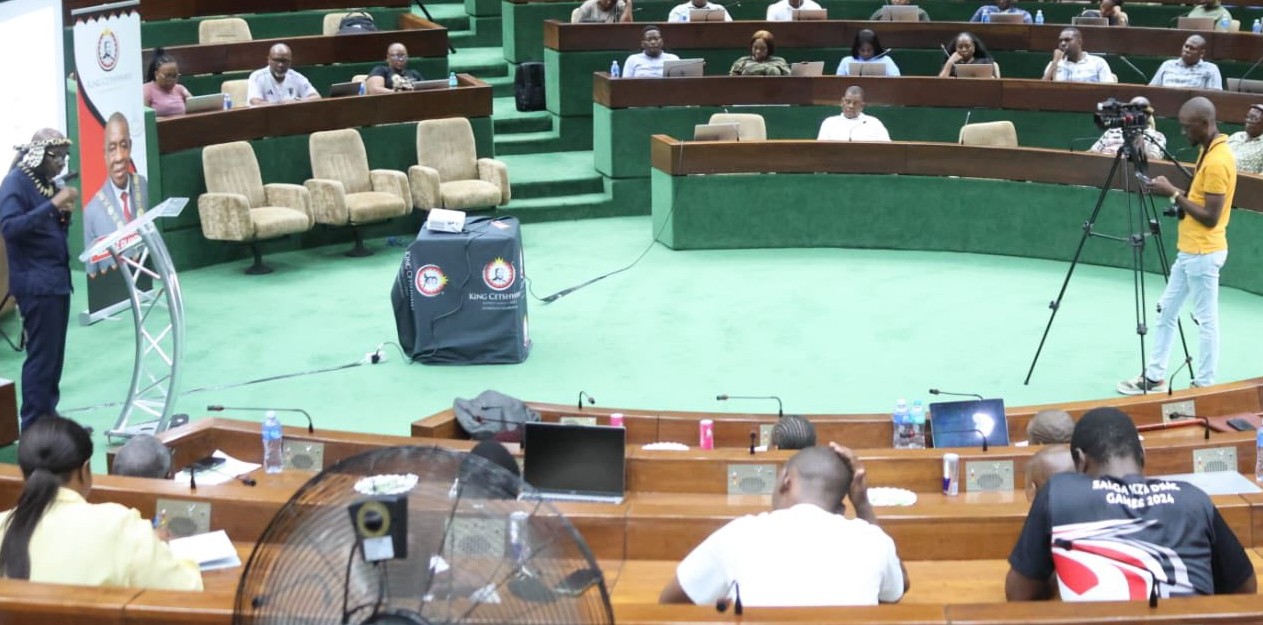
- The Constitutional Court refused King Cetshwayo District Municipality leave to appeal.
- The ruling confirms that 666 workers were transferred by law under section 197 of the Labour Relations Act.
- The Municipality was ordered to pay legal costs, including the costs of two counsel.
King Cetshwayo District Municipality has lost its final bid to avoid taking over 666 workers who were employed by Water and Sanitation Services South Africa (WSSA) to run its water services, after the Constitutional Court of South Africa refused leave to appeal.
Section 197 of the Labour Relations Act 66 of 1995 provides that when a business or service is transferred as a going concern, the workers attached to that operation move with it by law, together with their contracts and employment rights. That was the central legal question in this dispute.
The court’s refusal to hear a further appeal means earlier rulings stand, confirming that the transfer of King Cetshwayo District Municipality’s water services operation also carried the transfer of the 666 workers attached to that service.
How the dispute began
King Cetshwayo District Municipality contracted WSSA in 2003 to provide water-related services to residents in the district. Over time, that relationship was extended through a series of service level agreements, with WSSA taking responsibility for operational services, maintenance, monitoring, general asset management, and the running of a call centre.
To deliver those services, WSSA employed 666 workers. It also used its own vehicles, laboratory equipment, office systems and operational tools, while working with municipal infrastructure, including boreholes, treatment facilities, pumps and pipelines.
When the final agreement ended in June 2020, WSSA argued that Section 197 was triggered because the water services operation continued, meaning the workforce attached to that operation had to move with it. The Municipality disputed that interpretation and resisted taking over the workers.
The Labour Court ruled in favour of WSSA and declared that the workers’ employment contracts transferred with effect from 1 July 2020. The Labour Appeal Court later upheld that finding.
Constitutional Court closes the matter
King Cetshwayo District Municipality then approached the Constitutional Court, arguing that the lower courts had wrongly treated municipal assets used by WSSA as part of a transferable business and had incorrectly applied the legal test for deciding whether the operation continued as a going concern.
Writing for a unanimous court, Justice A Majiedt held that while the case involved the interpretation of labour legislation and therefore engaged constitutional jurisdiction, that alone did not mean the matter should be heard.
Justice Majiedt said, “Jurisdiction in and by itself does not grant a litigant access to this court to pursue an appeal.”
The court found that the municipality was not raising any new legal principle, but was instead challenging factual findings already made by the specialist labour courts.
Justice Majiedt said, “No new legal principles in relation to the interpretation and application of section 197 are being raised here.”
He added, “The law regarding the transfer of a business as contemplated in Section 197 is trite.” For that reason, the court refused leave to appeal.
Costs order follows lengthy delay
The court also ordered the municipality to pay costs, including the costs of two counsel, finding that this was an appropriate case for a costs order.
It noted that years passed between the granting of leave to appeal in the Labour Court and the hearing in the Labour Appeal Court, leaving hundreds of workers in prolonged uncertainty about their employment futures.
Justice Majiedt said, “This delay plainly had a deleterious effect on the affected workforce regarding their security of employment.”
Get your news on the go. Click here to follow the Conviction WhatsApp channel.


