


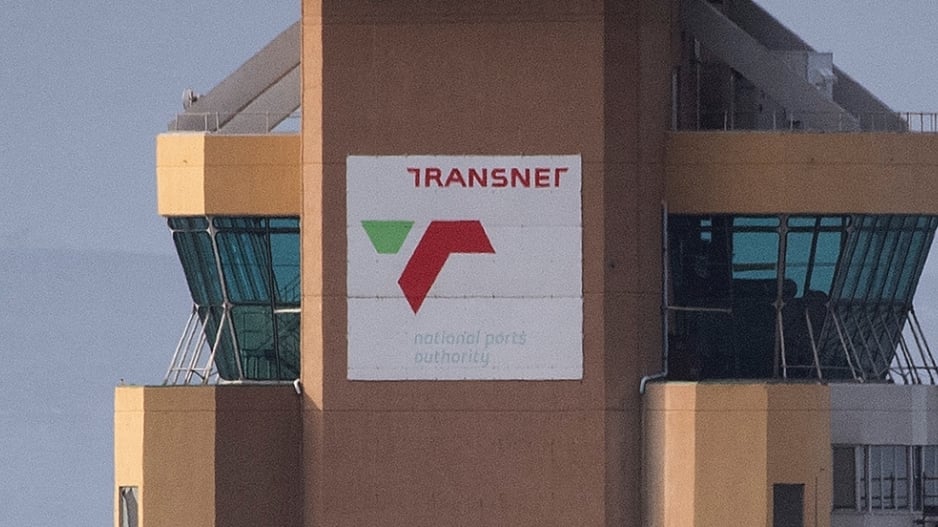
- The High Court found that Transnet has no reasonable prospects of successfully appealing the earlier judgment that set aside its R300 million security tender.
- The court rejected new legal arguments introduced during the application for leave to appeal, ruling they could not be entertained.
- The original order for a fresh procurement process remains in place, and Transnet has been ordered to cover the costs of the application.
Judge MMP Mdalana-Mayisela of the High Court in Johannesburg has dismissed Transnet’s application for leave to appeal a previous judgment that declared its R300 million security services tender unlawful. The court reaffirmed that Transnet must restart the procurement process.
This means the court’s earlier decision to review and set aside Transnet’s award of Tender No HOAC-HO-55168 remains fully effective. The tender was originally awarded to Sinqobile Equestrian Security Services after Fidelity Security Services was disqualified during the evaluation process.
Court finds no reasonable prospects of success
By refusing leave to appeal, Judge Mdalana-Mayisela found that Transnet had not satisfied the requirements of Section 17 of the Superior Courts Act, as it failed to show that another court would likely arrive at a different conclusion.
The judge stated, “Transnet has failed to demonstrate any reasonable prospect that an Appeal Court would interfere with this court’s order.” After considering each of Transnet’s arguments, the court concluded there was no basis to interfere with the previous judgment.
New defence cannot be raised on appeal
A key part of Transnet’s case was a new argument that Treasury Regulation 16A did not apply, as Transnet is a Schedule 2 public entity under the Public Finance Management Act. The court rejected this argument because it had never been raised during the original review proceedings.
Judge Mdalana-Mayisela said, “It is well established that a party cannot raise a new defence for the first time on appeal or in an application for leave to appeal.”
Allowing this new defence at this stage would be procedurally unfair, the court said, as Fidelity had not been given the chance to respond to it earlier.
The judgment also found that even if the argument had been considered, it would not have changed the outcome, as the original decision was based on several independent findings.
Procurement process remained fundamentally flawed
The court reaffirmed that Transnet did not comply with its own Procurement Manual during the tender process. Evidence showed that although officials approved a five-day advertising period, the tender was only advertised for three days.
Judge Mdalana-Mayisela also found there was no evidence that the required procurement committees had been properly established, or that all necessary governance processes were followed before the tender was awarded.
The court further held that advertising a contract worth more than R300 million for just three days could not reasonably be seen as providing enough time for prospective bidders to prepare proper bids.
These failures, the court found, were enough on their own to justify setting aside the procurement process.
Fidelity's disqualification was irrational
The judgment also reaffirmed that Fidelity Security Services had been unfairly disqualified from the tender.
According to the judgment, the evaluation committee failed to consider Fidelity’s Business Continuity and Transitional Plan, even though it clearly stated the company could deploy services within 24 hours. Judge Mdalana-Mayisela noted, “The evaluators clearly failed to consider relevant material.”
The court also pointed to the unexplained adjustment of Fidelity’s evaluation score as further proof that the evaluation process was irrational.
In contrast, Transnet accepted information from the successful bidder, even though there were outstanding provident fund issues, highlighting inconsistencies in the process.
Disruption argument rejected
During the application for leave to appeal, Transnet argued that setting aside the contract would cause severe operational disruption and harm the public.
The court rejected this submission because it had not been raised in the original proceedings and was not supported by any evidence. “There is no expert evidence, no affidavit from any Transnet official, and no factual basis at all for these assertions,” Judge Mdalana-Mayisela said.
The court also noted that this argument conflicted with Transnet’s earlier claim that the procurement was urgent and required an immediate replacement service provider.
Original order remains in force
After rejecting every ground of appeal, the court concluded there was no compelling reason to grant leave to appeal. “The application for leave to appeal is therefore nothing more than an attempt to re-argue the merits of a case that was correctly decided,” the judgment states.
Judge Mdalana-Mayisela dismissed the application with costs, including the costs of senior counsel.
The previous judgment setting aside the R300 million security services tender remains in force, requiring Transnet to conduct a new, lawful procurement process.
Get your news on the go. Click here to follow the Conviction WhatsApp channel.


