Skip to content
Close Menu
ConvictionConviction
  • Home
  • Law & Justice
  • Special Reports
  • Opinion
  • Ask The Expert
  • Get In Touch

Subscribe to Updates

Get the latest creative news from FooBar about art, design and business.

What's Hot

Widow denied early access to rental income from late partner’s property under lifetime usufruct

June 26, 2026

Copyright Bills survive constitutional challenge, Parliament must rewrite education provisions

June 26, 2026

Timberland manager denied legal representation in unfair dismissal dispute before CCMA

June 26, 2026
Facebook X (Twitter) Instagram
Trending
  • Widow denied early access to rental income from late partner’s property under lifetime usufruct
  • Copyright Bills survive constitutional challenge, Parliament must rewrite education provisions
  • Timberland manager denied legal representation in unfair dismissal dispute before CCMA
  • Utility company told to restore homeowner’s prepaid electricity in water billing dispute
  • The doors of learning are open; now we must open the doors of opportunity
  • Ramaphosa warns against vigilantism ahead of 30 June immigration protests
  • Government’s 21-year delay adds R717 000 interest to former Pollsmoor prisoner’s TB payout
  • SCA says private organisations must hold fair disciplinary hearings
Facebook X (Twitter) Instagram
ConvictionConviction
Sonneblom
  • Home
  • Law & Justice
  • Special Reports
  • Opinion
  • Ask The Expert
  • Get In Touch
ConvictionConviction
Home » Copyright Bills survive constitutional challenge, Parliament must rewrite education provisions
Constitutional Law

Copyright Bills survive constitutional challenge, Parliament must rewrite education provisions

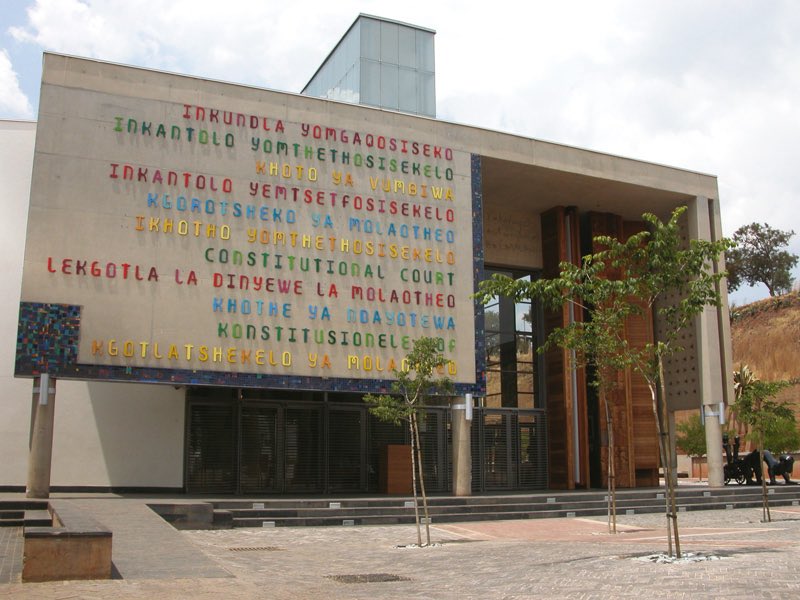
The Constitutional Court has upheld most of South Africa's proposed copyright reforms, including fair use, but has found part of the education exception to be unconstitutional.
Kennedy MudzuliBy Kennedy MudzuliJune 26, 2026No Comments
Facebook Twitter Pinterest LinkedIn WhatsApp Reddit Tumblr Email
Share
Facebook Twitter LinkedIn Pinterest Email
  • The Constitutional Court has upheld most of the Copyright Amendment Bill and the Performers' Protection Amendment Bill.
  • Fair use and several new copyright exceptions have survived constitutional scrutiny.
  • Parliament must amend part of the education exception before these Bills can become law.

The Constitutional Court has upheld most of South Africa's proposed copyright reforms. This clears the way for Parliament to move forward with the Copyright Amendment Bill and the Performers' Protection Amendment Bill, as long as limited amendments are made to the education provisions.

President Cyril Ramaphosa referred the Bills to the Constitutional Court after raising concerns about their constitutionality, instead of signing them into law. He questioned whether some provisions on royalty sharing, fair use and copyright exceptions complied with the Constitution and South Africa's international obligations.

In the majority judgment, Justice M Mhlantla found that most of the President's constitutional concerns were unfounded. However, the apex court did find that part of the proposed education exception would lead to an arbitrary deprivation of property.

Fair use survives constitutional scrutiny

One of the most significant aspects of the judgment is the introduction of a fair use exception into South African copyright law.

The Constitutional Court rejected arguments that this provision unlawfully deprives copyright owners of their property rights and held that the proposed fair use system is constitutionally valid.

Justice Mhlantla explained, "The fair use exception in Section 12A of the Copyright Amendment Bill is not arbitrary. It does not infringe the right to property under Section 25(1) of the Constitution and is constitutional."

The court also upheld Sections 12B and 12C of the Copyright Amendment Bill, along with sections 19B and 19C, finding that these provisions do not amount to an arbitrary deprivation of property.

Justice Mhlantla explained that copyright is protected by the Constitution but emphasised that it must be balanced against other constitutional rights, such as access to education, access to information, and the rights of people with disabilities.

Parliament must rewrite education provisions

However, the Constitutional Court found that Sections 12D(1) to 12D(5), which create exceptions for educational and academic use of copyrighted material, go too far.

The majority held that these provisions amount to an arbitrary deprivation of property and therefore cannot remain in their current form.

Justice Mhlantla stated, "The exceptions in subsections 12D(1)-(5) of the Copyright Amendment Bill amount to an arbitrary deprivation of property under section 25(1) of the Constitution and are unconstitutional."

Despite this, the court upheld Sections 12D(6) to 12D(9), finding that these provisions are more narrowly framed and remain constitutionally valid.

President's referral partly unsuccessful

The President also asked the Constitutional Court to rule on the proposed royalty-sharing provisions in Sections 6A, 7A and 8A of the Copyright Amendment Bill.

The Constitutional Court declined to rule on these issues, finding that the referral was procedurally incompetent because Parliament had already addressed the President's original constitutional objections when it reconsidered the Bills.

Justice Mhlantla wrote in the judgment, “The referral by the President in terms of Section 79 of the Constitution, regarding Sections 6A, 7A and 8A of the Copyright Amendment Bill, 2017 as a whole, is incompetent."

Narrow disagreement within the Court

Justice LTC Harms agreed with almost all of the judgment but disagreed with the finding that sections 12D(1) to 12D(5) are unconstitutional. "The divergence in our two judgments may be narrow, but it is crucial because subsections 12D(1)-(5) are the only provisions that the main judgment finds unconstitutional," Justice Majiedt said.

He concluded that the education provisions also comply with the Constitution and that the Copyright Amendment Bill and the Performers' Protection Amendment Bill should have passed constitutional scrutiny in full.

Long legislative process continues

The Copyright Amendment Bill and the Performers' Protection Amendment Bill were first published for public comment in 2015, before being introduced in Parliament in 2017.

Parliament passed the Bills in 2019, but President Ramaphosa sent them back to Parliament in 2020 due to concerns about their constitutionality. After more public participation and amendments, the revised Bills went back to the President, who then referred the remaining constitutional questions directly to the Constitutional Court.

The judgment now leaves Parliament with the specific task of amending the unconstitutional education provisions before the Bills can be presented to the President for approval.

Conviction.co.za

Get your news on the go. Click here to follow the Conviction WhatsApp channel.

Constitutional Court copyright amendment bill Fair Use intellectual property Parliament
Share. Facebook Twitter Pinterest LinkedIn Tumblr Telegram Email
Kennedy Mudzuli

Multiple award-winner with passion for news and training young journalists. Founder and editor of Conviction.co.za

Related Posts

Cape Town Minstrel Carnival Association trumps city again in venue appeal drama

June 22, 2026

Excluded Xihahele households awarded R21.4 million in land restitution settlement

June 19, 2026

New acting judges’ rules introduce a 12-year legal experience requirement from 1 July 2026

June 18, 2026
Leave A Reply Cancel Reply

Prove your humanity: 1   +   7   =  

Subscribe to our newsletter:
Top Posts

Making sectional title rules that work: A practical guide

January 17, 2025

Protection order among the consequences of trespassing in an ‘Exclusive Use Area’

December 31, 2024

Between a rock and a foul-smelling place

November 27, 2024

Irregular levy increases, mismanagement, and legal threats in a sectional title scheme

June 2, 2025
Don't Miss
Property Law
4 Mins Read

Widow denied early access to rental income from late partner’s property under lifetime usufruct

By Kennedy MudzuliJune 26, 20264 Mins Read

The High Court in Durban ruled that a lifetime usufruct vests on death but cannot be enforced until the deceased estate administration is complete.

Copyright Bills survive constitutional challenge, Parliament must rewrite education provisions

June 26, 2026

Timberland manager denied legal representation in unfair dismissal dispute before CCMA

June 26, 2026

Utility company told to restore homeowner’s prepaid electricity in water billing dispute

June 26, 2026
Stay In Touch
  • Facebook
  • Twitter
  • WhatsApp
Demo
About Us
About Us

Helping South Africans to navigate the legal landscape; providing accessible legal information; and giving a voice to those seeking justice.

Facebook X (Twitter) YouTube WhatsApp Twitch RSS
Latest posts

Making sectional title rules that work: A practical guide

January 17, 2025

Protection order among the consequences of trespassing in an ‘Exclusive Use Area’

December 31, 2024

Between a rock and a foul-smelling place

November 27, 2024
OUR PICKS

Tshwane loses land expropriation battle, ordered to relocate Kanana Village residents

June 2, 2026

Struck-off advocate and former detective fail separate bids to join legal profession

June 24, 2026

Standard Bank should have investigated mental health concerns before dismissal, CCMA finds

June 10, 2026
© 2026 Conviction.
  • Home
  • Law & Justice
  • Special Reports
  • Opinion
  • Ask The Expert
  • Get In Touch

Type above and press Enter to search. Press Esc to cancel.

Powered by
►
Necessary cookies enable essential site features like secure log-ins and consent preference adjustments. They do not store personal data.
None
►
Functional cookies support features like content sharing on social media, collecting feedback, and enabling third-party tools.
None
►
Analytical cookies track visitor interactions, providing insights on metrics like visitor count, bounce rate, and traffic sources.
None
►
Advertisement cookies deliver personalized ads based on your previous visits and analyze the effectiveness of ad campaigns.
None
►
Unclassified cookies are cookies that we are in the process of classifying, together with the providers of individual cookies.
None
Powered by