


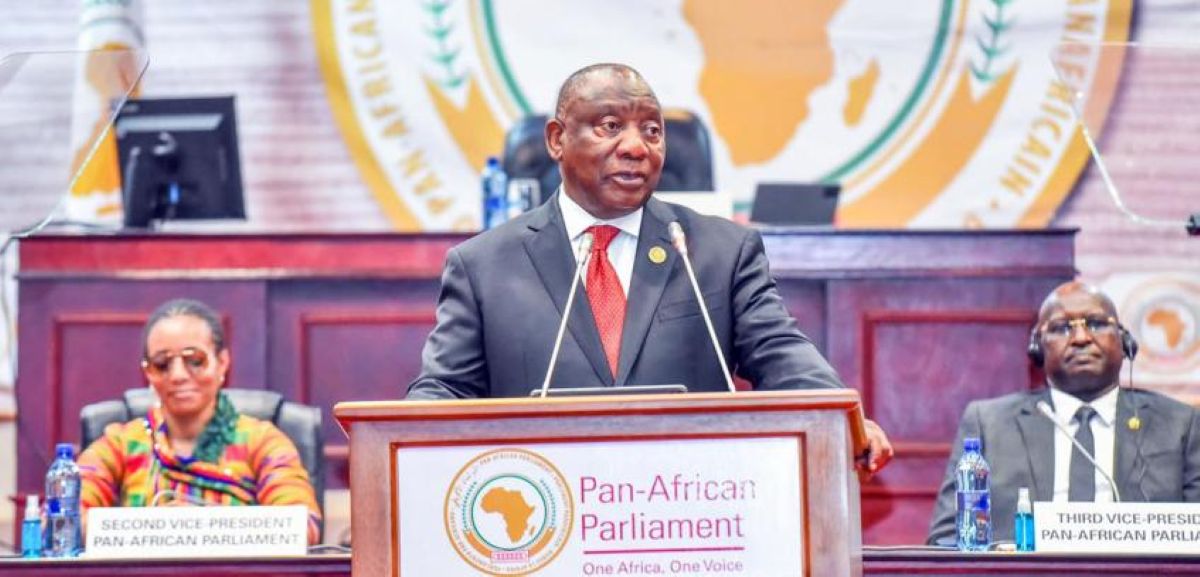
- Two parliamentary gatherings in Midrand and Malawi placed South Africa under sustained criticism over alleged afrophobic violence.
- The article argues that South Africa’s sovereignty and immigration laws should not be subordinated to pressure from other African states.
- It questions historical claims of entitlement while examining migration, remittances and the country’s role as a regional economic destination.
Two recent incidents exposed the depth of hostility toward South Africa from some African countries: one at the Pan-African Parliament (PAP) in Midrand, and another in Malawi.
On 30 July in Midrand, although the tone was somewhat muted, perhaps because South Africa hosts the PAP, the condemnation of South Africa for alleged afrophobic acts was loud and persistent. Many PAP Members of Parliament recited how ungrateful South Africans were after their countries had supposedly contributed so much to South Africa’s liberation.
They expressed shock at the intolerance displayed by South Africans toward other Africans, whether legal or illegal immigrants. One MP even claimed that his country, apart from hosting ANC leaders, contributed nearly R1 trillion, collected from students’ pocket money, to the anti-apartheid struggle, a claim often repeated by that country’s journalists.
South African MPs tried, with little success, to set the record straight. Illegal immigration has reached epidemic proportions, some migrants commit crimes with impunity, public institutions are overrun by undocumented migrants, and the R900 billion per year township economy is dominated by mostly undocumented foreigners.
They also cited high unemployment and other grievances voiced by South Africans. However, their efforts were drowned out by increasing hostility and bullying from other delegates.
In the end, two resolutions were unanimously adopted. They called for stronger protection of foreign nationals, accountability for perpetrators of violence, and robust mechanisms to monitor and prevent attacks. There were even suggestions to deploy PAP representatives to advise the South African government and oversee the implementation of these resolutions.
Malawi and rising regional tensions
The incident in Malawi deserves little mention. At the 55th Commonwealth Parliamentary Association Africa Region Conference in Lilongwe in August 2026, condemnation of South Africa was even louder, but this time South African representatives stood their ground, and tempers nearly boiled over into physical confrontation.
As if that were not enough, the parliaments and presidents of Ghana and Nigeria reportedly appealed to the African Union for urgent, collective action against South Africa, an appeal that, notably, went unanswered by the AU.
Questions of sovereignty and entitlement
Several unasked questions now demand attention. Is South Africa beholden to other African states? Is the sense of entitlement displayed by some African governments and their citizens justified? Should South Africa tolerate the blatant disregard for its laws and sovereignty by illegal immigrants?
Should its leaders keep apologising for citizens’ protests against illegal immigration, the takeover of the township economy, and infrastructure vandalism? Ultimately, why does a continent that demands so much from South Africa assume it is entitled to it?
A more complex liberation history
Many South Africans reject the idea that their liberation was delivered largely by other African countries. The historical record tells a more complex story. Zambia, Tanzania, the Soviet Union, Cuba, China and several Western European countries made significant contributions to the struggle against apartheid.
Yet today, nationals from these countries are rarely seen on South African streets. South Africans rightly assert that it was their own sacrifices, including their demonstrations, boycotts, stayaways, and willingness to face prison and death, that were decisive. Why, then, does the loudest sense of entitlement come from those who arguably contributed least?
Migration and economic reality
History shows that failed and fragile states often end up exporting people when they can no longer export commodities. These citizens become an economic lifeline, sending remittances home and injecting much-needed foreign exchange into struggling economies.
For governments battling to keep the lights on, pay civil servants, and avoid political instability, even coups, migration, legal or illegal, becomes an unofficial economic survival plan.
Given that Europe now enforces stricter borders, faster deportations, and perilous sea crossings, South Africa, with its porous borders and relatively stable economy, has become a safer destination for economic migrants. Hence, the steady influx of foreign nationals, from unskilled labourers to bogus professors and business opportunists, from Zimbabwe, Nigeria, Somalia, Ethiopia, Malawi, Mozambique, Pakistan and others.
Time for political resolve
Yet South Africa continues to be labelled xenophobic and threatened with ostracism, forcing its leaders to apologise for citizens’ demands that illegal immigrants leave and that the township economy be reserved for South Africans.
Meanwhile, countries such as Kenya, Ghana, Tanzania and others are not condemned for reserving their informal and small-business sectors for their own citizens. This hypocrisy should embolden our leaders to resist the temptation to apologise when no apology is due.
Get your news on the go. Click here to follow the Conviction WhatsApp channel.
The opinions expressed in this article are solely those of the author and do not necessarily reflect the views of Conviction.co.za
