


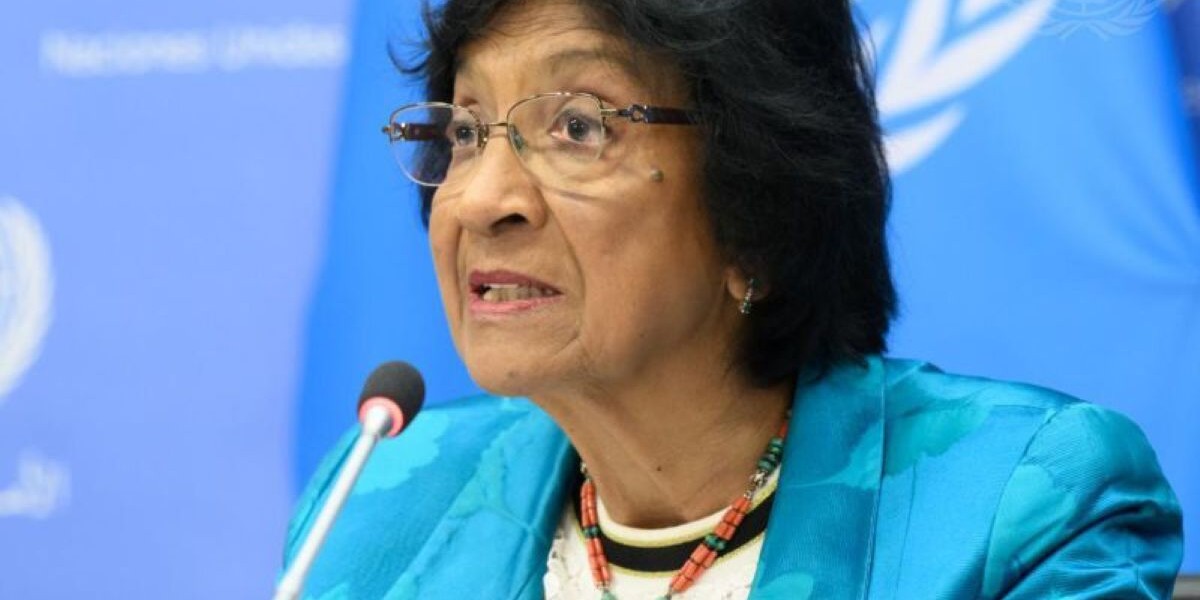
- President Cyril Ramaphosa, Justice Minister Mmamoloko Kubayi and Chief Justice Mandisa Maya have congratulated Judge Navi Pillay on receiving the 2026 Nobel Peace Prize.
- Pillay joins former president Nelson Mandela and Archbishop Emeritus Desmond Tutu among South African Nobel Peace Prize recipients.
- The Norwegian Nobel Committee recognised her efforts to promote peace and international law, including her contribution to international criminal justice.
South Africa’s political and judicial leadership has congratulated veteran jurist Navanethem “Navi” Pillay on receiving the 2026 Nobel Peace Prize, recognising her decades of work advancing international law, human rights and accountability for serious international crimes.
President Cyril Ramaphosa, Justice and Constitutional Development Minister Mmamoloko Kubayi and Chief Justice Mandisa Maya welcomed the award, describing Judge Pillay’s achievement as a source of pride for South Africa and recognition of her contribution to justice beyond national borders.
The Norwegian Nobel Committee announced on Friday 9 October 2026 that Judge Pillay had been awarded the prize for her efforts to promote peace and international law.
Judge Pillay joins former president Nelson Mandela, who received the Nobel Peace Prize in 1993 alongside FW de Klerk and Archbishop Emeritus Desmond Tutu, who received it in 1984. Her award adds to South Africa’s history of Nobel Peace Prize laureates recognised for their contributions to peace, justice and human rights.
The Nobel Committee said Judge Pillay had shown exceptional courage and integrity in helping to build a more comprehensive global legal order and had played a key role in ensuring that war crimes, crimes against humanity and genocide were prosecuted.
Ramaphosa praises Pillay’s service to humanity
Ramaphosa congratulated Judge Pillay on the international recognition of her lifelong commitment to peace and international law, highlighting her courage, integrity and distinguished service to humanity.
The President said her contributions to international justice and the protection of human rights have strengthened the rule of law and advanced human dignity, inspiring people in South Africa and around the world.
The award honours a career in which Judge Pillay has served in both South African and international judicial institutions, helping to establish legal principles that have shaped the prosecution of serious international crimes.
Kubayi says award makes South Africa proud
Kubayi called the award a proud moment for South Africa and the African continent, saying Judge Pillay’s lifelong dedication to justice gave practical expression to the constitutional values of equality and freedom.
“As a nation we are proud to celebrate our own who continues to fly the South African flag high,” Kubayi said. She said the Nobel Peace Prize reaffirmed the importance of respecting international law, defending human rights and working toward a peaceful world, especially in today’s global environment.
Justice Maya highlights her contribution to the judiciary
Justice Maya, speaking for the South African judiciary, congratulated Judge Pillay on the award, describing her career as a lasting commitment to justice, human dignity, human rights and the rule of law.
She said Judge Pillay’s service in the South African judiciary, followed by her influential work in international justice, has played a big part in strengthening accountability and protecting fundamental rights.
Justice Maya also pointed out the example Judge Pillay’s career sets for current and future generations of judges, especially the need for judicial independence, integrity, courage and faithfulness to the law. She said this achievement shows the contribution jurists can make to justice beyond their own countries.
From defending anti-apartheid activists to international justice
Born in Durban 85 years ago to a family of Indian Tamil origin, Judge Pillay became a lawyer during apartheid and started her own law firm in 1967. Early in her career, she defended Mandela and other anti-apartheid activists. She was appointed to South Africa’s High Court in 1995, becoming the first woman of colour to hold the position.
In 1999, Judge Pillay joined the International Criminal Tribunal for Rwanda and later served as its president. Her work on the landmark Prosecutor v Akayesu case helped establish that rape and sexual violence can be acts of genocide and crimes against humanity. The case also showed the importance of prosecuting direct and public incitement to commit genocide, including through propaganda.
Judge Pillay went on to serve as a judge of the International Criminal Court and as United Nations High Commissioner for Human Rights from 2008 to 2014. From 2021 to 2025, she chaired the United Nations Independent International Commission of Inquiry on the Occupied Palestinian Territory.
She is currently serving as a judge at the International Court of Justice in proceedings where Myanmar faces allegations of genocide.
Nobel Committee stresses importance of international law
In announcing the award, the Norwegian Nobel Committee said Judge Pillay’s career shows how international legal institutions can help prevent violence, hold perpetrators accountable and bring justice to victims. The committee said international law is essential for resolving conflicts peacefully and warned that the rules-based international order and its institutions are under considerable pressure.
It also stressed that the rule of law, both nationally and internationally, is the foundation for keeping peace and addressing conflicts without violence. The committee said Judge Pillay has held states and national leaders accountable while helping to define the legal principles for serious international crimes.
Her influence in the Rwanda tribunal proceedings, especially the recognition of sexual violence as a potential tool of genocide and the prosecution of incitement to genocide, was among the contributions highlighted by the award announcement.
Get your news on the go. Click here to follow the Conviction WhatsApp channel.
