


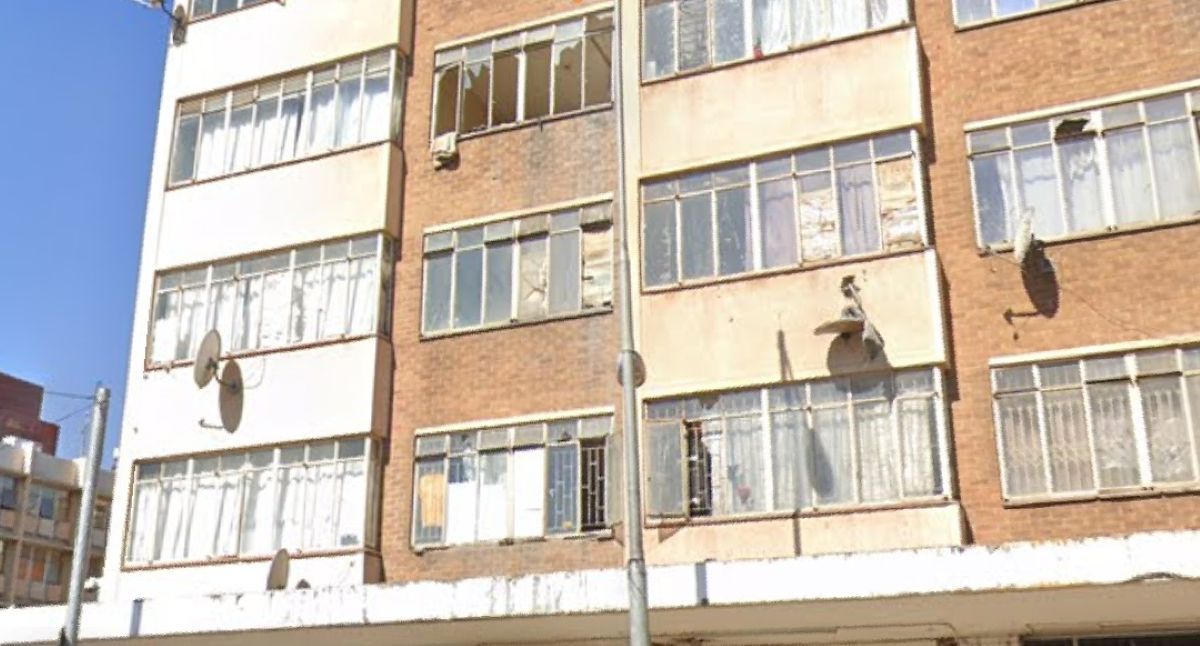
- High Court in Pretoria refused to compel Midcity Property Services to resume managing the Drakensberg sectional title scheme, even after assuming that the trustees’ termination notice was ineffective.
- The breakdown in trust, the prospect of further disputes and the availability of damages weighed against an order for specific performance.
- Midcity must hand over outstanding financial records and account for funds administered on behalf of the body corporate, while the validity of the contract’s termination remains undecided.
A potentially invalid termination of a managing agent’s contract does not automatically entitle a body corporate to force the agent to resume its duties.
This is according to the High Court in Pretoria, which highlighted the limits of specific performance in a dispute between the Drakensberg body corporate and Midcity Property Services. It found that compelling the company to return could trigger further disputes and require ongoing judicial supervision.
Midcity had managed the Drakensberg sectional title scheme at 195 Nana Sita Street in Pretoria since March 2021 under a written management agreement.
On 23 December 2025, four days after the High Court reinstated the body corporate’s trustees, they emailed Midcity stating that the company should vacate its position with effect from 1 January 2026, on three months’ notice. Midcity accepted the notice and treated 31 March 2026 as the end of the agreement.
The body corporate subsequently disputed whether the trustees had properly authorised the termination through a resolution.
Acting Judge DH Hinrichsen noted that the applicable management rules required the trustees to cancel the agreement through a resolution. Trustee decisions had to be adopted by majority resolution, either at a meeting or through a written round-robin process.
The body corporate maintained that the trustees had not resolved to terminate the agreement. Midcity argued that their subsequent attempt to withdraw the notice was an afterthought, pointing out that the notice had initially been issued in both trustees’ names and that its validity was questioned only after the company had accepted it.
Judge Hinrichsen did not decide whether a resolution had been adopted or whether the notice was effective. Instead, he assumed in the body corporate’s favour that no resolution had been passed and that the notice was ineffective.
Even on that assumption, he found that the body corporate was not entitled to an order compelling Midcity to resume its duties.
Why the court refused to compel reinstatement
The body corporate sought specific performance, a contractual remedy that ordinarily allows an aggrieved party to demand that the other party fulfil its obligations. Judge Hinrichsen explained that a court retains the discretion to refuse such relief, even where a party would ordinarily be entitled to specific performance following a contractual breach.
The relationship between the parties had deteriorated substantially. The trustees accused Midcity of gross negligence, breaches of fiduciary duties and convening an unlawful meeting. The body corporate had also informed owners that the company had absconded and intended to sue it for approximately R10 million.
The judge found that managing a sectional title scheme requires a degree of confidence that no longer existed on the body corporate’s own version. “An order compelling the respondent to resume office would give rise at once to further disputes concerning levies, trust funds, salaries and fees, and would call for the continuing supervision of this court,” Judge Hinrichsen said.
There was also a practical difficulty with the relief sought. Both the management agreement and the applicable management rules allowed Midcity to cancel the contract on two months’ notice. An order compelling the company to return would therefore offer limited practical value. “If the respondent wrongfully ceased to perform, the applicant’s remedy lies in damages,” the judge held.
The court dismissed the body corporate’s requests to invalidate the alleged termination notice and compel Midcity to resume office. However, Judge Hinrichsen expressly stated that he was making no finding on whether the management agreement had been validly terminated.
Managing agent must account for records and funds
Although the body corporate failed to obtain reinstatement, it secured an order compelling Midcity to deliver outstanding financial and administrative records. The parties agreed that the body corporate was entitled to the records, but Midcity argued that the court application had been unnecessary because it had tendered to hand them over.
The judge rejected that argument. The records had been requested in January 2026 and demanded again in April, but had not been delivered before proceedings were instituted.
The order requires Midcity to provide financial statements, bank statements, contracts, municipal accounts, minutes and resolutions in its possession or under its control. The records must cover the relevant years from 2021 to 2025, including trustees’ minutes and resolutions for the period from 7 November 2023 to 19 December 2025.
Midcity must also deliver a handover report reconciling funds received and held on the body corporate’s behalf from March 2021 until delivery. The report must disclose payments, deductions, including legal fees, and the remaining balance. A duly authorised officer must confirm under oath which records have been delivered and identify any outstanding documents.
The judgment distinguishes between the disputed contractual relationship and the managing agent’s continuing obligation to account for the body corporate’s records and funds.
Municipal arrears claim abandoned
The body corporate also sought an order requiring Midcity to pay approximately R4 million in electricity and water arrears owed to the City of Tshwane. Its counsel abandoned this part of the application at the hearing, accepting that the claim was essentially one for damages that should be pursued through action proceedings.
Judge Hinrichsen agreed, noting that the municipal charges were a liability of the body corporate and that questions of breach, causation and the amount of damages remained disputed. The abandonment does not prevent the body corporate from pursuing a damages claim or seeking a statement and debatement of account through action proceedings.
The judge also reserved the parties’ rights concerning Midcity’s claimed deduction of R202 645.92 from the body corporate’s trust funds for legal fees paid to Pretorius Le Roux Attorneys. No finding was made on whether the deduction was justified, but the handover reconciliation must disclose it.
Costs reflect divided outcome
Judge Hinrichsen ordered Midcity to pay half of the body corporate’s costs in the main application, as well as the costs of its application for condonation of its late answering affidavit and its unsuccessful application to strike out portions of the founding affidavit.
Midcity had emailed an unsigned and uncommissioned answering affidavit in June 2026, but only served a signed version in September. Although the judge found its attorneys’ explanation for the delay unsatisfactory, he granted condonation because excluding the evidence would not serve the interests of justice.
Neither party obtained the punitive costs order it sought. Instead, Judge Hinrichsen ordered Midcity to pay 50% of the body corporate’s costs in the main application, in addition to the costs of the condonation and striking-out applications.
The costs will be taxed on the party-and-party scale, with counsel’s fees on Scale B. The court made no finding on whether the management agreement had been validly terminated.
Get your news on the go. Click here to follow the Conviction WhatsApp channel.
