


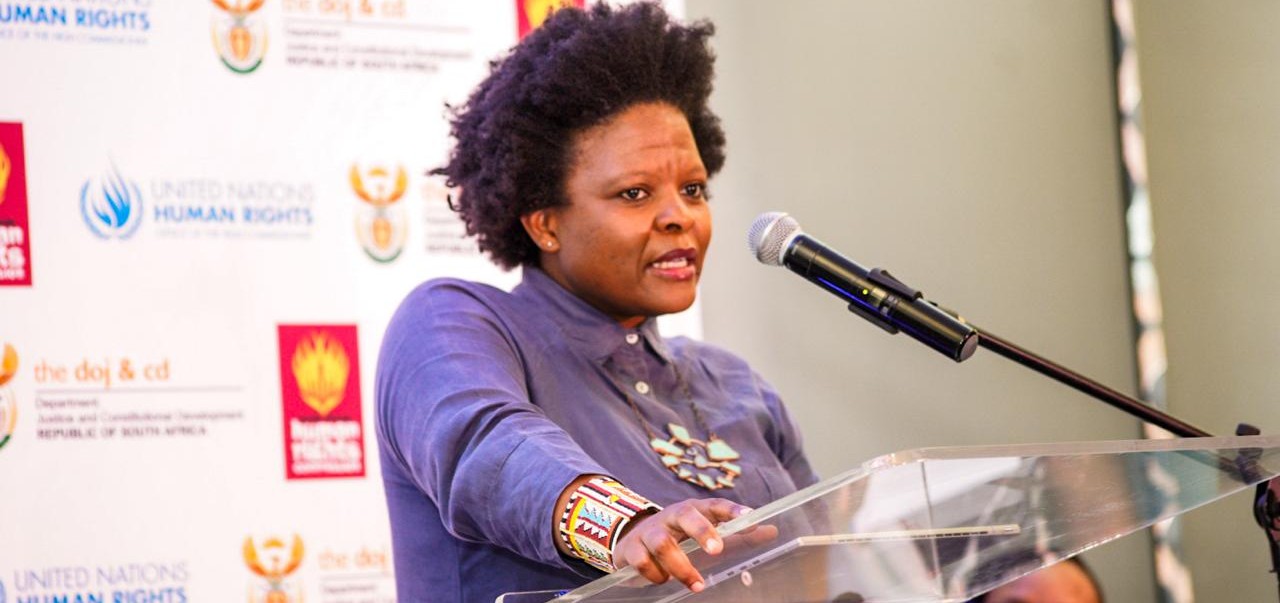
- The Public Interest Law Gathering 2026 is scheduled for 26 and 27 October at the Chalsty Centre at the University of the Witwatersrand in Johannesburg.
- The programme features conversations on land justice, gender-based violence, housing rights, climate litigation, migration, artificial intelligence and what it takes to defend human rights.
- Attendees will look at how civil society can protect constitutional democracy and work to advance the rights of marginalised and vulnerable communities.
Public interest lawyers, social justice activists and academics are set to meet in Johannesburg to discuss threats to constitutional democracy, the challenges of defending human rights and the crucial role of civil society in upholding constitutional rights.
The Public Interest Law Gathering (PILG) 2026 will be held at the Chalsty Centre at the University of the Witwatersrand on 26 and 27 October, with the theme ‘Defending the Promise of the Constitution’.
Over two days, the event offers plenary discussions and parallel sessions that address some of South Africa’s most urgent legal and social issues, such as housing, land reform, gender-based violence, migration, climate change and access to education.
Housing, accountability and gender-based violence
The gathering begins with a plenary discussion called ‘Interrogating the ‘Anti-Development Narrative’: Development for Who?’ This session will look at who really benefits from development.
The first set of parallel sessions will look at civil society’s response to changes in the Prevention of Illegal Eviction from and Unlawful Occupation of Land Act, widely known as the PIE Act. Other discussions will cover the role of school governing bodies in democracy, how institutions are held responsible for gender-based violence and femicide, and the fight for community environmental justice in Vhembe, Limpopo.
There will also be a session on creating and defending structural remedies that work, focusing on how public interest litigation can bring about effective and lasting change.
Another session, ‘Cautionary Tragedies: When Women and Girls’ Bodies Become Battlefields’, will look at the challenges women and girls face, with insights from legal practitioners and human rights specialists from various backgrounds.
A discussion on climate litigation will explore how floods and droughts can become legal claims, drawing on experiences from strategic litigation in Kenya and South Africa. The first day wraps up with a plenary session called ‘Public interest is not cost-free,’ where legal and professional experts will discuss the real costs of doing public interest work.
The cost of defending human rights
Tuesday starts with a plenary session called ‘The Cost of Defending Human Rights,’ exploring the challenges faced by individuals and organisations who work to protect fundamental rights.
Land justice will be a key focus in a session called ‘Beyond 1913: Land Justice and Defending the Constitutional Promise.’ Commissioner Philile Ntuli from the South African Human Rights Commission is scheduled to participate, along with a representative from a social movement and a public interest lawyer.
Other sessions will cover climate change and the right to basic education, how customary adoption practices relate to the best interests of children, and the role of children in rights litigation.
There will also be a session on the responsible use of artificial intelligence in the public interest law sector, highlighting the importance of considering how new technologies should be integrated into legal practice.
Migration, equality and constitutional rights
In the afternoon, sessions will look at South Africa’s gender recognition framework and the constitutional promise of dignity and equality.
Migration and xenophobia are also on the agenda. One presentation, called ‘Xenophobic Trojan Horses and Foreign Funded Forces: How South Africa’s right-wing is using xenophobia to drive forward a repressive authoritarian agenda,’ will look at how xenophobia is used for political ends.
Another session, ‘Who Belongs to the Constitution? Defending the Rights, Dignity and Equality of Migrants and Refugees in South Africa,’ will focus on the rights and dignity of migrants and refugees under the Constitution.
The event will also include a discussion on Rahube v Rahube, transformative constitutionalism and South Africa’s legal system, looking at how constitutional principles relate to the pursuit of justice.
The gathering ends with a plenary session called ‘Reflections on the State of Human Rights, Challenges to the SA Democracy,’ bringing the conversation back to the wider state of human rights and constitutional democracy.
Strengthening public interest law
PILG is a space for people working in public interest law, social justice and human rights to share knowledge, discuss new challenges and exchange strategies to advance constitutional rights.
Organisers point to the growing challenges faced by civil society groups, community activists, social movements, public interest lawyers and human rights defenders. While these groups play a crucial role in holding those in power to account, threats and intimidation against activists and human rights defenders remain a major concern.
The gathering aims to boost collaboration and networking across these sectors, improve access to justice and enhance the quality of support and services available to marginalised and vulnerable communities.
Participants range from public interest legal practitioners, advice office staff, paralegals and community organisers to social movement activists, law students, legal academics, private-sector lawyers and civil servants.
Get your news on the go. Click here to follow the Conviction WhatsApp channel.
