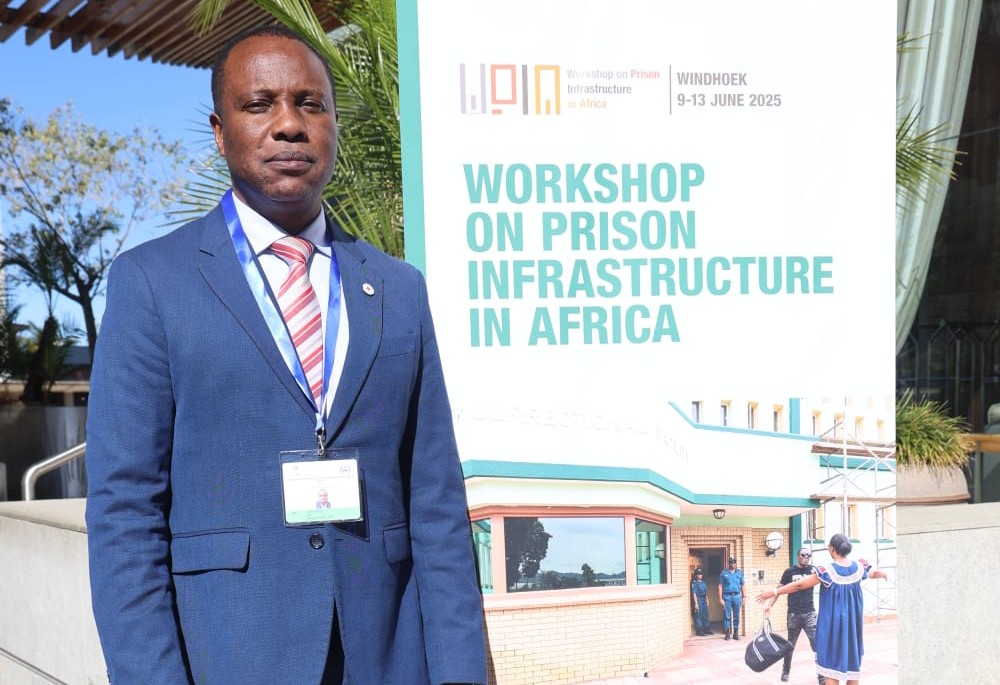
At the Fifth Regional Workshop on Prison Infrastructure in Africa, held in Windhoek, Namibia, delegates confronted an enduring colonial legacy, the punitive nature of African prison systems.
They noted that most facilities were originally designed for control and confinement rather than rehabilitation, leaving a structural and philosophical challenge that persists to this day.
The delegates heard that across Africa, prison facilities remain dangerously overcrowded, with occupancy rates in many countries exceeding 170%. Poor ventilation, limited medical care, and inadequate rehabilitation programmes exacerbate the crisis, making reintegration nearly impossible.
Opening the workshop, Namibian Minister of Works and Transport Veikko Nekundi, standing in for his Home Affairs, Immigration, Safety and Security counterpart Lucia Iipumbu, spoke with striking clarity, emphasising that reform must go beyond infrastructure; it must shift the very purpose of incarceration.
Namibia’s model for rehabilitation
Since 2010, Namibia has pioneered correctional reform through evidence-based rehabilitation strategies. Legal frameworks like the Correctional Service Act of 2012 and infrastructure projects such as the Evaristus Shikongo and Hardap Correctional Facilities exemplify the country’s commitment to transformation. These facilities prioritise skills training, treatment programmes, and unit management systems designed to foster personal growth rather than institutional deprivation.
Commissioner-General Raphael Hamunyela acknowledged that retrofitting outdated prisons is costly, and national budgets must balance correctional priorities with other essential services. However, despite financial constraints, Namibia continues to embrace rehabilitative corrections as the only viable path forward, he stated.
Rehabilitation as a humanitarian imperative
Jules Amoti, Head of the International Committee of the Red Cross Regional Delegation for Southern Africa, framed prison reform as a moral and humanitarian issue. He reminded delegates that infrastructure is never neutral, it either perpetuates exclusion or fosters rehabilitation. Overcrowded prisons not only harm detainees and staff but also pose public health risks, as seen during the Covid-19 pandemic.
Amoti said prison reform requires more than new buildings; judicial efficiency, non-custodial sentencing, alternatives to incarceration, and robust health and social services are essential. Delegates at the workshop emphasised that African prison systems must move away from punitive models, prioritising rehabilitation, especially for vulnerable groups such as women, children, migrants, and persons with disabilities.
A continental commitment to dignity
With nearly 500 new prison facilities constructed across Africa in the past decade, the continent is taking steps toward reform. However, Amoti warned that infrastructure without human-centred philosophies risks replicating past harms. The workshop’s theme, “Rehabilitation philosophy: A driving force behind prison design,” underscored the urgent need for systemic change, zooming in on justice systems on transformation rather than punishment.
As the workshop concluded, delegates invoked the words of Nelson Mandela: “A nation should not be judged by how it treats its highest citizens, but its lowest ones.”


#Conviction
Get your news on the go. Click here to follow the Conviction WhatsApp channel