


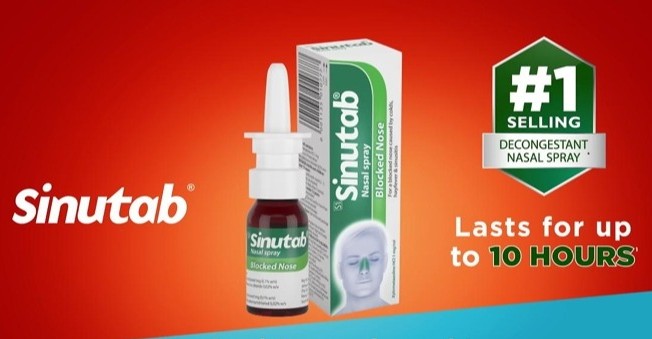
- Complaint lodged over Sinutab nasal spray advertisement.
- ARB rules ‘number one’ claim could mislead consumers.
- Company instructed to withdraw or amend all offending material.
Claims that Sinutab is South Africa’s “number one decongestant nasal spray” have been found to be misleading and inadequately substantiated by the Advertising Regulatory Board (ARB).
The consumer watchdog has ordered Johnson & Johnson to withdraw the ads in their current form after ruling that the bold slogans and barely legible disclaimers risked misleading consumers about the product’s market position.
The ruling followed a competitor complaint lodged by Procter & Gamble South Africa, manufacturer of rival brand Iliadin.
The case centred on YouTube commercials prominently displaying the claim “#1 SELLING DECONGESTANT NASAL SPRAY” alongside a voice-over stating “Sinutab. Number one decongestant nasal spray.” Procter & Gamble argued that market data from IQVIA covering October 2023 to September 2024 showed Iliadin outselling Sinutab in both volume and value. It also argued that the on-screen disclaimer was far too small to be meaningful to viewers.
Johnson & Johnson countered that its claim was based on sales of a single stock-keeping unit (SKU), Sinutab Nasal Spray 0,1% 10ml, which it said outsold any other individual SKU in the nasal decongestant category. It stressed that its comparison was by units sold, not revenue, and relied on an internal analysis of IQVIA data to back this position.
Why the evidence fell short
The ARB noted that the figures cited did not appear in the substantiating documents provided, that the sales data was nearly two years old, and that IQVIA had not independently endorsed the claim. Crucially, it found that consumers would interpret the “number one” statement as meaning Sinutab led the entire nasal spray category, a claim not supported by the data.
While Sinutab’s 10ml spray may have been the top-selling single product, Iliadin’s full range of sprays sold far more units overall. This meant the ads communicated a broader market dominance than the evidence supported.
Disclaimers too small to read
The ruling also criticised the commercial’s disclaimer, which appeared in tiny text for just a few seconds. The Board found that even if a viewer could read it, it was filled with technical jargon and failed to explain that the claim referred only to the 10ml SKU. Under advertising rules, disclaimers must be visible, clear, and remain on screen long enough to be read — standards this ad did not meet.
The ARB instructed Johnson & Johnson to withdraw or amend the claim in all media immediately and warned members not to carry the current version until it is properly substantiated.
Conviction.co.za
Get your news on the go. Click here to follow the Conviction WhatsApp channel.


