


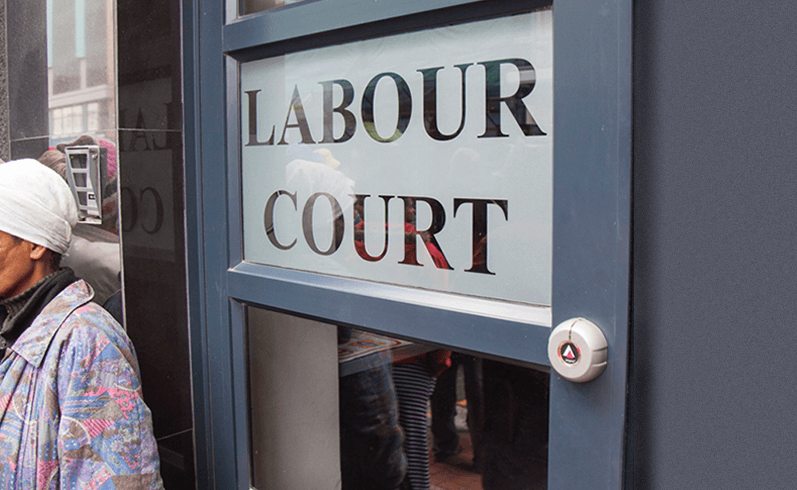
- Judge Kroon compared an attorney blaming a secretary for a failed case to a surgeon blaming a nurse for removing the wrong organ.
- The court found that legal practitioners remain responsible for supervising litigation and complying with court rules.
- A reinstatement application was dismissed with punitive costs; aspects of the matter were referred to the Legal Practice Council.
An attorney who blames a secretary for a failed case is no different from a surgeon who hands an operation over to a nurse and then blames her when the wrong organ is removed.
That was the warning from Acting Judge PN Kroon in a strong judgment that criticised legal practitioners for trying to avoid responsibility for a collapsed review application.
“An attorney who assigns to a secretary a legal task requiring the attorney’s professional judgment, diligence, and supervision, and who, when things go wrong, shifts the blame to the secretary stands in no different position than a surgeon who gives the job of performing an appendectomy to a nurse, only to blame her when the wrong organ is taken out,” Judge Kroon stated.
“The fault lies not with the subordinate’s failure, but with the professional’s abandonment of his own untransferable duty.”
The comments came in a dispute involving Benteler South Africa, which sought to revive a review application challenging an arbitration award. The award found the dismissal of employee Chris Langbooi to be unfair and ordered his reinstatement.
The responsibility lies here
Citing former US President Harry Truman’s famous saying, “the buck stops here,” the judge noted the attorney responsible for prosecuting the review application seemed to believe that the responsibility lay elsewhere.
“For him, the buck stopped elsewhere. It stopped with a supposedly negligent secretary who, he claimed, failed to properly monitor and supervise the file,” the judgment states.
Judge Kroon explained that while legal secretaries often provide valuable help, attorneys must not delegate tasks needing their professional judgment and oversight.
“The lesson is that, while many legal secretaries are very competent and offer essential support in running a legal practice, attorneys must be careful not to pass off tasks that require their independent judgment and thought,” said the judge.
Years of procedural failures
The court noted that Benteler’s review application was filed almost two months late and without a condonation application.
Further delays occurred when the record was not submitted within the required time periods, causing the review application to lapse.
Benteler later sought to have the matter reinstated, but the court found that even if reinstatement were allowed, the review would still face a jurisdictional issue because no condonation application had ever been submitted for the late review.
Judge Kroon deemed the omission fatal. The court also determined that Benteler had not put its “house in order” before seeking reinstatement. Important documents were missing, procedural requirements were unmet, and the case was not ready for adjudication.
Secretary made a scapegoat
Central to the application was an explanation from attorney Johan Biggs, who claimed that a secretary had failed to monitor the file correctly and had falsely informed him that the case was awaiting a hearing date. The court rejected this explanation.
Judge Kroon found that the attorney had effectively delegated responsibility for managing the litigation to support staff and then blamed a secretary when the review application failed.
The judgment examined an office system where secretaries monitored files, updated litigation diaries, and tracked the progress of review applications.
Judge Kroon stated that such arrangements could not relieve attorneys from their professional obligations.
“Delegation does not remove responsibility; nor does it justify an attempt to shift blame to a subordinate member of staff for tasks that remained, throughout, the attorney’s responsibility,” he said.
The judge noted that attorneys must ensure litigation is progressing accurately, that court rules are followed, and that deadlines are met.
Professional oversight questioned
The judgment expressed concern that the attorney in charge of the case had little direct knowledge of the file’s contents.
Judge Kroon found that the review application suffered from a complete lack of professional oversight and deemed the explanation for the delays unreasonable.
The court pointed out that the review application had effectively been neglected for long periods. Action was only taken after contempt proceedings were initiated to enforce the arbitration award.
The judge remarked that this case highlighted the dangers of treating litigation as an administrative task instead of a professional duty that requires active supervision by attorneys.
Punitive costs and referral
Judge Kroon ultimately dismissed the application to reinstate the review.
The court ordered Benteler to pay costs at an attorney-and-client scale and stated that the company’s attorneys could not charge fees for the heads of argument filed in the matter.
The judgment also raised concerns regarding the conduct of the legal representatives and ordered those issues to be referred to the Legal Practice Council for review.
Get your news on the go. Click here to follow the Conviction WhatsApp channel.


