


- Clement Jeremiah Williams was dismissed after the City accused him of illegally bypassing an electricity meter and accepting R1,800.
- An arbitrator found his dismissal substantively and procedurally unfair and ordered his retrospective reinstatement.
- Judge Lagrange dismissed the City’s review application, leaving the reinstatement intact.
The City of Cape Town has failed to overturn the reinstatement of a fleet coordinator who was dismissed after allegations that he accepted R1,800 to tamper with an electricity meter.
Clement Jeremiah Williams, who had worked for the City for about 14 years, was dismissed on 10 November 2023 after being accused of installing an illegal electricity bypass at a resident’s home in Ottery in April 2015. Williams denied the allegation and said another man, Abrahams, was responsible.
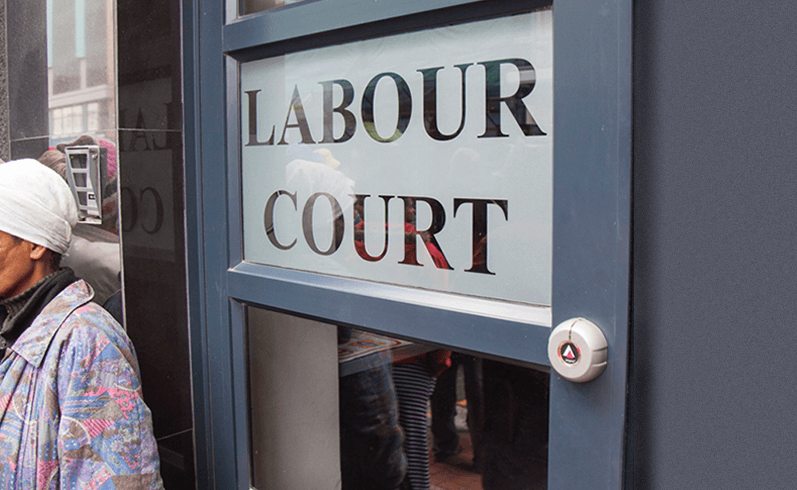
In a judgment delivered on 18 August 2026 by the Labour Court in Cape Town, Judge R Lagrange found serious flaws in the arbitrator’s treatment of hearsay evidence but held that a reasonable arbitrator could still have excluded that evidence and found the dismissal unfair.
Disputed evidence led to dismissal
The City said resident Hendricks identified Williams as the person who installed the bypass and paid him R1,800. Its evidence included Hendricks’s identification of a person named “Clement,” a cellphone number and address matching Williams, an identification from a photograph, and vehicle tracking data that placed a municipal vehicle allocated to Williams in the area.
Williams acknowledged knowing Hendricks through motor vehicle parts and car-related activities but denied carrying out the work. He said the tracking data did not prove he had stopped at Hendricks’s home. He also said Abrahams had admitted carrying out the electrical bypass. Abrahams did not testify, and the arbitrator excluded the alleged recording of their conversation.
Hendricks also did not testify at the arbitration. The City said he was reluctant to do so because his daughter had allegedly been threatened by Williams. The arbitrator found contradictions in the investigators’ evidence about how Hendricks obtained Williams’s details, and accepted Williams’s explanation of their prior relationship as plausible. There was also no independent evidence that Williams had received the alleged R1,800.
Arbitrator found dismissal unfair
The arbitrator found the dismissal substantively and procedurally unfair and ordered Williams’s retrospective reinstatement. He rejected Hendricks’s hearsay evidence as unreliable and found that the investigation had been poorly conducted.
The City then approached the Labour Court to review the award, arguing that the arbitrator had mishandled its evidence and misapplied section 3 of the Law of Evidence Amendment Act. Judge Lagrange agreed that the arbitrator had made errors.
The arbitrator initially admitted Hendricks’s statements but later rejected them without properly applying the statutory hearsay test. He also excluded Abrahams’s alleged conversation but relied on its substance when assessing Williams’s defence. The judge found this approach inconsistent.
Court finds hearsay could still have been excluded
Despite these errors, Judge Lagrange found that a reasonable arbitrator could still have excluded Hendricks’s evidence. The vehicle tracking report did not show that Williams’s vehicle had stopped at Hendricks’s property. It only showed movement in the southern suburbs during the relevant period.
There were also contradictions about how Hendricks obtained Williams’s contact details. Williams worked as a fleet coordinator rather than in electrical services, and there was no evidence that he had the expertise to install or bypass an electricity meter.
Judge Lagrange held that, without the hearsay evidence, the City was essentially left with proof that Williams had been driving near Hendricks’s home. “That evidence alone is obviously insufficient to prove on a balance of probabilities that Williams had tampered with the meter,” the judge found.
Delay also supported finding of unfairness
The court also considered the lengthy delay between the alleged misconduct and disciplinary action. The City said the tampering was only discovered in 2019 and that the investigation was affected by its complexity, the Covid-19 pandemic, and an investigator leaving the forensic department.
Judge Lagrange accepted that some delay was understandable but questioned why the investigation took until 2023 to finalise. “No proper explanation was provided to justify the delay from 2020 until September 2023,” the judge said.
Williams had complained that the passage of time made it difficult to remember events accurately. Judge Lagrange found it was therefore open to the arbitrator to conclude that the delay had prejudiced Williams and contributed to procedural unfairness.
City’s review application dismissed
Judge Lagrange concluded that, despite “considerable flaws” in the arbitrator’s reasoning, there was no basis to interfere with the outcome.
“Despite considerable flaws in the arbitrator’s own reasoning process,” the judge held, “it would have been perfectly possible for another arbitrator to justifiably conclude that the hearsay evidence tendered by the City should not have been admitted.”
Without that evidence, the City had not proved that Williams was responsible for the electricity tampering. The Labour Court dismissed the City’s review application, leaving Williams’s retrospective reinstatement intact.
Judge Lagrange made no order as to costs.
Get your news on the go. Click here to follow the Conviction WhatsApp channel.


