


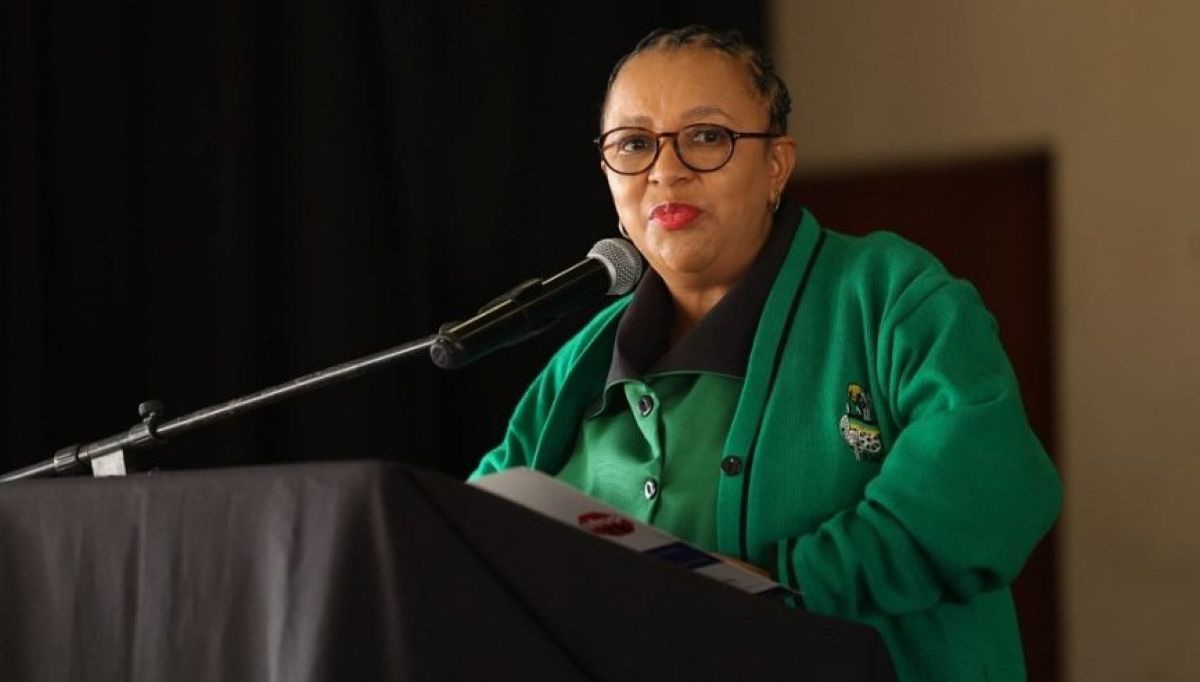
- The High Court in Bloemfontein set aside the Premier’s failure to decide on Gaboilelwe Moroka’s recognition as Kgosi.
- Judges held that the Premier had a statutory duty to decide once the royal family submitted its identification.
- The matter was remitted to the Premier, who must deal with the recognition process within 30 days.
The High Court in Bloemfontein has ordered the Premier of the Free State to decide on the recognition of Gaboilelwe Moroka as Kgosi of the Barolong Boo Seleka Traditional Community. The court ruled that the failure to make a decision was unlawful.
Judge PE Molitsoane, with Judge C Reinders concurring, delivered the judgment on 5 August 2026. The review application was brought by Moroka and the Barolong Boo Seleka Royal Family Council against the Premier of the Free State, the MEC for Cooperative Governance and Traditional Affairs, the Free State Provincial House of Traditional and Khoi-San Leaders, the Barolong Boo Seleka Traditional Council and Archibald Letshego Moroka.
The court reviewed and set aside the Premier’s failure to take a decision and ordered that the matter be dealt with within 30 days of service of the order. The Premier was also ordered to pay the applicants’ costs, including the costs of two counsel on Scale C.
Background to the dispute
The judgment records that the Barolong Boo Seleka leadership dispute dates back to the 1880s, when the traditional leadership moved from one lineage to another after Kgosi Moroka II appointed Tshipinare as his successor.
The court referred to the Supreme Court of Appeal’s earlier account of the dispute and noted that the Tshipinare lineage had exercised traditional leadership until the death of Kgosi Ramokgopa Moroka in 2011.
After his death, competing factions emerged within the royal family, leading to litigation and challenges to provincial recognition decisions. The court noted that the Supreme Court of Appeal had previously set aside the findings of the Tolo Commission and the Premier’s acceptance of those findings.
Identification of Moroka as Kgosi
Moroka was recognised by the Premier as Motshwaredi (Regent) on 10 June 2022. She stated that the royal family later identified her as the successor to the position of Kgosi and that a customary coronation took place on 10 September 2022.
On 24 April 2024, the Barolong Boo Seleka Royal Family Council resolved to identify her as Kgosi. A formal request was sent to the Premier on 26 April 2024 asking that she be recognised in terms of Section 18 of the Free State Traditional Leadership and Governance Act.
The request stated that Kgosi Gaboilelwe Moroka is identified as Kgosi (Senior Traditional Leader) of the Barolong Boo Seleka of Thaba Nchu. The royal family further requested the Premier to take the required steps to recognise Kgosi Gaboilelwe Moroka as Kgosi (Senior Traditional Leader).
Premier requested clarity
The Premier did not decide on the request. Instead, the office asked for clarity about an earlier 2022 resolution in which Moroka had been identified as regent for an heir who was allegedly a minor.
The Premier asked the royal family to advise on the position and status of the identified heir. The royal family responded that the earlier regency resolution did not apply to their application for recognition and maintained that the current application concerned Moroka’s identification as Kgosi.
It also declined to disclose information about any heir, stating that royal family matters are private and sacred and are handled in confidentiality and in compliance with customary law, customs and traditions. Further correspondence followed, including requests for meetings and follow-up letters.
Opposition by Archibald Letshego Moroka
Archibald Letshego Moroka opposed the application. He argued that Barolong customary succession is based on male primogeniture and that only male descendants of the royal family may become Kgosi.
He also disputed Moroka’s claim that she descends from Tshipinare, contending that Tshipinare was not the son of Kgosi Moroka II. According to him, he was the direct male descendant entitled to the throne.
The court did not determine that dispute and held that the issue of the chieftainship remains unresolved.
Court rejects standing challenge
The court rejected the Premier’s challenge to Moroka’s standing to bring the application. Judge Molitsoane held that she was acting in her personal capacity and had the necessary legal capacity to litigate.
The court also held that the earlier High Court and Supreme Court of Appeal rulings did not finally determine which royal house is entitled to the Barolong Boo Seleka chieftainship.
Regency does not create entitlement to kingship
Judge Molitsoane held that recognition as regent does not create a legitimate expectation of becoming Kgosi. The position of Motshwaredi is distinct from the position of a Kgosi, the judge said.
The court did not decide whether a woman may be recognised as Kgosi of the Barolong Boo Seleka. Referring to constitutional jurisprudence on male primogeniture, the judge observed that the notion appears not to accord with the development of customary law on the very system of primogeniture.
Failure to take a decision
Moroka relied on Section 6(2)(g) of the Promotion of Administrative Justice Act, which allows a court to review an administrator’s failure to take a decision where there is a legal duty to do so.
Judge Molitsoane held that once the royal family had identified a person and submitted the request for recognition, the Premier was required either to recognise that person or to invoke the statutory mechanisms available where there is evidence that the identification was not in accordance with customary law.
The Premier is obliged to decide to recognise the applicant as Kgosi upon identification unless the Premier holds that she or he ought to act in terms of Section 18(6) of the Free State Act, the judge wrote.
The court added that the Premier cannot just decide to remain silent, even in the face of follow-up requests for progress by the Royal Family.
Coronation attendance considered
The court noted that provincial officials, including the then Director-General, attended Moroka’s customary coronation. Judge Molitsoane said this “irrefutably confirms that the applicant was identified to ascend the throne as Kgosi”.
Matter sent back to the Premier
Moroka asked the court to grant the recognition directly. The judges declined to do so, holding that substitution is appropriate only in exceptional circumstances.
Because the dispute about the royal lineage and succession remains unresolved, the court held that the proper course was to remit the matter to the Premier.
Judge Molitsoane concluded that the failure of the Premier to deal with the application in terms of section 18 of the Free State Act is unlawful and has to be reviewed and set aside.
The judge added that the identification of a Kgosi is the prerogative of the royal family through the customary identification process.
The order
The court ordered that the Premier’s failure to take a decision on Moroka’s recognition as Kgosi be reviewed and set aside. The matter was remitted to the Premier to take a decision and deal with the identification within 30 days.
The Premier was ordered to pay the applicants’ costs on scale C, including the costs of two counsel where employed.
Get your news on the go. Click here to follow the Conviction WhatsApp channel.


