






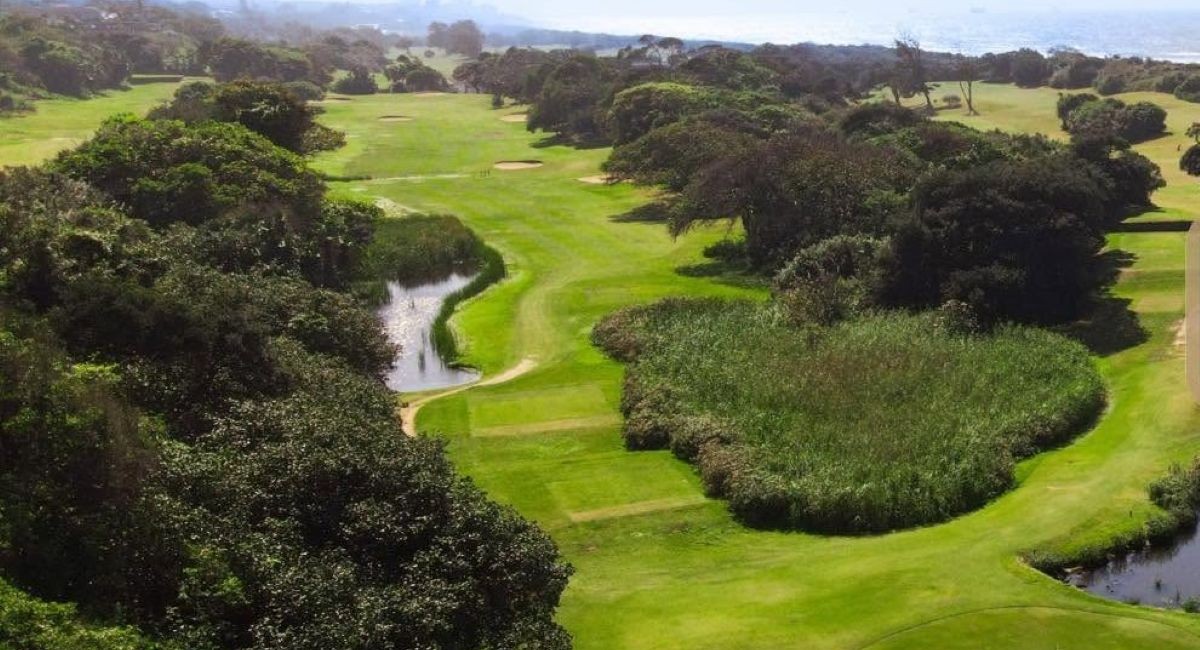
- The former Beachwood Golf Course covers more than 42 hectares and was sold for R108 million in 2017.
- The residents and Friends of Beachwood challenged environmental approval and several municipal decisions linked to the proposed development.
- The court dismissed the main review application, and the environmental and municipal approvals remain in place.
Residents and the Friends of Beachwood have taken on plans to turn the former Beachwood Golf Course in Durban North into a development that would include residential and tourism facilities.
This property, spanning more than 42 hectares, lies between Virginia Airport and the Beachwood Mangrove Nature Reserve. The sea forms its eastern boundary, while the M4 is close to the west. The golf course was established in the 1930s and remained until the Durban Country Club decided to sell in 2017. Beachwood Investments bought it for R108 million.
The proposed development needed environmental approval from KwaZulu-Natal provincial authorities as well as planning decisions from eThekwini Municipality. Friends of Beachwood and James Te Reile took part in those processes before taking the decisions to the High Court in Durban.
Environmental approval became a major point of dispute
The provincial authorities granted environmental authorisation in January 2021. The applicants appealed, but that appeal was dismissed in October 2021.
They argued that the approval was not final because the development layout could still change. Judge J Olsen rejected this because the developer had been allowed to begin work on the northern part of the property while more steps were needed for the southern section.
The applicants only brought their review challenge about two and a half years later, asking the court to excuse the delay. They said they believed the environmental approval was not yet final and wanted to avoid bringing several separate cases.
Judge Olsen did not accept this explanation. “I conclude that the applicants have provided no reasonable and acceptable explanation for their failure to launch judicial review proceedings against the provincial decisions on time,” he said.
Old restrictions stood in the way of development
The proposed development also required removing restrictive conditions attached to the property in 1949 and 1952. These conditions limited the use of the land and prevented flats, terrace houses, and most business activity.
The applicants argued that the restrictions protected the public value of the open space and that the municipality should have followed municipal finance rules before removing them.
Judge Olsen disagreed because the property was privately owned and the rights created by the restrictions benefited other properties. “The public enjoyment of the environmental value of open space has no ‘market value’,” he said.
Municipality faced challenges over planning decisions
The applicants also challenged several municipal decisions linked to the development. These included the creation of a special Beachwood Coastal Estate zone, the subdivision of the property, and changes to road and parking servitudes.
They said the municipality had not properly considered the development’s impact on sewerage, stormwater, and roads. The court found that specialist reports were reviewed by the relevant municipal departments and that the applicants had not provided evidence showing those assessments were inadequate.
The applicants also challenged the municipality’s classification of Beachwood as a catalytic project. Judge Olsen found no evidence that this status allowed the development to bypass standard planning and environmental requirements.
Court leaves approvals in place
Judge Olsen refused to extend the period for challenging the provincial environmental decisions. He did allow an extension for the delayed challenge to the municipal council’s decision to amend the land use scheme and create the special zone.
That extension did not overturn the decision. The court dismissed the application to review and set aside the decisions of the provincial and municipal respondents. The environmental approval and municipal planning decisions remain in place.
The applicants were ordered to pay the provincial respondents’ costs for their unsuccessful application to excuse the delay. The municipal respondents were ordered to pay the applicants’ costs relating to the delayed challenge over the municipal council’s decision. There was no order as to costs on the main review application.
Get your news on the go. Click here to follow the Conviction WhatsApp channel.


