


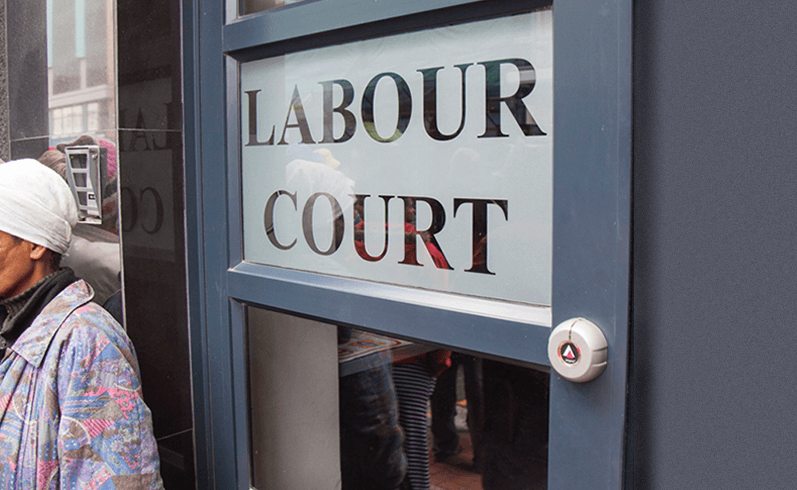
- Labour Court overturns arbitration award that reinstated a dismissed City of Cape Town employee.
- Judge says serious rape allegations cannot be rejected simply because the complainant did not testify.
- Employee remains dismissed but receives one month's compensation for procedural unfairness.
A Labour Court judge has warned that serious rape allegations cannot simply be discarded because a complainant does not testify during arbitration proceedings. The judge said commissioners must properly assess all the available evidence before deciding whether a dismissal was fair.
The ruling came as the Labour Court overturned an arbitration award reinstating a City of Cape Town employee dismissed after allegations that he kidnapped and raped a young woman. Judge T Gandidze found the commissioner reached an unreasonable decision by accepting the employee's contradictory evidence while discounting other evidence before the arbitrator.
The judgment means the employee will not return to work after the court substituted the arbitration award with a finding that his dismissal was substantively fair. However, the court upheld an earlier finding that the disciplinary process was procedurally unfair and awarded him one month's salary as compensation.
Dismissal followed serious allegations
The employee, a general worker employed by the City of Cape Town, was dismissed in 2021 after being charged with serious misconduct arising from allegations that he kidnapped and raped a 20-year-old woman in Dunoon. The City alleged that his conduct had brought the municipality into disrepute.
Although the related criminal case was provisionally withdrawn because the complainant could not be traced, the City proceeded with disciplinary action. The employee was found guilty and dismissed before referring an unfair dismissal dispute to the South African Local Government Bargaining Council.
The commissioner found the dismissal both substantively and procedurally unfair and ordered the employee's retrospective reinstatement.
City challenges reinstatement
The City approached the Labour Court in Cape Town seeking to review and set aside the arbitration award. It argued that the commissioner had failed to properly assess the hearsay evidence, medical evidence and the competing versions presented during the arbitration.
The South African Municipal Workers Union (SAMWU), representing the employee, argued that the arbitration award was reasonable and should not be interfered with on review.
Commissioner failed to assess the evidence
Judge Gandidze found that the commissioner failed to properly assess witness credibility, reliability and the probabilities before accepting the employee's version. "I have no hesitation in finding that the commissioner failed to assess the credibility and reliability of witnesses or the probabilities," the judge said.
The court found the employee repeatedly changed his version of events. He initially described the complainant as his girlfriend, later referred to her as an ex-girlfriend and ultimately claimed during the arbitration that the sexual intercourse had been consensual.
Judge Gandidze concluded, "The employee was not a credible or reliable witness… His account that the sexual intercourse was consensual, an afterthought proffered at the eleventh hour, fell to be rejected."
Complainant's absence did not end the enquiry
A central issue before the Labour Court was that the complainant did not testify during the arbitration because she could not be traced.
Judge Gandidze found that although the commissioner admitted the complainant's hearsay evidence, he effectively discounted it because she was unavailable for cross-examination. The court also found the commissioner wrongly criticised the City for not calling additional witnesses despite evidence that the investigating officer had been unable to locate the complainant.
Delivering the key message of the judgment, Judge Gandidze said, "It cannot be that serious allegations of rape are thrown out simply because a complainant did not appear to testify during arbitration proceedings, while all other evidence presented points to the conclusion that it is more probable that a complainant was raped than that she consented to sexual intercourse."
The judge said the commissioner failed to appreciate that the absence of the complainant did not end the enquiry. Instead, the evidence had to be assessed as a whole, including the medical evidence, the hearsay evidence that had been admitted and the employee's own contradictory explanations.
Dismissal restored
Rather than sending the matter back to the bargaining council for another hearing, Judge Gandidze substituted the arbitration award with a finding that the employee's dismissal was substantively fair.
The finding that the disciplinary process was procedurally unfair was not challenged by the City and therefore remained in place. The employee was awarded one month's salary as compensation for that procedural unfairness.
Each party was ordered to pay its own costs.
Get your news on the go. Click here to follow the Conviction WhatsApp channel.


