


- The Constitution Twenty Fourth Amendment Bill, 2026, aims to change sections 47, 106, and 158 of the Constitution.
- Former judges removed for serious misconduct and Chapter 9 office bearers removed for misconduct would be ineligible for elected office.
- The Bill notes no financial impact on the State and states that no consultations were conducted.
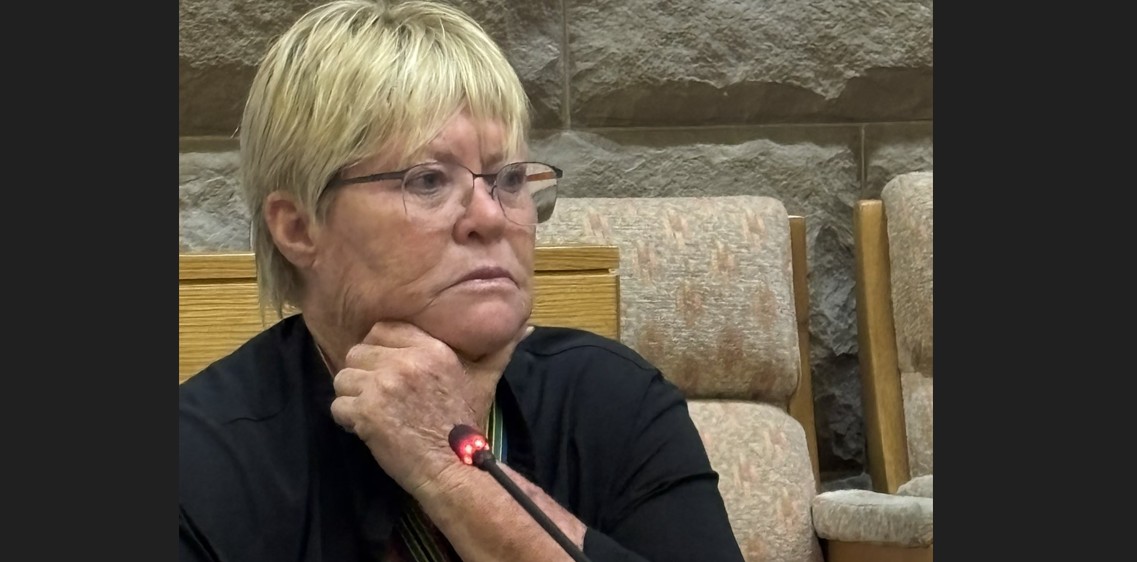
A constitutional amendment Bill introduced in the South African Parliament by DA MP Advocate Glynnis Breytenbach seeks to add a new group of people who would be barred from holding elected office.
The Constitution Twenty Fourth Amendment Bill, 2026, introduced in the National Assembly under Section 74(3)(b) of the Constitution, proposes changes that would stop certain former judges and Chapter 9 office bearers removed for misconduct from later serving in Parliament, a provincial legislature, or a Municipal Council.
The memorandum on the Bill’s objectives states that it aims to amend the Constitution to declare that a former judge or a person appointed under Chapter 9 who was previously removed from office by the President due to gross misconduct or misconduct is not eligible to be a member of Parliament, a provincial legislature, or a Municipal Council.
Proposed constitutional changes
Clause 1 suggests an amendment to Section 47 of the Constitution, which governs membership of the National Assembly. The amendment would add a new Paragraph (f) to Section 47(1), reading, “any former judge who, on the ground of gross misconduct, or any person appointed under Chapter 9 who, on the ground of misconduct, was removed from office by the President according to the Constitution.”
This wording would make these individuals ineligible to become members of the National Assembly.
Clause 2 mirrors this amendment in Section 106 of the Constitution, which governs membership of provincial legislatures. It adds the same Paragraph (f), meaning that former judges removed for serious misconduct and Chapter 9 office bearers removed for misconduct would also be barred from provincial legislatures.
Clause 3 amends Section 158(1)(c), which addresses disqualification from Municipal Councils. This section would be updated so that anyone disqualified under Section 47(1)(c), (d), (e), or the new Paragraph (f) would also be disqualified from serving as a councillor.
The practical result is that the proposed constitutional bar would apply across all three levels of elected representation covered by the Bill: national, provincial, and local government.
Memorandum details
The memorandum states that the Bill has no financial implications for the State. It also notes that no consultations occurred before its introduction.
Regarding parliamentary procedure, the sponsoring member indicates that the Bill must be addressed according to Section 74(3)(b) of the Constitution since its goal is to change provisions in Chapter 4 and Chapter 6 of the Constitution.
The memorandum also mentions that the Bill may be sent to the National House of Traditional and Khoi San Leaders under Section 39(1)(a) of the Traditional and Khoi San Leadership Act, 2019, as it includes provisions related to a matter mentioned in Section 154(2) of the Constitution.
If enacted, the Constitution Twenty Fourth Amendment Act, 2026, will take effect on a date set by the President through proclamation in the Gazette.
Get your news on the go. Click here to follow the Conviction WhatsApp channel.


