


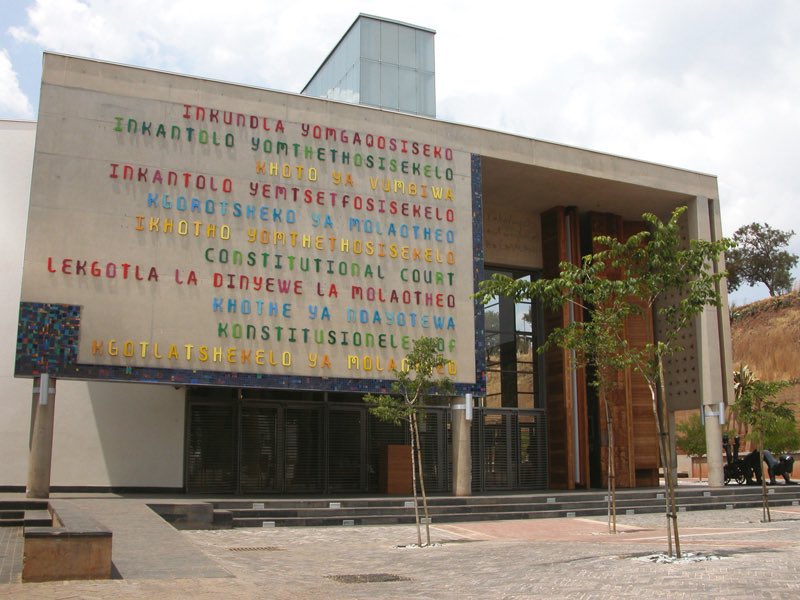
- The Constitutional Court has upheld most of the Copyright Amendment Bill and the Performers' Protection Amendment Bill.
- Fair use and several new copyright exceptions have survived constitutional scrutiny.
- Parliament must amend part of the education exception before these Bills can become law.
The Constitutional Court has upheld most of South Africa's proposed copyright reforms. This clears the way for Parliament to move forward with the Copyright Amendment Bill and the Performers' Protection Amendment Bill, as long as limited amendments are made to the education provisions.
President Cyril Ramaphosa referred the Bills to the Constitutional Court after raising concerns about their constitutionality, instead of signing them into law. He questioned whether some provisions on royalty sharing, fair use and copyright exceptions complied with the Constitution and South Africa's international obligations.
In the majority judgment, Justice M Mhlantla found that most of the President's constitutional concerns were unfounded. However, the apex court did find that part of the proposed education exception would lead to an arbitrary deprivation of property.
Fair use survives constitutional scrutiny
One of the most significant aspects of the judgment is the introduction of a fair use exception into South African copyright law.
The Constitutional Court rejected arguments that this provision unlawfully deprives copyright owners of their property rights and held that the proposed fair use system is constitutionally valid.
Justice Mhlantla explained, "The fair use exception in Section 12A of the Copyright Amendment Bill is not arbitrary. It does not infringe the right to property under Section 25(1) of the Constitution and is constitutional."
The court also upheld Sections 12B and 12C of the Copyright Amendment Bill, along with sections 19B and 19C, finding that these provisions do not amount to an arbitrary deprivation of property.
Justice Mhlantla explained that copyright is protected by the Constitution but emphasised that it must be balanced against other constitutional rights, such as access to education, access to information, and the rights of people with disabilities.
Parliament must rewrite education provisions
However, the Constitutional Court found that Sections 12D(1) to 12D(5), which create exceptions for educational and academic use of copyrighted material, go too far.
The majority held that these provisions amount to an arbitrary deprivation of property and therefore cannot remain in their current form.
Justice Mhlantla stated, "The exceptions in subsections 12D(1)-(5) of the Copyright Amendment Bill amount to an arbitrary deprivation of property under section 25(1) of the Constitution and are unconstitutional."
Despite this, the court upheld Sections 12D(6) to 12D(9), finding that these provisions are more narrowly framed and remain constitutionally valid.
President's referral partly unsuccessful
The President also asked the Constitutional Court to rule on the proposed royalty-sharing provisions in Sections 6A, 7A and 8A of the Copyright Amendment Bill.
The Constitutional Court declined to rule on these issues, finding that the referral was procedurally incompetent because Parliament had already addressed the President's original constitutional objections when it reconsidered the Bills.
Justice Mhlantla wrote in the judgment, “The referral by the President in terms of Section 79 of the Constitution, regarding Sections 6A, 7A and 8A of the Copyright Amendment Bill, 2017 as a whole, is incompetent."
Narrow disagreement within the Court
Justice LTC Harms agreed with almost all of the judgment but disagreed with the finding that sections 12D(1) to 12D(5) are unconstitutional. "The divergence in our two judgments may be narrow, but it is crucial because subsections 12D(1)-(5) are the only provisions that the main judgment finds unconstitutional," Justice Majiedt said.
He concluded that the education provisions also comply with the Constitution and that the Copyright Amendment Bill and the Performers' Protection Amendment Bill should have passed constitutional scrutiny in full.
Long legislative process continues
The Copyright Amendment Bill and the Performers' Protection Amendment Bill were first published for public comment in 2015, before being introduced in Parliament in 2017.
Parliament passed the Bills in 2019, but President Ramaphosa sent them back to Parliament in 2020 due to concerns about their constitutionality. After more public participation and amendments, the revised Bills went back to the President, who then referred the remaining constitutional questions directly to the Constitutional Court.
The judgment now leaves Parliament with the specific task of amending the unconstitutional education provisions before the Bills can be presented to the President for approval.
Get your news on the go. Click here to follow the Conviction WhatsApp channel.


