






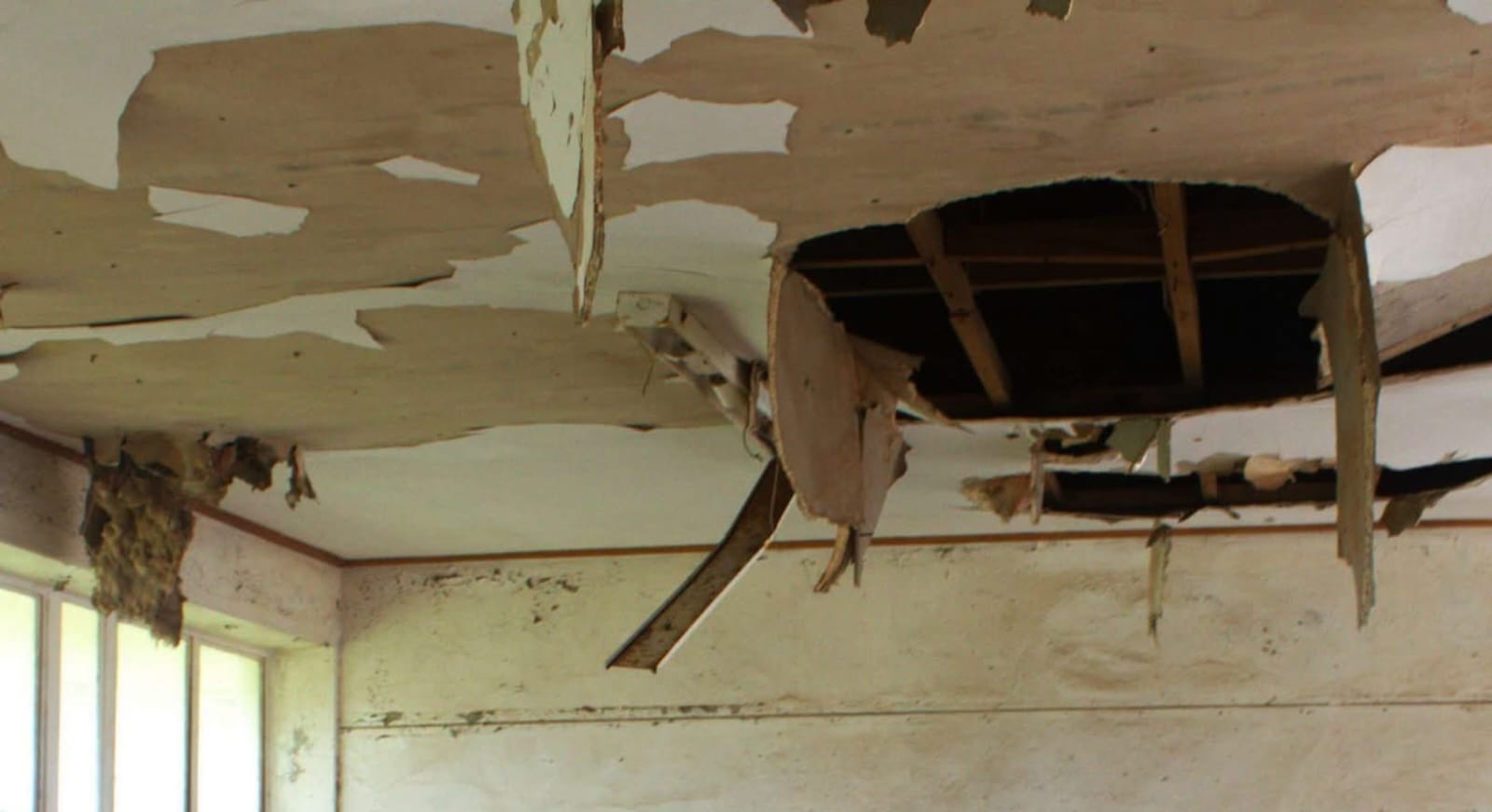
- The High Court in Makhanda has found that the Eastern Cape’s school funding cuts over the years were unconstitutional and invalid.
- Judge M Malusi struck down the province’s decision to withhold 33.75 percent of school allocations for the 2023/24 and 2024/25 financial years.
- The department now has to report to the court every three months until September 2027 to show that it is restoring lawful funding.
Thousands of learners across the Eastern Cape have won a landmark victory after the High Court in Makhanda ruled that the provincial government unlawfully deprived public schools of funding meant for textbooks, learning materials and essential day-to-day operations.
On 19 August 2026, Judge M Malusi made the order by agreement between all parties in a case brought by the Makhanda Circle of Unity and the governing bodies of Ntsika Secondary School, Hoërskool PJ Olivier, and Tyantyi Lower Primary School. The Legal Resources Centre joined as a friend of the court.
Court declares years of funding cuts unconstitutional
The case challenged the Eastern Cape Department of Basic Education’s decision to withhold more than a third of school funding and its ongoing practice of funding schools below the national minimum levels.
Judge Malusi said, "The decision of the first, second and third respondents, communicated to public schools in the Eastern Cape in May 2023, to withhold 33.75 percent of each school’s funding allocation for 2023/2024 is declared unconstitutional, unlawful and invalid."
He made the same finding for the following financial year, ruling, "The decision of the first, second and third respondents, communicated to public schools in the Eastern Cape in December 2023, to withhold 33.75 percent of each school’s funding allocation for 2024/2025 is declared unconstitutional, unlawful and invalid."
The judgment also covers earlier funding reductions. In the judgment, Judge Malusi said, "The decisions taken by the first, second and third respondents between 20 November 2020 and November 2022 to reduce the per learner funding allocations for public ordinary schools… are declared unconstitutional, unlawful and invalid."
The ruling makes it clear that years of reduced allocations violated the laws governing public school funding.
Government must prove it cannot afford the minimum
A key question for the court was whether the province could legally give schools less than the minimum funding set out in the National Norms and Standards for Public School Funding.
Judge Malusi said that paragraph 114(b) requires the government to show "that it is not financially possible to provide schools with at least the target per learner allocations in that financial year" before giving schools less than the prescribed minimum.
The court said that if the province cannot meet the funding targets immediately, it cannot simply cut funding. Instead, it must prepare a proper recovery plan that explains how the shortfall will be addressed as soon as possible.
Judge Malusi ruled that the joint plan must include the steps that will be taken, to the extent possible, to make up any shortfall at the earliest possible stage, making sure schools are not left indefinitely without the funding they are entitled to receive.
Schools must receive the recovery plan
The judgment also calls for greater transparency, requiring that schools be told whenever their funding is less than the national target.
Judge Malusi ruled that if a provincial education department publishes an allocation that is lower than the target, it must "at the same time as the school allocation, provide every public school with access to the joint plan" set out in the funding framework.
This means schools will be able to see the financial reasoning and the timetable for restoring the missing funding.
Poorer schools must come first
The High Court also clarified how limited education resources should be distributed when money is tight.
Judge Malusi said that paragraph 114(b) creates an ordering of priorities, such that in any year when it is not possible... to fund at least in accordance with the target, the provincial education department must prioritise Quintile 1 and 2 schools and learners from Grades 1 to 9.
This finding reinforces the principle that the province’s poorest learners must be protected first when education budgets are under pressure.
High Court retains supervision until 2027
Instead of just making a declaratory order, the High Court decided to keep overseeing how the ruling is implemented.
Judge Malusi ordered the respondents "to deliver written reports to this court... once per three-month period" starting on 1 September 2026 and continuing until 30 September 2027. These reports must explain what is being done to make sure every public school gets a 2027/28 allocation based on at least the minimum amount for its quintile and number of learners.
The applicants and the Legal Resources Centre can file responding affidavits and return to the High Court if more relief is needed.
Government ordered to pay costs
Judge Malusi ordered the first to fourth respondents to pay the costs of the application together, including the costs of two counsel on the C scale.
The judgment ends a long legal battle over school funding and confirms that provincial budget constraints cannot be used to justify unlawful cuts to the funding public schools are supposed to get.

Get your news on the go. Click here to follow the Conviction WhatsApp channel.


