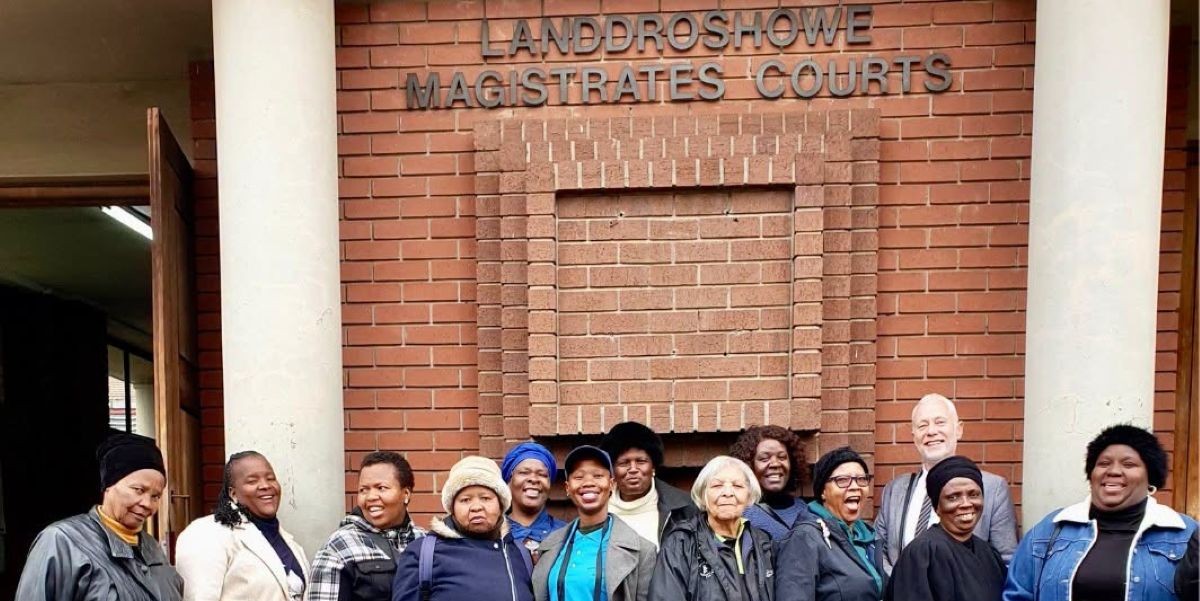
- Each of the three Orange Farm ECD principals faces a R5,000 fine for operating without the required City of Johannesburg permits.
- The case has been postponed to give Lawyers for Human Rights time to submit written arguments against the fines.
- LHR says almost half of the 200 ECDs in Johannesburg’s Region G are struggling to secure permits.
Lawyers for Human Rights (LHR) has shared an update on these three Orange Farm principals who are facing fines for operating without official City of Johannesburg permits.
The organisation is representing the principals and wants to draw attention to the many obstacles ECD centres in townships and informal settlements face.
The case was heard in the Vereeniging Magistrates’ Court on Wednesday, 30 September 2026. The court granted a postponement so LHR can submit written reasons explaining why the fines should be withdrawn. If these submissions are not accepted, the case will go to trial on 11 November 2026.
Permit requirements create wider difficulties
LHR says the three principals are not alone in their struggle. The Sisonke ECD Forum, which represents ECDs in Johannesburg’s Region G, including Orange Farm, estimates that nearly half of its 200 members are struggling to get permits.
LHR has identified several requirements that are especially difficult for less affluent ECDs to meet. These include providing a title deed or rental agreement, professionally drawn building plans, and paying various fees to different City departments.
For ECDs in informal settlements or unproclaimed township areas, getting the necessary title deeds or rental agreements is often impossible. The cost of professionally drawn building plans is also beyond reach for many centres.
Paying fines does not resolve the permit problem
LHR says the problem goes beyond just paying the fine. Even after paying R5,000, a principal still does not have the required permit and could still be shut down, LHR said in a statement.
The organisation adds that these centres try to follow health inspectors’ recommendations whenever possible, but this does not solve the separate problem of getting a permit. LHR argues that many of the requirements stopping centres from getting permits are not essential for the health and safety of children.
Permit barrier affects access to funding
LHR has also raised concerns about how the permit requirement affects access to government funding. ECDs without a City permit are not eligible for Department of Basic Education grants, leaving them unable to get the funding that could help them meet the City’s requirements.
As a result, LHR says ECDs are caught in a cycle. They struggle to get permits, face enforcement action, and remain unable to access the resources that would help them improve their centres.
LHR says regulatory system is at fault
David Dickinson, an attorney at LHR, says the City’s requirements are extremely difficult for ECDs in townships and informal settlements to meet.
“Many ECDs in townships and informal settlements can’t meet the City of Johannesburg’s requirements,” Dickinson said. “These are the same whether the ECD is in Sandton or an informal settlement.”
Dickinson believes the problem lies with the regulatory system, not with the principals running the centres. “It is the regulatory system that is at fault, not the ECD principals who are doing their best in impoverished communities to provide care and early childhood development,” he said.
Get your news on the go. Click here to follow the Conviction WhatsApp channel.