


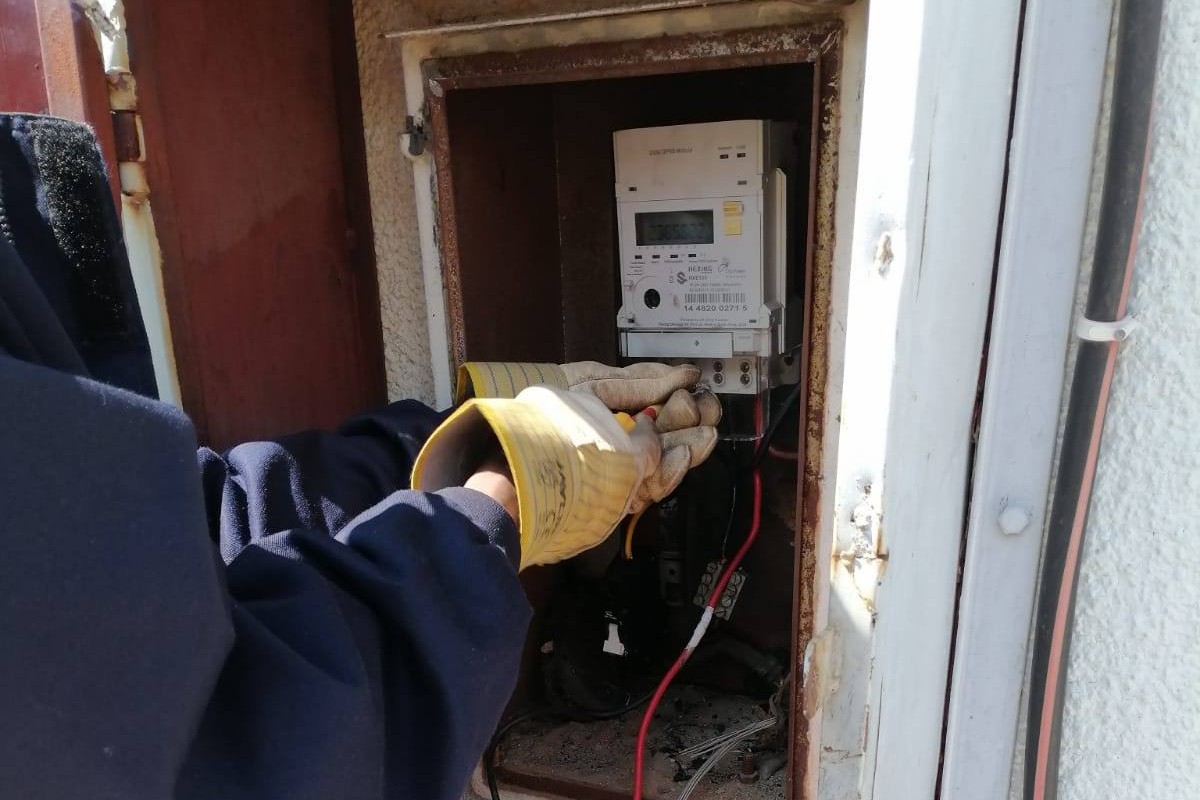
- The court found that eThekwini Municipality acted lawfully when it disconnected the electricity and imposed higher rates, rejecting the trustees' arguments.
- The court did not accept the applicants' claim that they had no involvement in the illegal development next to their property.
- The court dismissed the application with punitive legal costs, finding the process had been abused.
eThekwini Municipality has been vindicated for disconnecting electricity to a commercial property after the High Court in Durban found it acted lawfully in enforcing municipal regulations against an illegal development built on protected land.
Acting Judge P Wallis dismissed an urgent application brought by Mohamed Eidris Vawda, Zakariya Eidris Vawda and Eidris Mohamed Vawda, the trustees of the Zikr and Shukr Trust, who sought to compel the municipality to reconnect electricity and reverse a decision to impose punitive rates on the property. The judge also ordered the trustees to pay the municipality's legal costs on an attorney-and-client scale.
Trustees challenged the electricity disconnection
The dispute arose after eThekwini Municipality determined that the trust was responsible for an unauthorised multi-storey concrete structure built behind its commercial property on Umgeni Road. The development required excavation into Burman Bush, a protected municipal nature reserve.
Following inspections, the municipality reclassified the property's rates category to "unauthorised/illegal development use", resulting in substantially higher rates. When those charges remained unpaid, electricity to the property was disconnected.
The trustees approached the court on an urgent basis, arguing that the municipality had acted unlawfully by changing the rates category and disconnecting electricity without complying with the requirements of procedural fairness. They contended they had not been afforded proper notice before the decisions were taken and sought an order restoring electricity while asking the court to set aside the rates reclassification.
Municipality explained enforcement actions
The municipality told the court it had inspected the property on several occasions after discovering the unlawful development, issued stop-work notices, warned the trustees that non-compliance could result in increased rates and continued engaging with them through correspondence.
It said further inspections confirmed that the unlawful construction continued, after which the property's rates category was amended, and supplementary valuation notices were issued. Municipal accounts also warned that electricity services would be terminated if outstanding amounts were not paid.
The municipality maintained that the trustees had actual knowledge of its decisions and that the electricity disconnection followed their failure to pay the penalty rates.
Court rejected the applicants' version
A central issue before the court was the trustees' insistence that they had no involvement in constructing the large concrete structure adjoining their property. Judge Wallis found that version to be implausible.
The judge noted that the structure required substantial excavation, engineering work and the transport of large quantities of construction material, yet there was no obvious means of accessing the site other than through the applicants' property.
He said the trustees offered no satisfactory explanation as to how such an extensive development could have taken place immediately adjacent to their building without their knowledge or involvement.
Judge Wallis concluded, "The version advanced by the applicants is in my view so untenable that it cannot be true… I therefore reject the applicants' version as untrue."
Administrative challenge could not succeed
Having rejected the factual foundation of the trustees' case, the court found there was no basis to interfere with the municipality's enforcement decisions.
Judge Wallis held that the evidence showed the municipality had repeatedly engaged with the trustees, delivered notices and exercised its statutory powers after they failed to comply with their municipal obligations.
Although the applicants argued that procedural fairness requirements had not been met, the judge found the correspondence demonstrated they had actual notice of the municipality's position before approaching the court.
The court also rejected the trustees' reliance on the rule of law as a basis for relief. "The error of the applicants is to assume that the rule of law runs in only one direction and that that direction confers rights, but not obligations," Judge Wallis said, adding that municipalities are required to act lawfully, but citizens are equally obliged to comply with the law and court processes.
Environmental significance of the protected nature reserve
While the dispute centred on municipal enforcement, the judgment highlighted the environmental significance of Burman Bush, describing it as one of Durban's remaining areas of protected coastal forest.
Judge Wallis said unlawful development in such an environmentally sensitive area engaged constitutional obligations to protect the environment for present and future generations. He found that the municipality's enforcement measures served not only planning objectives but also broader constitutional responsibilities relating to environmental protection.
Abuse of process resulted in punitive costs
The court was equally critical of the urgency with which the application had been launched. Electricity had been disconnected in February 2026, yet the urgent application was only brought in July. Judge Wallis found that any urgency was self-created and that, when coupled with the applicants' failure to present a truthful factual version, the proceedings constituted an abuse of process.
He commended counsel and municipal officials representing eThekwini Municipality for presenting comprehensive evidence and argument within the truncated timeframes of urgent litigation.
The application was dismissed, and the trustees were ordered to pay the municipality's costs on the punitive attorney-and-client scale.
Get your news on the go. Click here to follow the Conviction WhatsApp channel.


