


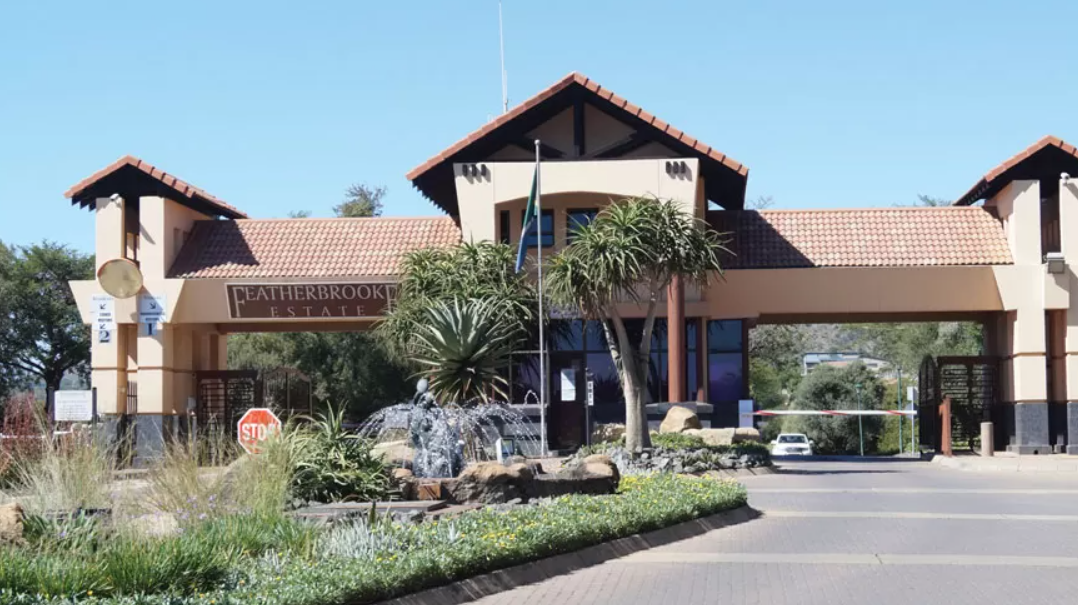
- Johlene Wasserman says the Featherbrooke Estate judgment sets an important precedent for community schemes across South Africa.
- The High Court ordered three state entities to jointly repair damaged river infrastructure and implement a stormwater management plan.
- The ruling follows six years of litigation over flooding, erosion and deteriorating public infrastructure.
A High Court judgment in favour of Featherbrooke Estate should serve as a warning to municipalities and other state institutions that they cannot escape accountability by shifting responsibility between government departments, according to Johlene Wasserman.
The Director of Community Schemes and Compliance at Van Deventer Dowlath & Marx Incorporated said the ruling goes far beyond a single residential estate, establishing an important precedent for community schemes that have faced years of government inaction while infrastructure continues to deteriorate.
She said, "Structural interdicts of this nature, compelling multiple state organs to act jointly, are rare in South African law and typically reserved for systemic governance failures. The judgment therefore sets an important national precedent for community schemes facing overlapping municipal and departmental inaction."
Wasserman said the judgment also delivers long-awaited relief for Featherbrooke Estate residents. "Finally, residents have the outcome they've been waiting for since the estate first approached the courts in May 2020," she said.
On 29 May 2026, the High Court in Johannesburg ordered Mogale City Local Municipality, the City of Johannesburg and the Johannesburg Roads Agency, jointly and severally, to repair riverbeds, install gabions and produce a formal Stormwater Management Plan.
Years of flooding and frustration
The case centred on the Muldersdrift se Loop, a river running through Featherbrooke Country Estate on the western edge of Mogale City.
According to Wasserman, the river has repeatedly flooded the estate since around 2010, eroding embankments and exposing underground sewer lines and electrical infrastructure. She said residents were left weighing "the risk of electrocution against the risk of raw sewage."
Wasserman said the river forms part of the ecological system flowing from the Walter Sisulu National Botanical Gardens to Hartbeespoort Dam, making its deterioration an environmental concern beyond the estate itself.
The erosion became so severe that sections of the estate's perimeter security fence were left suspended above the collapsing riverbank, while court papers revealed that a major sewer line had shifted to within about one metre of the boundary fence, creating significant environmental and public health risks.
A decade of passing responsibility
Before turning to the courts, the homeowners' association spent years seeking intervention from the Department of Water and Sanitation, Mogale City and the City of Johannesburg.
Wasserman said, "For more than a decade, the homeowners' association knocked on the doors of the Department of Water and Sanitation, of Mogale City, of the City of Johannesburg. And the answer was, 'Not us. Try next door.'"
The estate launched legal proceedings in 2020 to address stormwater failures dating back to 2010. What followed included the dismissal of the application, a remittal, years of delays and the threat of a substantial costs order.
A significant turning point came in March 2024 when the Supreme Court of Appeal overturned an earlier Full Court ruling that had dismissed Featherbrooke's application with costs.
The appeal court found that the dispute involving the various state entities had not been properly resolved and sent the matter back for fresh consideration.
Although the decision kept the litigation alive, residents still waited another two years before the High Court granted final relief.
Court rejects blame shifting
Wasserman said the judgment exposed years of responsibility being shifted between government institutions.
She noted that the Department of Water and Sanitation had internally recommended issuing directives as early as March 2016, but failed to act. She said, "Yet they failed to act."
According to Wasserman, the judgment makes it clear that constitutional obligations cannot be avoided through administrative technicalities.
She said, "You can't acknowledge a disaster risk and then hide behind licensing processes to escape responsibility. Thankfully, the court saw through the blame shifting and put an end to it."
Lessons for community schemes
Wasserman believes the judgment contains important lessons for trustees, homeowners' associations, bodies corporate and managing agents.
She said litigation against the state is often a lengthy and demanding process requiring persistence, careful record-keeping and financial resilience.
She also warned that infrastructure failures involving stormwater systems, roads, riverbanks and servitudes should never be dismissed as routine maintenance issues because they can quickly develop into significant governance and constitutional disputes.
According to Wasserman, Featherbrooke Estate survived six years of litigation because it maintained a comprehensive evidentiary record and refused to abandon its claim despite repeated setbacks.
During that time, the estate spent millions of rand on engineering reports, hydrological assessments, legal fees and emergency stabilisation work while residents continued living with recurring floods, exposed electrical infrastructure, damaged sewer lines and an increasingly unstable riverbank.
Wasserman said the final interdict represents an important victory, but it also illustrates the consequences of prolonged government inaction.
She said, "Featherbrooke Estate has dry ground beneath its feet at last, but they had to survive years of litigation and multiple rainy seasons before they could get the state to execute its basic municipal functions."
Get your news on the go. Click here to follow the Conviction WhatsApp channel.


