


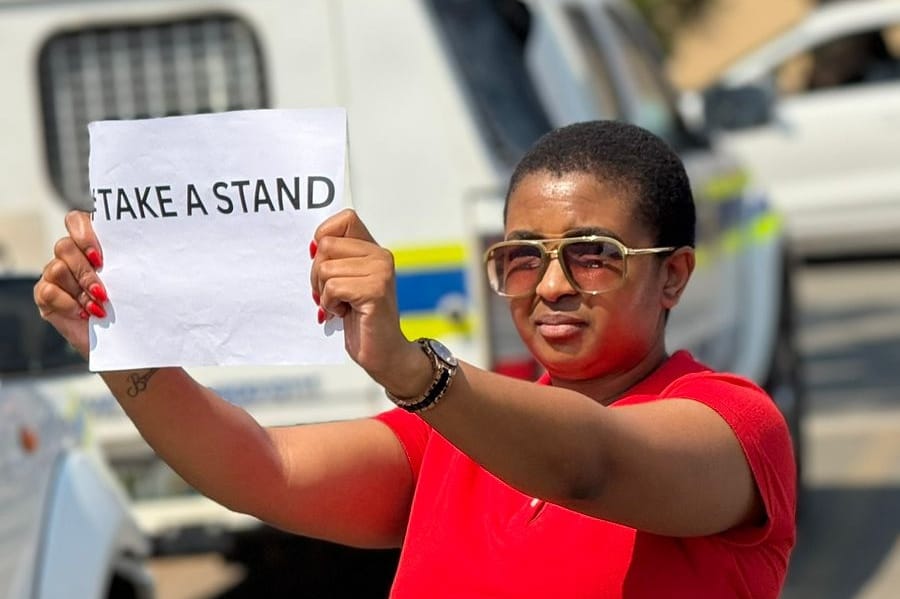
- Bhengu’s experiences of abuse began in childhood and continued into her marriage, impacting her trust, relationships and sense of safety.
- She highlights that gender-based violence is a widespread crisis affecting both women and men, urging society to recognise the trauma carried by all survivors.
- Now an advocate, Bhengu uses her story to support others and calls for education, accountability and stronger protections during the 16 Days of Activism and beyond.
For many South Africans, gender-based violence (GBV) is just a statistic, a headline or a government slogan. However, for Wendy Zimasa Bhengu from Rustenburg, it is the story of her life, a reality etched into her childhood memories, marriage and the emotional wounds she continues to heal.
As South Africa observes the 16 Days of Activism for No Violence Against Women and Children, Bhengu has chosen to break her silence and share her journey of survival.
Bhengu grew up in a home where safety was uncertain and violence was routine. Her earliest memories include the sounds of her mother crying and the chaos that followed her father’s drunken outbursts. She realised at just seven years old that her home was not a safe place for a child.
“My father would come home drunk, insult my mother and beat her in front of us,” she recalled. “After assaulting her, he would point his gun at me and threaten to kill me. That became normal for us; fear became part of our daily life.”
Bhengu and her two younger brothers watched their mother endure years of physical and emotional abuse. She describes her father as a man consumed by alcoholism, rage and control. The violence robbed Bhengu of her sense of security and shaped her understanding of love, relationships and trust.
“The love of a father is something I never knew,” she said. “Instead, I grew up fearing men, associating them with pain and danger.”
A marriage that became another prison
When Bhengu entered adulthood, she hoped marriage would offer a chance to rewrite her story and experience the stability and affection she had been denied as a child. Instead, history repeated itself.
Her ex-husband, she says, was charming in public but controlling and violent behind closed doors. The emotional abuse soon escalated into severe physical attacks, often triggered by jealousy and insecurity.
“If we went out to the mall and another man looked at me, I would be beaten,” she said. “One assault was so brutal that I was admitted to the hospital for weeks.” Desperate and frightened, Bhengu eventually went to the police to report the abuse. But the response she received left her feeling even more vulnerable. “The officers told me to leave the house since I was the one suffering,” she said. “It felt like even the system expected women to carry the burden in silence.”
With no choice but to protect herself and her son, Bhengu packed what she could and sought shelter with relatives, taking her child and the family helper with her.
A widespread crisis affecting all genders
Bhengu’s story is one of thousands across South Africa, where GBV has been called a “second pandemic.” While women and girls make up the majority of victims, men and boys also face violence, often in silence, because society expects them to be strong, unemotional and unaffected.
“Sometimes I think about my brothers and other men who grew up in abusive homes or experienced violence in their own relationships,” Bhengu said. “People forget that men also carry trauma. They also need help; they also bleed emotionally.” She believes GBV should not be framed as a women-only issue but as a societal crisis that affects everyone, destroying childhoods, families and communities.
“Children who grow up watching violence absorb that pain. They either repeat it or live their lives filled with anger, fear and confusion,” she added.
Turning pain into purpose
Despite the scars she carries, Bhengu is determined not to be defined by her trauma. She is now part of Kgaola Ketane Mosadi, an advocacy initiative aimed at raising awareness about GBV and supporting both male and female survivors. Through storytelling, community discussions and mentorship, she hopes to help others find their voice.
“Sharing my experience is painful, but it is necessary,” she said. “If one person hears my story and decides to walk away from an abusive situation or seek help, then my journey was not in vain.”
A call to action during 16 Days of Activism
As South Africa reflects during the 16 Days of Activism, Bhengu believes the fight against GBV requires more than campaigns. It demands accountability, education and systemic change. “Violence destroys generations,” she said. “We need stronger laws, better support systems and safe spaces for victims. But we also need to raise boys and girls differently and teach them respect, compassion and emotional intelligence.”
Bhengu’s story is a powerful reminder that behind every statistic is a real person navigating a lifetime of wounds. Yet her courage to speak out also serves as a beacon of hope for survivors across the country. “I am still healing,” she said softly. “But I am alive. And I want my story to help others survive, too.”
Get your news on the go. Click here to follow the Conviction WhatsApp channel.


