


- Supreme Court of Appeal confirms hospital admission privileges end when a doctor is suspended from practice.
- Doctors whose HPCSA suspension is lifted must submit a fresh application for admission privileges.
- Appeal by specialist obstetrician and gynaecologist Dr Ganes Anil Ramdhin dismissed with costs.
If the Health Professions Council of South Africa (HPCSA) suspends a doctor from practising, their right to admit and treat patients at a private hospital ends automatically. This is true even if the suspension is later lifted. To regain admission privileges, a new application is required.
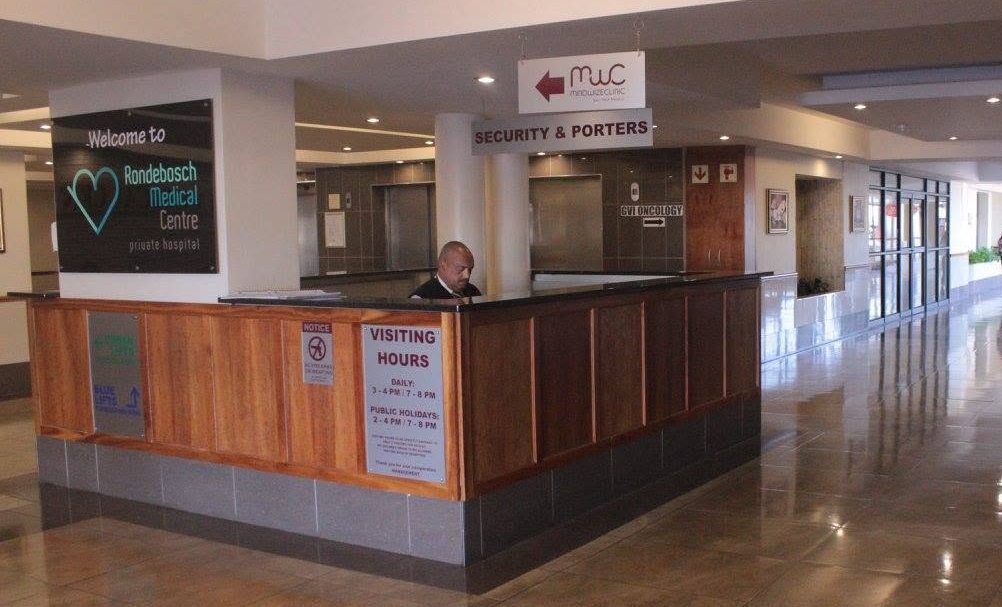
The ruling came after an appeal by specialist obstetrician and gynaecologist Dr Ganes Anil Ramdhin against Rondebosch Medical Centre, which refused to reinstate the admission privileges he had before being suspended by the HPCSA.
Doctor challenged loss of admission privileges
Ramdhin had held admission privileges at Rondebosch Medical Centre since October 2019, which allowed him to admit and treat patients at the private hospital.
In June 2023, the HPCSA found him guilty of unprofessional conduct involving two patients. He pleaded guilty to charges that included performing procedures without proper pre-operative assessment, carrying out a futile operation, and failing to provide proper post-operative care.
The disciplinary body suspended him from practice for three years, with two years suspended on condition that he was not found guilty of similar misconduct during that period and that he practised under an HPCSA-approved supervisor after returning to work. As a result, he was legally prohibited from practising medicine for one year.
Hospital required fresh application
During Ramdhin’s suspension, Rondebosch Medical Centre introduced a formal admissions policy requiring practitioners seeking admission privileges to submit written applications and meet specific professional requirements.
When his suspension was lifted in June 2024, the hospital informed him that he would need to submit a new application before he could admit patients again. Although he successfully applied to the HPCSA to resume practice, the hospital’s board declined to grant him admission privileges.
The board considered several factors, including that there was no operational need for another obstetrician and gynaecologist, concerns about his disciplinary history and its publicity, the potential reputational impact on the hospital, and the likelihood of increased professional indemnity insurance costs.
Original agreement did not survive suspension
Ramdhin argued that the agreement granting him admission privileges had never been terminated and was merely temporarily incapable of being performed while he was suspended.
He contended that once the HPCSA reinstated his registration, he should automatically be entitled to resume those contractual rights without reapplying.
Writing for a unanimous bench, Justice PA Koen rejected that argument. Justice Koen stated that admission privileges can only be exercised by medical practitioners who are entitled to practise.
He concluded that once Ramdhin was no longer legally permitted to practise, the admission privileges terminated automatically because he was no longer permitted or registered to practise as a medical practitioner.
Suspension fundamentally changed the contract
The appeal court found that Ramdhin’s suspension was not just a temporary interruption. Instead, it fundamentally changed the relationship between the doctor and the hospital.
Justice Koen said, “The underlying contractual substratum of the 2019 agreement thus disappeared.” He added that the suspension was “not a brief, transient disruption” but “a structural prohibition on independent professional practice.”
The court noted that once his suspension ended, he could only return to practice under HPCSA-approved supervision and subject to ongoing conditions imposed by the disciplinary sanction. That meant he could no longer provide the independent professional services that formed the basis of the original agreement.
The judges also rejected a new legal argument raised during the appeal that his suspension amounted to temporary impossibility of performance, finding that the doctrine could not assist someone whose inability to perform resulted from his own admitted professional misconduct.
Doctors must apply afresh
The Supreme Court of Appeal concluded that admission privileges cannot survive a practitioner’s loss of legal authority to practise.
Justice Koen said, “If Dr Ramdhin were to enjoy admission privileges again, the parties would need to enter into a new contract.” He added that any new agreement would have to be consistent with the policy in place when the doctor sought to return.
The court held that once a doctor’s registration is suspended, the admission privileges terminate automatically and do not revive when the suspension ends.
It also noted that Ramdhin had submitted a written application for admission privileges after his suspension ended, reinforcing the position that he no longer held those rights under the original agreement.
Appeal dismissed
The Supreme Court of Appeal dismissed Ramdhin’s appeal with costs, confirming that Rondebosch Medical Centre acted lawfully in requiring him to apply afresh for admission privileges after the lifting of his HPCSA suspension.
Get your news on the go. Click here to follow the Conviction WhatsApp channel.


