






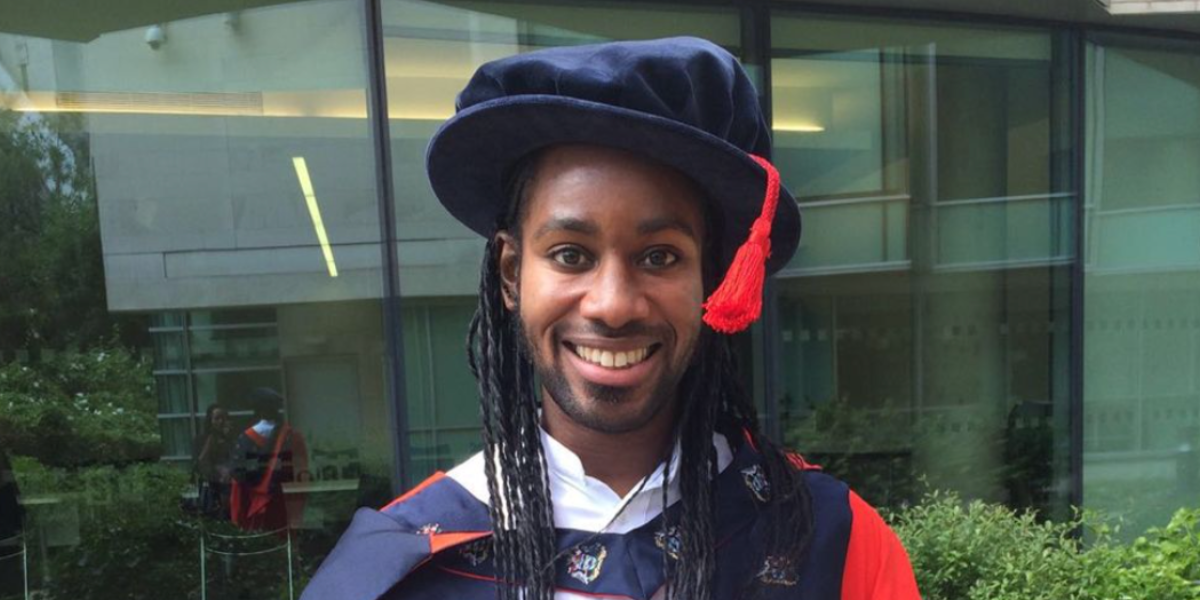
- Professor Jason Arday’s scholarship challenged the comfortable assumptions through which knowledge about Africa, race, power, and the modern world has too often been produced.
- His work on race, inequality, and intersectionality formed part of a broader intellectual struggle to challenge the hierarchy of knowledge.
- His death must not become the death of an intellectual project, but a call to African scholars to continue the work.
The death of Professor Jason Arday, a British Sociology professor at Cambridge University, is more than the passing of a scholar. It is the loss of an intellectual force whose work challenged the comfortable assumptions through which knowledge about Africa, race, power, and the modern world has too often been produced.
For Black scholars, the death of a scholar such as Arday is deeply personal. We understand that scholarship is not always an innocent enterprise. Knowledge has historically been used to classify, control, exclude, and diminish. The university itself has sometimes been an instrument through which colonial and imperial ideas were reproduced and legitimised. This is why Arday’s intellectual contribution matters.
Arday challenged the hierarchy of knowledge
His work on race, inequality, and intersectionality treads on a dangerous platform I call Knowledges of Death. Many pay the ultimate price for producing such scholarship. Black radical studies belonged to a broader intellectual struggle to challenge the hierarchy of knowledge that has placed Western epistemologies at the centre while treating African and other marginalised knowledge systems as peripheral.
Arday reminded us that the question is not simply who produces knowledge, but whose knowledge is recognised as knowledge. This is at the heart of the decolonial project.
A truly pluriversal intellectual world cannot be one in which one epistemology claims universal authority. It must be a world in which multiple ways of knowing can coexist, interrogate one another, and contribute to our understanding of humanity. African scholarship must therefore not merely seek admission into an existing intellectual order; it must also have the confidence to question the foundations of that order.
Arday will be read into eternity
That is why Arday’s passing is painful. But it is also why we must refuse to understand his death only through grief. Arday came, wrote, published, challenged and disrupted. His work enters that space where ideas acquire a life beyond their authors.
His books will be read. His arguments will be debated. His scholarship will be taught. His ideas will be prescribed to generations of students who may never have had the privilege of meeting him. Arday will be read into eternity. This is perhaps the greatest form of intellectual immortality.
As Black African scholars, we are conscious that our struggle is larger than individual personalities. The biblical reminder by Paul in Ephesians 6:13 reminds us that “we wrestle not against flesh and blood, but against principalities, against powers, against the rulers of the darkness of this world” and speaks powerfully to the nature of the struggle before us.
Our struggle is against systems, structures, epistemologies, hierarchies and institutions that reproduce inequality long after the individuals who created them have disappeared.
We must continue the intellectual work
As we mourn the passing of one of our own, let us not surrender but continue to do the work of writing, publishing, supervising, building institutions, creating knowledge and opening doors for those who come after us. And perhaps most importantly, we must not allow the death of a scholar to become the death of an intellectual project.
Arday lived his purpose with remarkable urgency. He demonstrated what can happen when scholarship is not detached from the struggles of society but becomes part of the struggle to transform it. In that sense, he achieved in a relatively short life what many take decades to accomplish. His intellectual legacy now belongs to us.
The task before African scholars is to cultivate the next generation of scholars who will question received wisdom, challenge intellectual orthodoxies, reclaim African histories and knowledge systems, and imagine futures beyond the confines imposed upon us.
Another Arday will come
Let those who believe that the structures of empire will endure forever remember that empires, too, are temporary. Those who built systems of domination will not inherit eternity. Let us remember that ideas will outlive empires. Moreover, intellectual courage, as exemplified by Arday, will outlive those who sought to suppress it.
Go and rest, Arday. You challenged and lived your purpose, and it is now our turn. Another Arday will come. And another and another.
Get your news on the go. Click here to follow the Conviction WhatsApp channel.
The opinions expressed in this article are solely those of the author and do not necessarily reflect the views of Conviction.co.za


