


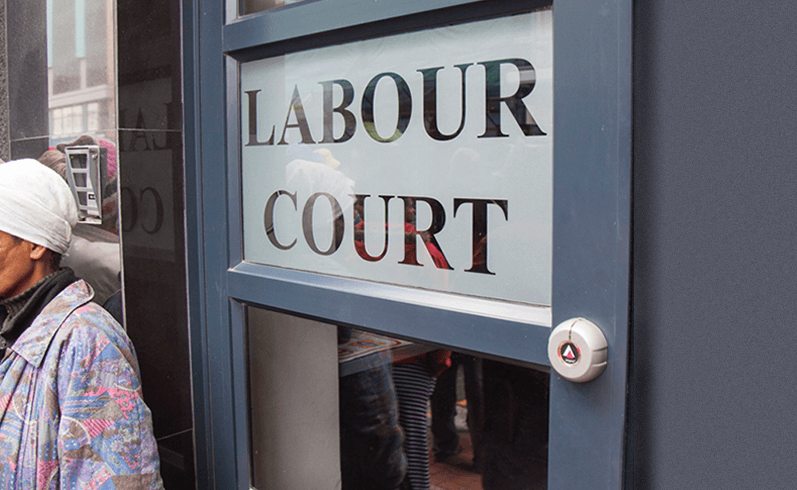
- The Labour Court found Distriliq George did not comply with fair procedure under sections 189 and 189A of the Labour Relations Act, issuing an urgent interdict to prevent retrenchments.
- Justice Lallie emphasised that the facilitation process was prematurely terminated and employees were identified too late for meaningful consultation.
- Employees are reinstated pending proper procedure, and the company must provide detailed financial and operational disclosures within 14 days.
In a dramatic intervention just before Christmas, the Labour Court in Gqeberha halted Distriliq George’s plans to retrench 42 employees, citing serious procedural failures.
Justice Z Lallie granted an urgent order on 23 December 2025 after hearing counsel for the applicants, the Independent Commercial, Hospitality and Allied Workers Union (ICHAWU), representing the employees, and counsel for the respondent. The court also reviewed extensive papers filed on record.
Justice Lallie emphasised the urgency and procedural dispensation in the order, stating, “Non-compliance with the forms and service and time periods provided for in the Rules of Court is dispensed with, and the application is heard as an urgent application as contemplated in Rule 35 read with Rule 38 of the Rules of the Labour Court is condoned.”
Failure to follow fair procedure
The court declared that Distriliq George had failed to follow a fair procedure as required under Section 189 of the Labour Relations Act. Justice Lallie found that the facilitation process conducted by the CCMA was prematurely terminated and did not constitute meaningful consultation.
“The Respondent failed to comply with section 189(3) by failing to identify the affected employees by name until the date of termination of their contracts of employment, thereby denying meaningful consultation on the selection criteria and their application to specific individuals,” the judgment reads.
The court issued a rule nisi calling upon the company to show cause on 23 January 2026 why an interdict preventing retrenchments should not be granted, or why all 42 employees should not be reinstated pending proper consultation.
Disclosure and consultation mandated
Justice Lallie ordered Distriliq George to provide comprehensive financial and operational information within 14 days. This includes complete bank statements for the preceding 12 months, cash flow forecasts and projections for the next 24 months, and supplier payment schedules with ageing analyses.
The company must also disclose full sales ledger and debtor ageing reports, along with VAT, PAYE, and UIF returns for the past 24 months.
The court further required the disclosure of management and director headcount, details of remuneration and salary adjustments since January 2024, and any payments made to related parties, including Silver Dawn Investments 200 CC.
Minutes of board and management meetings relating to the retrenchment decisions must also be provided, as well as full details of the labour broker arrangement with Workforce, including monthly costs, worker numbers, and rates per category.
Justice Lallie additionally directed the company to disclose any bonuses, dividends, or other distributions to directors or shareholders over the same period.
Justice Lallie emphasised the importance of meaningful consultation. “Directing the parties… to engage in meaningful consultation for a period of not less than 30 days from the date of provision of the information set out in prayer 2.5 above, such consultation to take place under the auspices of the CCMA or as otherwise directed by this court,” the judge said.
Immediate reinstatement and interdict
The judgment interdicts the respondent from implementing any retrenchments pending the return date. Employees listed in Annexure “A” are to continue working and receive their remuneration.
Justice Lallie wrote, “Pending the return date, the Respondent is interdicted from implementing the terminations of the employees listed in Annexure ‘A’; alternatively, the employees listed in Annexure ‘A’ are reinstated pending the return date, and the Respondent is directed to permit the employees to continue working and to pay their remuneration pending the return date.”
The court also noted that the respondent may anticipate the return date on not less than 48 hours’ notice to the applicants and the registrar.
Costs and accountability
Justice Lallie ordered that the respondent pay the costs of the application, either on the scale as between attorney and client, or on the party and party scale.
The judgment makes clear that compliance with fair procedure and transparency in corporate decision-making are non-negotiable, especially when employees’ livelihoods are at stake.
Get your news on the go. Click here to follow the Conviction WhatsApp channel.


