


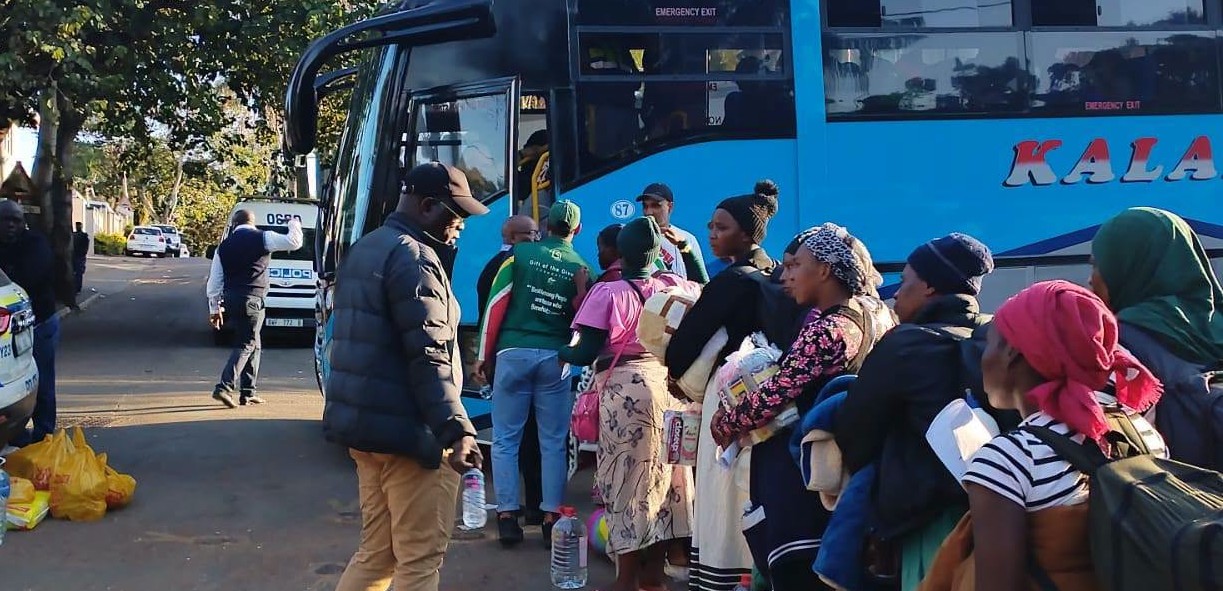
- About 500 Malawian nationals were transported from Cape Town and Durban to Johannesburg after fleeing xenophobic violence and intimidation.
- KAAX says the group was left at a depot in Jeppe without shelter, humanitarian assistance or protection before later being moved to a church facility in Newlands.
- The organisation is calling for urgent government intervention, investigations and protection for displaced migrants, refugees and asylum seekers.
The relocation of approximately 500 Malawian nationals from Cape Town and Durban to Johannesburg has sparked serious questions about how displaced migrants fleeing xenophobic violence are being protected and assisted in South Africa.
Kopanang Africa Against Xenophobia (KAAX) says the incident highlights significant shortcomings in the coordination of humanitarian responses involving government authorities, diplomatic missions and other stakeholders responsible for assisting vulnerable people displaced by violence and intimidation.
According to the organisation, the Malawian Embassy arranged six buses on 17 June 2026 to transport approximately 500 Malawian nationals from Cape Town and Durban to Johannesburg.
The passengers reportedly included women, children and men who had already fled xenophobic violence and intimidation in the Western Cape and KwaZulu-Natal. Among them were vulnerable individuals, including pregnant women and older persons, many of whom had already experienced displacement and uncertainty before undertaking the journey.
Arrival in Johannesburg
KAAX says the buses arrived in Sandton, where tensions reportedly escalated following the sudden arrival of such a large group. The organisation alleges that the passengers were subsequently transported to the George Koch diesel depot in Jeppe, where they were dropped off without arrangements for shelter, humanitarian assistance or protection.
“The buses subsequently transported the passengers to the George Koch diesel depot in Jeppe, where they were reportedly dropped off without any arrangements for shelter, humanitarian assistance or protection,” said KAAX in a statement.
The organisation argues that the relocation exposed serious weaknesses in planning and coordination. “This sequence of events raises serious concerns about the coordination between government authorities, diplomatic missions and humanitarian actors,” said KAAX.
It says people fleeing violence should not be transported from one province to another without comprehensive arrangements for accommodation, food, healthcare, security and psychosocial support.
“Human beings fleeing violence cannot simply be transported from one province to another without adequate planning, protection, accommodation and support. These are people traumatised and living in fear of being attacked,” said the organisation.
Police intervention and move to Newlands
According to the organisation, further tensions developed around the George Koch Hostel area on 20 June 2026. KAAX says the South African Police Service intervened while new arrangements were made to relocate the displaced group.
The Malawian nationals were subsequently moved to a church facility in Newlands, Johannesburg. The organisation says the events in Newlands demonstrate the extent of the challenges facing migrants and refugees who have been displaced by xenophobic violence.
“The situation that occurred in Newlands, Johannesburg, over the last few days illustrates the gravity of this failure,” KAAX said. It argues that the incident should serve as a warning about the broader consequences of inadequate planning when dealing with large groups of vulnerable people who have already fled violence and intimidation.
Allegations of humanitarian aid obstruction
The organisation also raised concerns about reports that humanitarian efforts were obstructed during attempts to assist the displaced group. KAAX says human rights organisations, community movements and volunteers have been providing food and essential assistance to migrants affected by xenophobic violence.
The organisation alleges that activists attempting to distribute food to the Malawian nationals were temporarily prevented from doing so. “We are particularly concerned by reports that a local Patriotic Alliance councillor and associates temporarily prevented activists assisting with food distribution from delivering humanitarian aid to the Malawian nationals,” said KAAX.
KAAX said blocking humanitarian assistance to vulnerable people, particularly women and children, was deeply troubling and worsened an already difficult situation. “Blocking humanitarian assistance to vulnerable people, particularly women and children, is deeply troubling and further compounds an already desperate humanitarian situation,” the statement further read.
Part of a wider displacement crisis
KAAX says the situation involving the Malawian nationals forms part of a broader humanitarian emergency affecting migrants, refugees and asylum seekers in several parts of South Africa.
The organisation points to ongoing developments in KwaZulu-Natal, where thousands of migrants, refugees and asylum seekers have reportedly been displaced from their homes, businesses and communities following weeks of xenophobic violence and intimidation.
According to KAAX, many documented refugees seeking protection have found themselves sleeping outside police stations and government offices rather than receiving assistance from authorities. The organisation says others remain outside the Department of Home Affairs Refugee Reception Centre on Che Guevara Road in Durban despite holding valid documentation.
Many continue to live in temporary shelters while fearing further attacks. KAAX has also expressed concern about reports that some refugees have been threatened with deportation or pressured to return to areas where xenophobic groups continue to operate.
The organisation says such actions would be inconsistent with South Africa’s constitutional obligations, the Refugees Act and international legal commitments, including the principle of non-refoulement, which prohibits returning refugees to situations where they face persecution, violence or serious harm.
Constitutional obligations
KAAX says the responsibility of the state is to prevent xenophobic intimidation and violence, investigate those responsible and ensure equal protection under the law for everyone living within South Africa.
“The responsibility of the state is not to punish those who have fled threats and violence. It is to prevent xenophobic intimidation, threats and attacks, investigate those responsible, prosecute perpetrators and ensure that everyone within the Republic enjoys equal protection under the law,” it said.
The organisation emphasised that constitutional protections apply to everyone within South Africa, irrespective of nationality or immigration status. “South Africa’s Constitution guarantees the rights to dignity, equality, life and freedom and security of the person. These rights are not conditional upon nationality. They apply to everyone within the Republic.”
Calls for urgent intervention
KAAX has called on all levels of government to publicly declare that ultimatums demanding the removal of foreign nationals from South Africa are unlawful and should be condemned in the strongest terms.
The organisation also wants authorities to take practical action against individuals and vigilante groups involved in attacks, intimidation and unlawful conduct targeting migrants. Among its demands are the immediate provision of safe accommodation, food, healthcare, sanitation and psychosocial support for displaced migrants, refugees and asylum seekers.
KAAX has further called for urgent intervention by the Departments of Home Affairs, Social Development, Cooperative Governance and Traditional Affairs, together with the South African Police Service, to coordinate what it describes as a humane and lawful response to the crisis.
The organisation is also seeking investigations into individuals and organisations allegedly responsible for inciting or carrying out attacks, forced evictions and the obstruction of humanitarian assistance.
In addition, it has called on the Electoral Commission to investigate any political party structures or members whose conduct may violate the electoral code ahead of the local government elections scheduled for November 2026.
KAAX has urged churches, trade unions, civil society organisations, community leaders and humanitarian agencies to continue supporting displaced communities.
The organisation concluded with a warning that the treatment of vulnerable people fleeing violence would ultimately define how the country is judged.
“History will judge us not by how we treated those with power, but by how we treated those who sought safety, dignity and protection when they had nowhere else to turn,” added KAAX.
Get your news on the go. Click here to follow the Conviction WhatsApp channel.


