


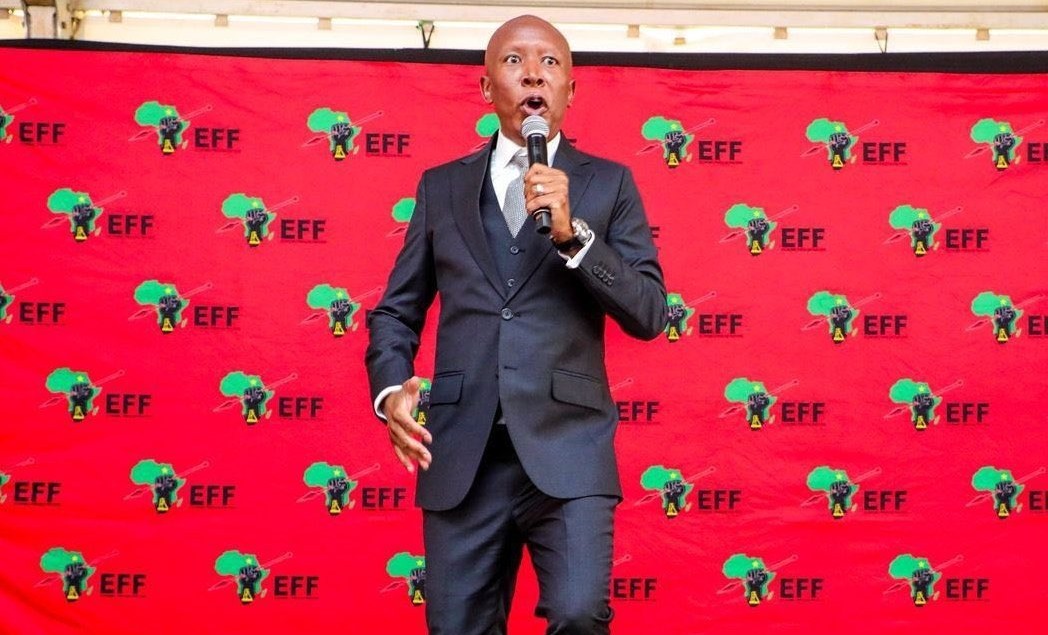
- Julius Malema and the EFF held jointly liable under the Equality Act and the Hate Crimes and Hate Speech Act.
- The Act shifts responsibility to the speaker by criminalising incitement, not just actual harm.
- Law balances freedom of expression with protection against identity-based violence and prejudice.
The Equality Court’s 2025 ruling against Julius Malema and the Economic Freedom Fighters has reverberated across South Africa’s political and legal landscape. Yet beyond the headlines, its true significance lies in the Prevention and Combating of Hate Crimes and Hate Speech Act, 2023, legislation that became operational in January 2025 and is now shaping the country’s constitutional order.
The Act criminalises hate speech in precise terms. It defines it as intentional communication, whether spoken, written, gestural, or digital, that can reasonably be understood as inciting harm or promoting hatred on protected grounds such as race, gender, religion, sexual orientation, or disability. What matters is not whether harm occurs, but whether the expression carries an intention to provoke it. This shifts accountability away from a listener’s reaction and firmly onto the speaker’s responsibility.
Another groundbreaking innovation is organisational liability. If hate speech or a hate crime is committed by someone acting on behalf of an institution, that organisation itself can be held criminally accountable. In Malema’s case, the Equality Court ruled that his speech was delivered in his official capacity as leader of the EFF, with the party’s endorsement. This triggered the clause, making both Malema and the EFF jointly liable.
Protecting rights while combating harm
Critics often fear that such laws will muzzle legitimate expression. The Act anticipates this by carving out safeguards for artistic, academic, journalistic, and religious expression, so long as such speech does not advocate hatred that incites harm. The legislation reflects a constitutional balance: free speech remains essential to democracy, but it is not absolute when it becomes a weapon of dehumanisation.
The law also goes beyond regulating speech. It mandates that hate-motivated crimes be treated as aggravated offenses, with prejudice considered at sentencing and victim impact statements fully recognised. This acknowledges that identity-based violence damages not only victims but also entire communities, eroding trust and social cohesion.
The Malema case as a test of the Act
The Equality Court found Malema’s remarks, framed around a prior racial altercation and targeting a white man, as direct calls to violence rooted in race and gender. The court concluded that both Malema and the EFF were accountable, not because violence occurred, but because the statements themselves crossed the statutory threshold of incitement. That is precisely the standard the Act was designed to enforce.
The legislation also mandates training for police and judicial officers, public education campaigns, and civic literacy programmes aimed at clarifying the boundaries of lawful expression. In this way, the Act is not just a prosecutorial tool but a framework for social repair, reaffirming dignity, equality, and accountability in the public square.
The Malema judgment underscores the seriousness with which South Africa now treats identity-based harm. Words, when wielded recklessly, can inflict as much damage as weapons. The law insists that leadership, institutions, and individuals alike carry responsibility for ensuring that speech builds democracy instead of tearing it apart.
Conviction.co.za
Get your news on the go. Click here to follow the Conviction WhatsApp channel.


