


- Court warns that freedom of expression does not shield activists who publish serious allegations without proof.
- Targeted letter to a major client is seen as reputational and commercial harm rather than public debate.
- Final interdict granted with forced retraction and punitive attorney and client costs order.
The High Court in Johannesburg has issued a pointed warning to activists and civil society groups that public advocacy does not give a licence to make unverified accusations that can damage a company’s name and business relationships.
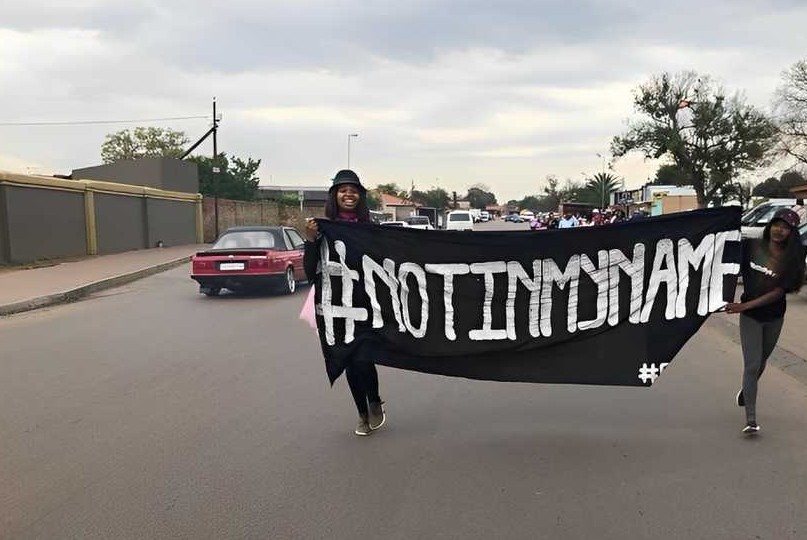
The court confirmed a final interdict in favour of Barloworld South Africa (Pty) Ltd, finding that repeated claims of racism and sexism by Not in My Name International NPC went beyond protected speech and crossed into unlawful harm.
At the centre of the ruling is a clear caution from Judge L Windell, who stressed that constitutional protections for free expression do not extend to publishing serious allegations that cannot be proven, especially when those allegations are directed at a company’s customers.
Court draws a line between activism and defamation
The dispute arose after social media posts and direct correspondence accused Barloworld of racist, sexist and unethical conduct linked to an earlier contractual fallout with a service provider. The respondents framed their conduct as public interest advocacy and said they were highlighting the alleged mistreatment of a black woman-owned business.
But the court held that once defamatory statements are published, the law presumes they are wrongful and intentional. It then becomes the publisher’s duty to justify them.
Judge Windell said the respondents failed to do so. “The respondents did not place before the court admissible evidence establishing the truth of the allegations of racism and sexism advanced,” the judgment states.
“Absent proof of substantial truth, publication cannot be justified on the basis of public interest.” That finding became the backbone of the court’s caution. Activism, the court made clear, must still be grounded in facts.
Freedom of expression has limits
A key part of the defence relied on freedom of expression and the idea that civil society organisations should be allowed to interrogate powerful corporations. The judge accepted the constitutional importance of robust debate, but emphasised that the right is not unlimited.
“The defence of fair comment likewise fails,” the court said. “The statements complained of go beyond protected opinion and rest upon factual assertions not shown to be true.”
The judge added that freedom of expression “does not extend to the unsubstantiated publication of defamatory allegations, particularly where such allegations are directed at damaging existing commercial relationships.” In other words, strong opinions are lawful, but factual claims that damage reputations must be backed by evidence.
Letter to a customer seen as especially serious
The most troubling conduct for the court was not only the social media posts, but a direct letter sent to Tharisa Minerals (South Africa) (Pty) Ltd, described as a longstanding Barloworld customer.
The letter repeated the same accusations and effectively invited the client to reconsider doing business with the company. Judge Windell drew a firm distinction between general commentary and targeted interference.
“The letter addressed to Tharisa Minerals was not a general commentary but a targeted communication to a longstanding customer of the applicant, repeating defamatory allegations and inviting reconsideration of its business relationship with the applicant,” the court said.
“A prohibition on future publication does not, on its own, remedy the harm already occasioned by that communication.”
That reasoning led to an unusual remedy. The respondents were ordered not only to stop publishing further allegations, but also to issue an unconditional written retraction to the customer.
Final order and a punitive costs warning
The court confirmed the earlier interim interdict and made it final. The respondents are now barred from publishing or disseminating defamatory statements about Barloworld and from contacting its customers or employees about the dispute. They must retract the letter within seven days and pay costs on the attorney and client scale.
Judge Windell was critical of their conduct, noting they persisted with “serious allegations without placing before the Court evidence capable of justifying them” and escalated the dispute despite legal warnings.
Get your news on the go. Click here to follow the Conviction WhatsApp channel.


