


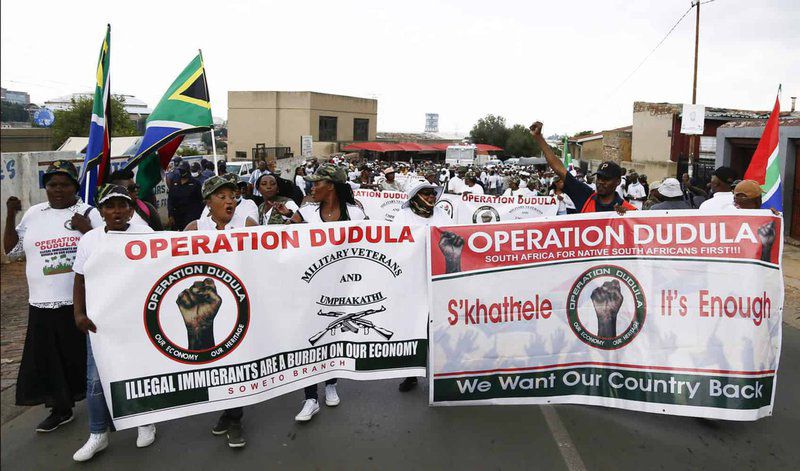
- The High Court stopped Operation Dudula from harassing, intimidating, and blocking foreign nationals, reinforcing the rule of law.
- Parliament, CoRMSA, and SAFTU call the judgment a win for human rights and social unity, urging accountability.
- Civil society groups, including Abahlali baseMjondolo and KAAX, celebrate protections for vulnerable communities and the enforcement of the National Action Plan against xenophobia.
The Johannesburg High Court’s ruling against Operation Dudula has been widely praised as a significant win for human rights, social unity, and the rule of law.
Parliament, unions, civil society groups, and community movements welcomed the judgment, which prevents the group from harassing, intimidating, or blocking foreign nationals.
In Kopanang Africa Against Xenophobia & Others v Operation Dudula & Others, the court declared Operation Dudula’s actions unlawful, unconstitutional, and xenophobic. Judge T Adams stated that “human dignity has no nationality” and clarified that only authorised police or immigration officers may ask for identification.
Leaders of Operation Dudula were stopped from assaulting, evicting, or obstructing people in schools, healthcare settings, workplaces, and markets. The court also ordered the government to carry out the National Action Plan to Combat Racism, including early-warning and rapid-response mechanisms and accountability for hate crimes.
Ruling welcomed by Parliament, unions, and civil society
Parliament’s Select Committee on Education, Sciences and the Creative Industries welcomed the ruling. Chairperson Makhi Feni said, “This judgment is a win for the rule of law. We cannot accept illegal actions just because they do not affect us. Disruption of social services in healthcare and education harms South Africans as well.”
He added, “Violently blocking foreign nationals from accessing healthcare services is nearly illegal and serves no purpose. Intimidating innocent children achieves nothing, and this is why Operation Dudula must reconsider the legitimacy of their actions.”
The Consortium for Refugees and Migrants in South Africa (CoRMSA) called the judgment a reaffirmation of dignity and equality: “This judgment not only promotes access to justice but reaffirms the fundamental rights and inherent dignity of all people living in South Africa, regardless of nationality or legal status.”
The South African Federation of Trade Unions (SAFTU) highlighted the wider implications for working-class unity: “An injury to one is an injury to all, no matter the nationality. Xenophobia is a tool for division that benefits only the wealthy elite who profit from cheap labor, social desperation, and fear.”
Civil society celebrates protections for vulnerable communities
Abahlali baseMjondolo emphasised the human impact of the ruling: “Operation Dudula’s actions have brought cruelty, violence, fear, and division to poor communities.” Kopanang Africa Against Xenophobia (KAAX) stressed the judgment’s importance: “The rights granted by the Bill of Rights, including the rights to life, dignity, education, and healthcare, apply to everyone within South Africa’s borders, regardless of nationality or immigration status.”
Lawyers for Human Rights, representing the UN Special Rapporteur on Human Rights Defenders, called the judgment “a strong win for South Africa’s constitutional order, affirming that xenophobic vigilantism is illegal and will not be accepted in a democratic society.”
Operation Dudula responds
In a brief statement on its social media accounts, Operation Dudula said, “A positive aspect for South Africa is that Operation Dudula will appeal the ruling, overturn it, and continue doing the Lord’s work. This could potentially continue until 2029.”
Get your news on the go. Click here to follow the Conviction WhatsApp channel.


