


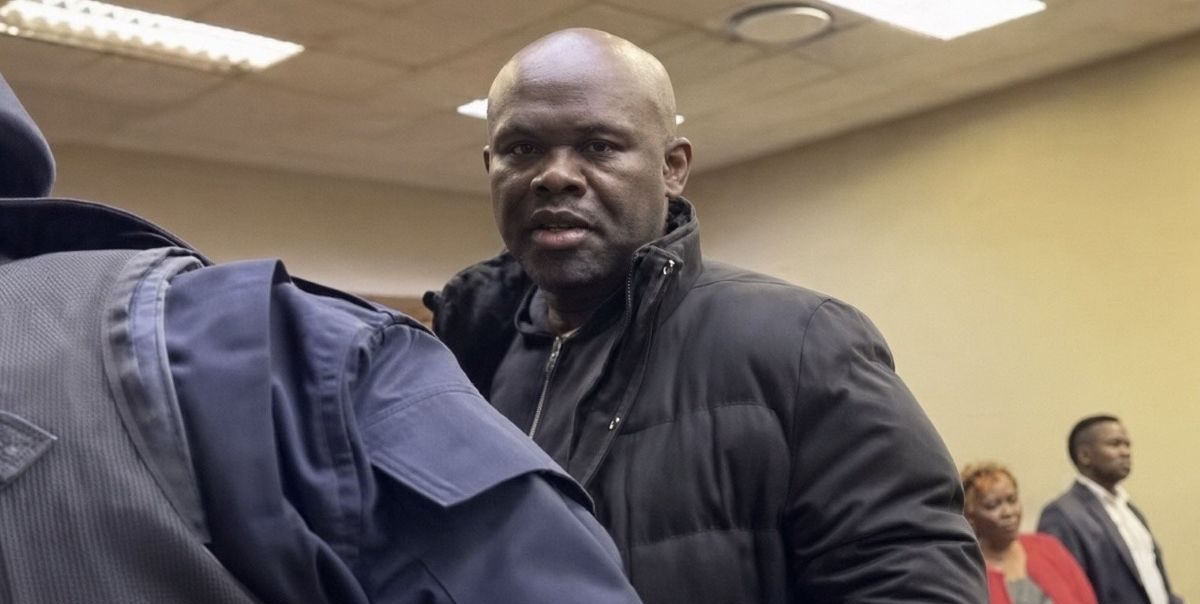
- The arrest of suspended Deputy Police Commissioner Lieutenant-General Shadrack Sibiya reignited debate over why his identity could not be published before his first court appearance.
- The Women’s Legal Centre is challenging Section 154(2)(b), arguing it criminalises survivors, supporters, and journalists who identify an accused rapist.
- The organisation has launched Nxme Him while awaiting a High Court judgment on the law’s constitutionality.
The arrest of suspended Deputy Police Commissioner Lieutenant-General Shadrack Sibiya has reignited scrutiny of Section 154(2)(b) of the Criminal Procedure Act, the law that prevented South Africans from naming him before his first court appearance.
Sibiya appeared in the Randburg Magistrate’s Court on 22 September 2026, where the rape case was postponed to 2 October 2026 for further proceedings. His identity was made public following that first appearance, ending the period of statutory anonymity.
The Women’s Legal Centre says the case has highlighted the very law it challenged in the High Court earlier this year.
Why the Women’s Legal Centre wants the law changed
The Women’s Legal Centre argues that Section 154(2)(b) prohibits the publication of identifying information about a person accused of a sexual offence before they have pleaded in court. The organisation says the provision disproportionately impacts women, silences survivors, and can make it harder for other victims to come forward.
It argues that lengthy delays before plea often mean accused sexual offenders remain anonymous for months or even years, reducing the chances of additional complainants and witnesses recognising the accused and assisting police investigations. The constitutional challenge is currently awaiting judgment.
Criminalising survivors
According to the Women’s Legal Centre, the law creates a unique double standard in South Africa’s criminal justice system.
While people accused of crimes such as murder, armed robbery, and corruption can generally be identified publicly after arrest and their first court appearance, those accused of sexual offences receive automatic anonymity before their first appearance.
The organisation says this leaves survivors in the extraordinary position of risking criminal prosecution for publicly naming the man they say raped them before he appears in court. A conviction for breaching Section 154(2)(b) can carry a fine or imprisonment of up to three years.
It argues that the law protects the identities of accused sexual offenders while exposing survivors, supporters, and journalists to criminal sanctions.
Nxme Him campaign
In response, the Women’s Legal Centre has launched Nxme Him, which it describes as the world’s first civil disobedience AI.
Rather than publishing a person’s name, the platform converts the name of an accused sexual offender into an uncrackable emoji code, allowing people to symbolically “nxme” an accused offender without revealing identifying information.
The organisation says the campaign gives survivors a symbolic voice while exposing what it considers an unjust law. It is also urging the public to sign a petition calling on the Minister of Justice and Constitutional Development to reform Section 154(2)(b) and support its constitutional challenge.
Why it matters
The Women’s Legal Centre says the country is talking about the anonymity law again because of one high-profile arrest, but insists the broader issue is whether South Africa’s legal system protects survivors as much as it protects the accused.
The High Court’s pending judgment will determine whether Section 154(2)(b) survives constitutional scrutiny.
Get your news on the go. Click here to follow the Conviction WhatsApp channel.


