






- The High Court in Pretoria found that attorney Kader Sheik Muhammad appeared in court while suspended, did not fully comply with a court order, and practised without a valid Fidelity Fund Certificate.
- The court also found unresolved discrepancies in trust records and held that this cumulative misconduct showed professional unreliability.
- Acting Judge PN Mamabolo ordered that Muhammad be struck off the roll for an indefinite period, with the possibility of a future reinstatement application.
Attorney Kader Sheik Muhammad appeared in court while suspended, failed to comply fully with a High Court order, practised without a valid Fidelity Fund Certificate and could not satisfactorily account for discrepancies in trust records, the High Court in Pretoria has found.
Acting Judge PN Mamabolo, with Judge LMM Lenyai concurring, ruled that the cumulative misconduct showed professional unreliability and ordered that Muhammad be struck off the roll of practising legal practitioners for an indefinite period, subject to a future application for reinstatement.
The judgment was delivered in an application brought by the South African Legal Practice Council (LPC) under Section 44 of the Legal Practice Act. The council sought Muhammad’s suspension or removal from the roll together with orders aimed at protecting clients and preserving trust account records.
The court noted that Muhammad had already been placed under interim suspension on 10 August 2023 and that a curator bonis had been appointed to take control of his trust accounts and accounting records pending the final determination of the proceedings.
Court says the case was about protecting the public
Judge Mamabolo stressed that disciplinary proceedings against attorneys are not ordinary civil disputes. “The ultimate question is not whether the respondent has contravened regulatory provisions in a technical sense,” the judge said, “but whether, in light of established misconduct, the public can safely continue to repose trust in him as a legal practitioner.”
The court applied the established three-stage enquiry used in attorney disciplinary matters: whether misconduct was proved, whether the practitioner remained fit and proper, and, if not, whether suspension or striking off was the appropriate sanction.
LPC details multiple allegations
The LPC presented what the court described as a pattern of sustained regulatory and professional non-compliance. It said Muhammad repeatedly failed to comply with the interim suspension order by not handing over accounting records, client files, enrolment certificates and other practice documentation. The LPC said that failure delayed its investigation for almost two years and hampered efforts to assess the state of the practice and its trust accounts.
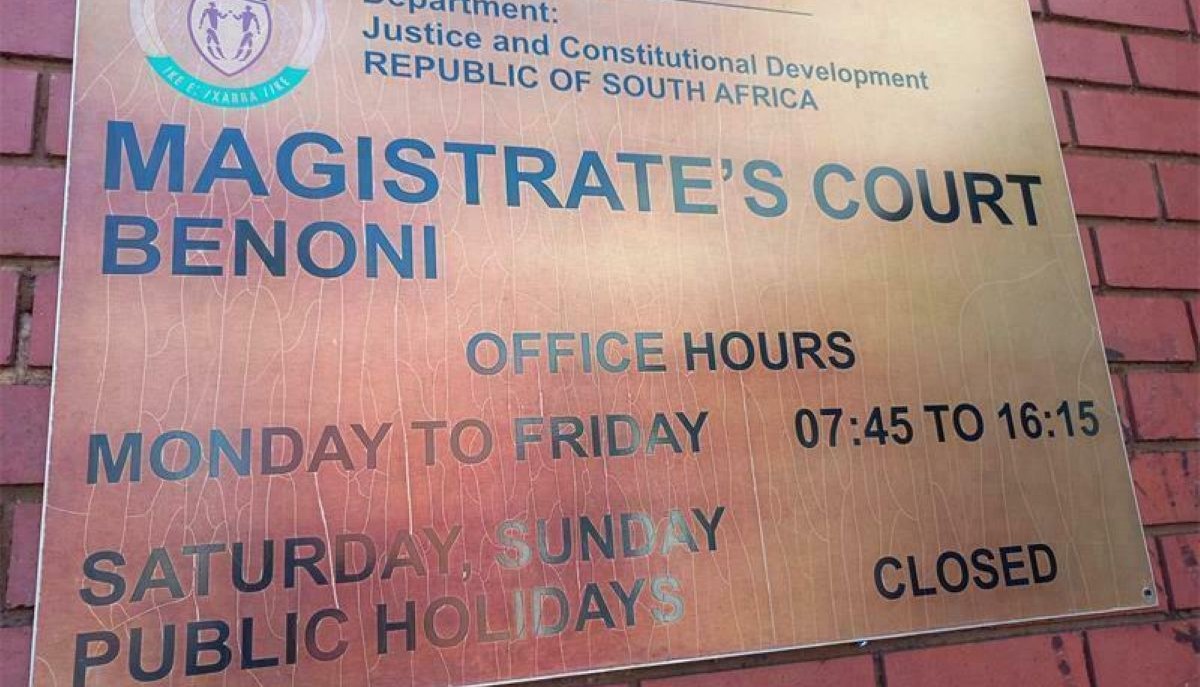
The council also alleged that Muhammad appeared in the Benoni Magistrate’s Court on at least two occasions after he had been suspended from practice and thereby misrepresented his entitlement to appear as a legal practitioner.
A significant part of the case concerned the handling of trust money. The LPC alleged that trust ledgers, bank statements and reconciliation records did not correspond in two client transactions identified as the Letshaba and Tokwe matters.
In the Letshaba transaction, the council alleged that more than R500 000 paid into the firm’s trust account in connection with a property deal could not be properly reconciled with the trust ledger and banking records. The LPC argued that the discrepancies raised serious concerns about the accounting for trust funds.
In the Tokwe transaction, the dispute involved money that Muhammad said had been placed in a section 78(2A) investment account. He denied that the funds had been stolen and maintained that the disagreement related to delays in payment and communication rather than misappropriation.
The LPC further alleged that Muhammad attended to conveyancing-related matters despite not being admitted as a conveyancer and that he provided contradictory explanations regarding complaints, court appearances and trust transactions.
Muhammad denies theft and says he was ill
Muhammad denied that the threshold for striking off had been met. He argued that the LPC should first have pursued internal disciplinary remedies before approaching the High Court and that the application was premature. Acting Judge Mamabolo rejected that argument, holding that the High Court retains ultimate disciplinary authority over practitioners.
Muhammad also contended that the original concerns were limited to unpaid annual fees, outstanding audit reports and the absence of a Fidelity Fund Certificate, and that those issues had been remedied by late 2023.
On the trust account complaints, he denied any theft or misappropriation. He maintained that the Tokwe funds remained intact in a Section 78(2A) investment account and that the dispute concerned delays in payment and communication failures during a period of severe illness following Covid-19.
Regarding the Benoni appearances, Muhammad admitted attending court but said it was “an emotional error motivated by family obligations”. He told the court he had acted to assist a cousin involved in domestic violence proceedings and did not intend to defy the suspension order. The judgment records that he apologised and expressed remorse.
Fidelity Fund Certificate was not a technicality
The court treated practice without a valid Fidelity Fund Certificate as a serious breach. “The certification requirement forms part of a carefully constructed protective scheme,” Acting Judge Mamabolo said. “It is not optional. Nor is it a mere bureaucratic formality.”
The judge found that continued practice without certification exposed clients to risk and weighed heavily against Muhammad in assessing his professional reliability.
Trust record discrepancies remained unexplained
On the trust account issues, the court distinguished suspicion and proof. Acting Judge Mamabolo accepted that the evidence did not conclusively establish intentional theft of trust money. However, the judge held that unexplained discrepancies in trust accounting were not neutral.
“Suspicion does not equate to proof of misappropriation,” the judgment states. “However, unexplained discrepancies in trust accounting are not neutral. They reflect either inadequate bookkeeping or inadequate oversight.”
The court said an attorney’s fiduciary duty requires strict segregation of trust money, accurate record-keeping, timely reconciliation and complete transparency.
Court finds suspension order was breached
The court found that compliance with the interim suspension order had been delayed and incomplete. “Compliance with court orders is foundational to the rule of law,” Acting Judge Mamabolo said, adding that incomplete or delayed compliance was directly relevant to the assessment of fitness to practise.
The judge also expressed concern about Muhammad’s appearances in the Benoni Magistrate’s Court while suspended. “A suspension order is not merely symbolic,” Acting Judge Mamabolo said. “It removes the practitioner’s entitlement to hold himself out as entitled to practise.”
Public would not be adequately protected
After considering all the evidence, the court assessed the cumulative effect of the conduct rather than each allegation in isolation.
Acting Judge Mamabolo found that practising without certification, failing to submit audit reports, incomplete compliance with court orders, unresolved trust account discrepancies and questionable conduct during suspension collectively demonstrated a pattern of regulatory non-compliance and professional unreliability.
“The decisive question remains whether members of the public would be adequately protected were the respondent permitted to resume practice immediately,” the judge said. “On the evidence presently before this Court, the answer must be in the negative.”
The court concluded that Muhammad did not presently satisfy the standard required of a fit and proper person to practise as an attorney.
Striking off chosen over further suspension
The judge considered whether suspension would be sufficient. The judgment acknowledged that striking off is generally reserved for cases involving proven dishonesty or irredeemable moral unfitness. Because intentional theft had not been conclusively proved, the court considered whether a lesser sanction could adequately protect the public.
Acting Judge Mamabolo ultimately held that the cumulative misconduct justified removal from practice, while still leaving open the possibility of future reinstatement if Muhammad could demonstrate full regulatory compliance, complete reconciliation of trust accounts, genuine insight into past misconduct and evidence of rehabilitation.
Final order
The court ordered that Muhammad be struck off the roll of practising legal practitioners for an indefinite period, subject to an application for reinstatement on proper papers.
He must surrender his certificate of enrolment within 10 days, failing which the sheriff may seize it. The court further ordered him to deliver all accounting records, trust ledgers, bank statements, client files and documents relating to the practice to the curator within 10 days.
Muhammad was also removed from any fiduciary office held by virtue of his status as a legal practitioner and ordered to pay the costs of the application on the attorney-and-client scale, including the costs of the curator.
The ruling means Muhammad cannot practise as an attorney unless he later brings a successful reinstatement application and satisfies the High Court that he has restored the reliability and trustworthiness expected of an officer of the court.
Get your news on the go. Click here to follow the Conviction WhatsApp channel.


