





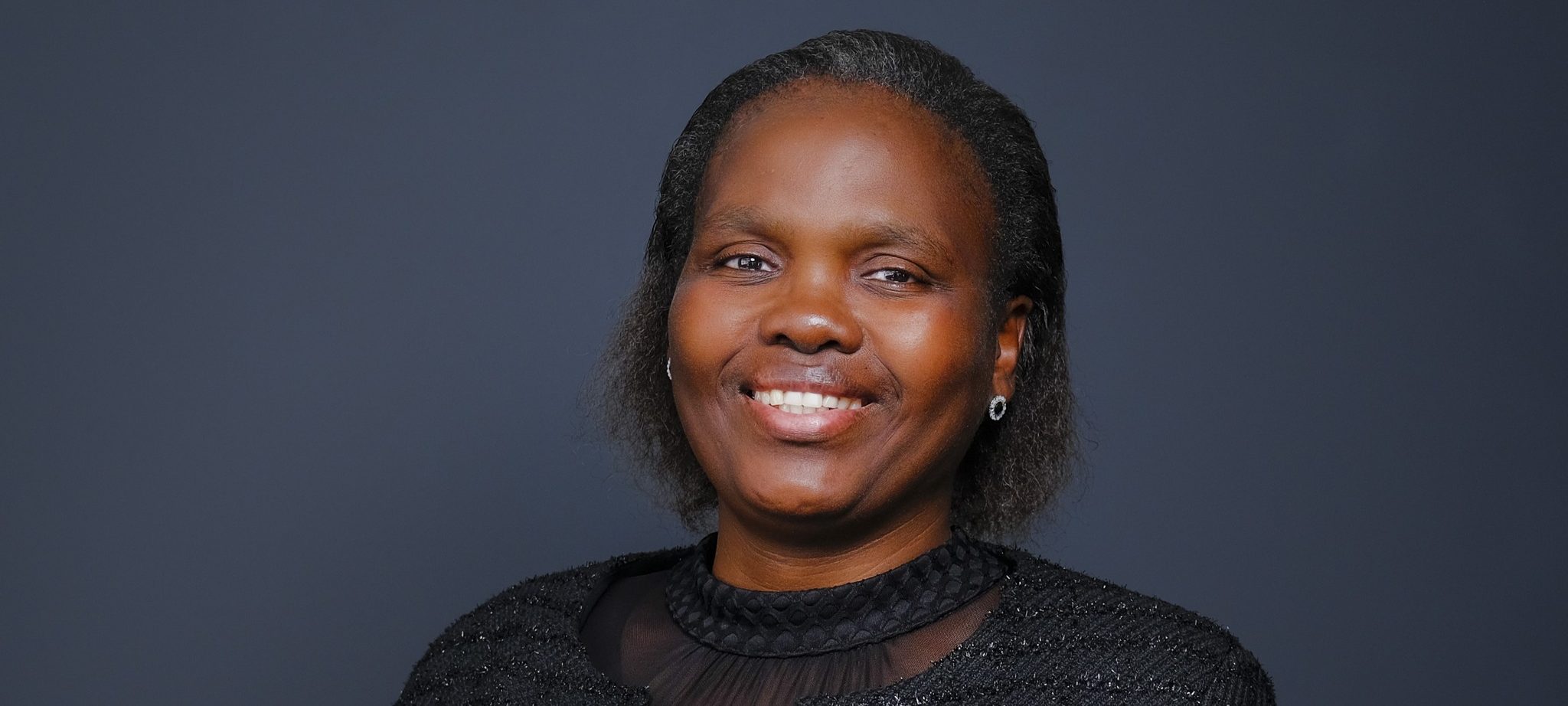
- She has worked as an Acting Judge in several High Court divisions, using her academic background to inform her decisions.
- She talks about both the difficulties and the rewards of shifting from teaching constitutional law to making decisions that affect people's lives.
- Balancing both roles has deepened her research and helped her better understand how South African law is evolving.
Professor Nomthandazo Ntlama-Makhanya remembers her first day on the High Court Bench clearly. “On my first day, I presided over a matter concerning an application for condonation of a document critical to the evidence,” she said.
“The pressure to deliver a judgment by the end of the day, without any prior training in court procedures, was immense. I felt like I was thrown into a lion’s den,” she said. She noted that the transition from academic writing to judicial writing required precision, clarity, and speed under pressure.
As a respected Public Law Professor at the University of Fort Hare (UFH), Ntlama-Makhanya has long been a key figure in South Africa’s legal education. Her deep expertise in constitutional law has influenced many students and significantly contributed to the country’s legal development.
Her influence goes beyond academia. Having served as an Acting Judge multiple times, she embodies the rare connection between legal scholarship and court practice. Her most recent role at the Johannesburg High Court, which ended in March 2025, marked another chapter in a journey rooted in public service, intellectual depth, and humility.
“In 2016, I was appointed as an Acting Judge. It was a pivotal moment for me, moving from pure academia to the complex and often intimidating world of judicial practice,” she recalled. “As a constitutional law scholar, I had spent years immersed in legal theory. But overseeing cases, where the stakes are high and the outcomes significant, was a whole different experience.”
Growing into the role
Despite the initial challenges, Ntlama-Makhanya embraced her judicial role with confidence and purpose. “My next major task was an appeal that I had to oversee and write the judgment for. To my surprise, this judgment gained media attention. This unexpected recognition left me both humbled and bewildered. It also highlighted that judicial decisions are not just academic exercises; they're living entities that profoundly affect people's lives.”
Her background in constitutional law provided a strong foundation for clear judicial reasoning. “My expertise in constitutional law became the basis for my judicial duties. Being appointed as an Acting Judge allowed me to apply what I had only taught and written about. It bridged the gap between theory and practice, giving me valuable insights into the procedural frameworks behind litigation.”
A scholar-judge across South Africa’s courts
Over the years, Ntlama-Makhanya has served in different High Court divisions, including Durban, the Eastern Cape, Gauteng, and the Electoral Court. She has presided over various matters, from civil and criminal cases to complex constitutional disputes. “Writing judgments is perhaps the most essential and solitary task for a judge. It requires a deep understanding of the law, the facts of the case, and the ability to write a well-reasoned judgment that will endure,” she explained.
Her training as an academic equipped her with the essential research discipline for judicial work. “The difference between academic research and judicial research became clearer as I worked through evidence, statute interpretation, and constitutional application. It was enlightening to see how academic insights apply directly to judicial reasoning,” she said.
While her judicial work demanded a lot of focus, she never abandoned her teaching and research. “This commitment to both has enriched my teaching by providing real-world examples to my students while also expanding my own understanding of the law.”
Contributing to the legal profession
Ntlama-Makhanya’s contributions go beyond the courtroom and the classroom. She has served as an expert witness and represented the Society of Law Teachers of Southern Africa in the Judicial Services Commission (JSC). “This involvement has provided me with a broader perspective on the judicial appointment process and the changes in South Africa’s legal landscape,” she said.
Reflecting on her journey, she expressed gratitude for the recognition and opportunities she has received. “I am thankful to the judicial profession for recognising my potential and appointing me as an Acting Judge. It was not just a personal achievement, but also an acknowledgment of the Faculty of Law at the University of Fort Hare, where I have had the privilege of teaching future legal minds.”
She also recognized the support that helped her serve. “I am deeply appreciative of the assistance I have received from both the legal community and the University of Fort Hare, which enabled me to take on this important national duty while continuing my academic work.”
A transformative experience
In conclusion, Ntlama-Makhanya describes her time as an Acting Judge as transformative. “It has taught me that the journey from theory to practice is not just about applying knowledge but about continuously learning, adjusting, and contributing to the ongoing development of our legal system,” she said. “It is a responsibility I hold in high regard, and I am privileged to have served in this role.”
Her reflections highlight the vital role that legal academics play in strengthening South Africa’s justice system, not only through research and teaching but also through active participation in judicial service.
Get your news on the go. Click here to follow the Conviction WhatsApp channel.


