





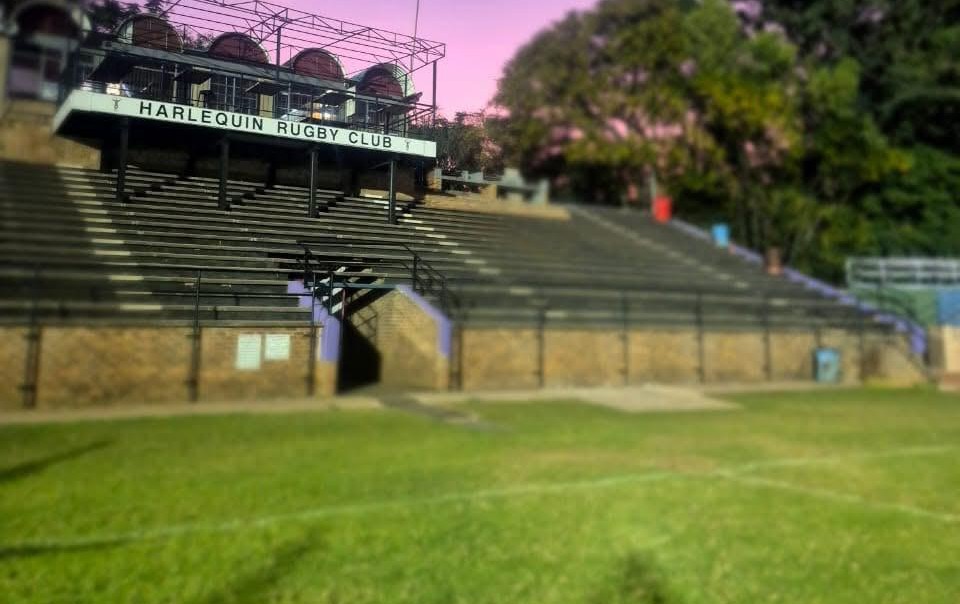
- The City of Tshwane alleges land use non-compliance and unauthorised advertising structures at Harlequins Sports Club.
- Harlequins Pro supports compliance enforcement and confirms corrective steps are underway.
- A dual structure introduces a professional rugby system linked to community development and player pathways.
The City of Tshwane has raised compliance concerns relating to Harlequins Sports Club, centred on land use and municipal approvals.
In the notice, the City alleges that certain commercial, hospitality and recreational activities taking place on the property do not align with current zoning or approved land use rights. It also flags a separate issue relating to outdoor advertising structures that were allegedly installed without formal municipal consent.
These concerns arise within the context of the club’s existing non-profit structure and how the property is currently being used.
Harlequins Rugby Club Equity Partners, operating as Harlequins Pro, has responded to these developments. The organisation says it supports compliance enforcement and is willing to engage directly with the relevant authorities to resolve the matter lawfully and constructively.
Pieter de Bruyn, spokesperson for Harlequins Pro, stated that this is a compliance issue that must be corrected and confirmed that the process is now underway.
Professional structure introduced
Harlequins Pro operates through Harlequins (Pty) Ltd as the professional rugby arm of the club. It sits alongside Harlequins Rugby Club’s long-standing non-profit structure, focused on stabilising, structuring and growing rugby operations, while supporting the broader amateur and community rugby ecosystem.
Operating as a private company backed by equity partners, the structure enables formal contracting of players and coaches, introduces governance and financial oversight, and opens the door to securing and managing investment and sponsorship.
In practical terms, the professional structure runs and grows the rugby operation, while the non-profit structure builds and supports the game at the community level. Together, they form a connected system that aligns performance, investment and development.
De Bruyn stated that at the same time, the work to stabilise and rebuild the rugby environment is already underway.
Community and development focus
The model includes work with township and community-based clubs to strengthen and formalise these environments over time. This includes supporting progression into competitive club structures and participation in competitions such as the Carlton League.
The longer-term vision includes supporting and uplifting up to 43 community-based clubs, in collaboration with relevant rugby unions, through structured coaching, operational alignment and development pathways.
De Bruyn noted that across the country, there are players with talent, discipline and potential, often without access to consistent coaching, facilities or clear pathways. The gap, he said, is not ability. It is an opportunity.
He added that for the first time in South Africa at this level, a club environment is being structured to connect grassroots development, progression pathways and professional rugby within a single system.
Structural changes underway
Changes within the club include the appointment of former Springbok Gary Botha, bolstering coaching and high-performance standards. A detailed rugby strategy is in place, key roles are being formalised, and engagement with potential partners is progressing.
The model is also extending into community rugby, where initial engagements with smaller and community-based clubs have progressed into early-stage incubation of selected environments. Structured coaching, operational support and alignment are being introduced to underpin long-term development.
Legacy and repositioning
Harlequins’ legacy as a century-old rugby club remains central to its current positioning. The shift is framed as a continuation of that legacy within a more structured system.
De Bruyn was clear that this is not a collapse of the club but a necessary reset that creates the foundation for something bigger.
He noted that South Africa has seen players come from the most rural parts of the country and rise to the very top, pointing to someone like Siya Kolisi as an example. There are many more like him out there, he said, who simply need the platform to be discovered, supported and given a real pathway.
What happens next
The City of Tshwane’s notice alleges that certain commercial, hospitality and recreational activities on the property do not align with current zoning or approved land use rights. It also flags a separate issue relating to outdoor advertising structures that were allegedly installed without municipal consent.
Harlequins Pro has confirmed that the corrective process is underway and that it remains committed to engaging with the relevant authorities to resolve the matter fully and constructively.
Get your news on the go. Click here to follow the Conviction WhatsApp channel.