






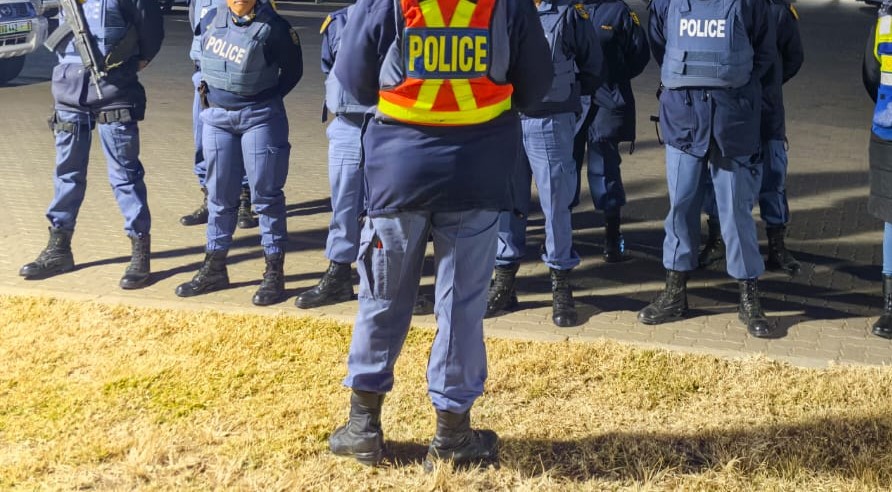
- Sieghart Ernest Duvel was arrested at his business premises in February 2016 in full view of patrons and detained overnight.
- Financial evidence showed a sharp decline in museum, restaurant, pub and motor-show income following the arrest.
- The Minister of Police, Warrant Officer Brijlall and the National Director of Public Prosecutions must pay Duvel R4 235 726.05 in damages, plus interest and costs.
A public arrest that left businessman Sieghart Ernest Duvel humiliated in front of patrons became central to a damages claim following the collapse of his museum, restaurant, pub and related activities.
The High Court in Johannesburg awarded Duvel R4 145 726.05 for future loss of earnings, along with R40 000 for deprivation of liberty and discomfort, and R50 000 for damage to his reputation, dignity, and good name.
Acting Judge S Van Aswegen delivered the judgment on 10 September 2026, after Acting Justice S Kruger had previously ruled in Duvel’s favour on the merits.
Duvel was arrested in front of patrons
Duvel, born in September 1952, was 64 years old when he was arrested on 10 February 2016. He is a civil engineer with an MBA, lives with diabetes and weakened leg muscles, and had built a strong reputation in his community while supporting charity organisations.
He ran the approximately 3 000m² Heritage Museum, Urban Vibes restaurant and Cock & Bull pub from agricultural land west of Vanderbijlpark. The museum displayed cultural objects, rare dolls and a collection of vintage, classic, and exotic cars, including as many as 12 Model T Fords.
Warrant Officer Brijlall first arrived at about 4pm without a warrant, returning later with one and several uniformed officers. He took Duvel by the sleeve, leading him through a courtyard where around 60 patrons could be seated, and escorted him to a police vehicle.
Rotarians and visitors from the United States saw the incident. Duvel was later shown a message from a visitor from Texas confirming he had witnessed the arrest. Duvel spent the night at Vanderbijlpark Police Station, detained from about 6pm until 8.30am the next morning.
He shared a cell with seven others, sleeping on a thin mattress and using two blankets; one as a cushion, the other when he needed to urinate. He described the experience as “daunting and unpleasant.” Because of his diabetes, his assistant, Ms Callow, was allowed to bring his medication. He was then held in court cells until about noon, when the charges were read.
Bail was set at R20 000, which he could not afford and was eventually paid by someone else. He was released around 1pm and had to appear in court five more times, with his final appearance in November 2016.
The arrest changed Duvel’s businesses
Duvel testified that his arrest, detention and prosecution left him feeling despondent and depressed. News of his arrest spread on social media, and he said he was unfairly stigmatised as a criminal. He was prescribed additional medication and eventually became reclusive.
He explained that his businesses were financially healthy before the arrest, but patrons stopped visiting afterwards. Rotarians did not come back, and people whose cultural pieces were displayed at the museum withdrew their items.
In an attempt to keep the businesses going, Duvel sold and auctioned off items, including most of his vintage cars. The annual two-day Wheels at the Vaal Motor Show had previously generated about R100 000 per event, attracting between 2 000 and 2 500 people. After the arrest, sponsors and vendors withdrew their support, and the 2016 show was the last one held.
Ms Callow, who managed the businesses’ finances and prepared their SARS submissions, confirmed the downturn. Vendors who used to book stalls for future events, and whom she described as “like family,” also stopped coming.
After the arrest, vendors cancelled bookings, sponsors pulled out, and regular patrons stopped attending. Within six months, supporters demanded the return of museum artefacts. The collections were eventually auctioned off, and none of the businesses survived.
Financial records showed the scale of the losses
Chartered accountant Paul Koski reviewed Duvel’s financial records. Having qualified in 1986, Koski has worked in private practice since 1990 and brought around 30 years of litigation-support experience. The museum’s income rose from R625 514 in 2013 to R1 320 858 in 2014, R1 794 539 in 2015 and R1 924 392 in 2016.
Koski reviewed 24 months of records after the arrest and found a sharp decline. Pub and restaurant income dropped from R1 583 373 between May 2015 and April 2016 to R893 712 in the following year, then fell to nothing. Village & Country Market income dropped from R48 175 to R12 721, and then also to nothing.
Koski projected future losses over 11 years, starting from a base income of R1.7 million, allowing for 10 percent annual revenue growth and cost savings of R442 997 a year, increasing at 7 percent. His net-present-value calculation used a 15.5 percent discount rate.
He calculated future loss at R4 481 866. Judge Van Aswegen accepted his evidence as consistent and credible, finding that the arrest was “the significant factor to the ultimate collapse of the businesses.”
R1.4 million past-loss claim failed
Koski’s total calculation included R1 406 594, representing a loan Duvel had given to the Sylviavale Heritage and Preservation Trust. The Minister of Police’s legal representative argued that the loan existed before the arrest, had not been repaid, and there was no evidence it could have been recovered before the arrest.
Judge Van Aswegen decided he did not need to rule on that causal question. Duvel had claimed the R1 406 594 as past loss of income, but the evidence showed it was the loss of an asset instead. The judge found that Duvel could not plead one case and prove another, and so dismissed the Claim C amount.
Future loss was reduced by a further contingency
The Minister of Police also argued that the businesses had an administrator and that Duvel’s brief time in detention could not have caused the future losses claimed. A R90 000 award was suggested.
Judge Van Aswegen rejected this, finding that the financial records supported Koski’s conclusion that the arrest was a critical turning point. Koski had already included a 7.5 percent business-risk premium in his 15.5 percent discount rate.
The judge nevertheless applied a further 7.5 percent contingency for factors including Duvel’s age, health, potential early retirement, mortality and wider economic conditions. The resulting future-loss award was R4 145 726.05.
Police must pay R4.23 million in damages
Judge Van Aswegen also awarded Duvel R40 000 for contumelia, deprivation of freedom, liberty and discomfort, and R50 000 for damage to his reputation, dignity and good name.
The Minister of Police, Warrant Officer Brijlall and the National Director of Public Prosecutions were ordered to pay Duvel the R4 145 726.05 future-loss award jointly and severally. The total principal damages amount to R4 235 726.05, excluding interest and costs.
Interest is payable from 30 March 2017 until full payment. The Minister of Police, Warrant Officer Brijlall and the National Director of Public Prosecutions were also ordered to pay the costs, including counsel’s fees on Scale C.
Get your news on the go. Click here to follow the Conviction WhatsApp channel.


