


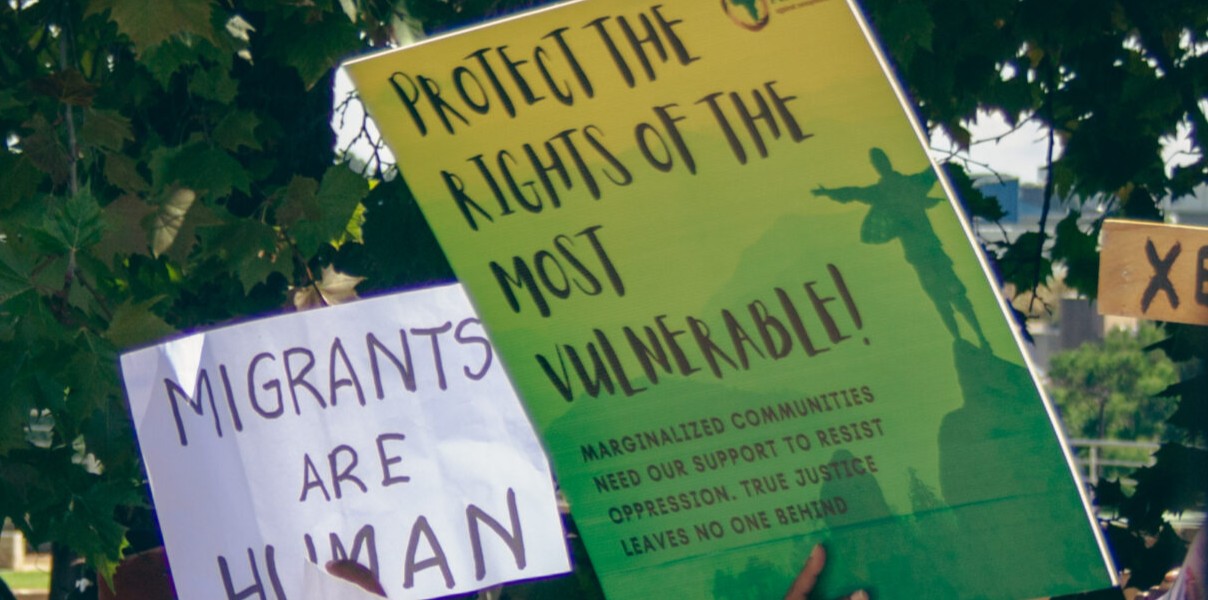
- Ramaphosa insists that enforcing immigration laws is solely the government’s responsibility.
- The government is introducing new immigration courts, strengthening border controls, and tightening enforcement.
- The president stresses that South Africa has no place for xenophobia, racism, or vigilantism.
President Cyril Ramaphosa has strongly warned against individuals trying to enforce immigration laws themselves. He says only the government holds this power, and anyone who tries to disrupt the country’s stability will face the law.
Answering questions in the National Council of Provinces, Ramaphosa explained that illegal immigration is a major challenge affecting social unity, national security, and the delivery of public services.
His comments come just days before the March and March movement’s planned nationwide protests on 30 June, which call for stronger government action on illegal immigration. The President’s warning is in response to public debate and concerns that ordinary people may try to enforce immigration laws themselves.
Ramaphosa said the Cabinet adopted a comprehensive migration management strategy on 3 June 2026, which he outlined in a national address on 7 June.
He added that the Presidential Coordinating Council, which includes all levels of government and traditional leaders, supports this approach. The government has also briefed faith-based groups, traditional leaders, organised labour, business, and other stakeholders.
Only the State may enforce the law
Ramaphosa stressed that while the government is stepping up efforts against illegal immigration, members of the public are not authorised to stop others and ask for proof of identity or nationality.
“We have made it clear that only the state is responsible for enforcing our laws. No individual has the right to stop anyone and demand their documents or proof of identity,” he said.
The organisers of the planned protests reject claims that their demonstrations promote vigilantism or violence against foreigners.
At a media briefing, March and March leader Jacinta Ngobese-Zuma said the demonstrations will be peaceful and are meant to pressure the government to enforce immigration laws, secure South Africa’s borders, and address what organisers call an illegal immigration crisis.
“The 30th of June was never about violence, shutting down the country, or harming anyone,” Ngobese-Zuma said. “All we are asking is for illegal immigrants to leave the country and for the government to enforce existing laws.”
Ramaphosa also cautioned against discrimination or violence towards foreign nationals. “There is no place for racism, sexism, xenophobia, Afrophobia, or any form of intolerance in our country,” he added.
The President said security agencies are already prepared to respond to any attempts to undermine stability. “As a government, we have put in place security and other measures to deal with any attempts to destabilise our country, whether by citizens or foreign nationals,” he said.
He finished with a clear warning: “Our security forces are ready. Anyone who breaks the measures we’re putting in place will face the full force of the law.”
Five-point migration strategy
Ramaphosa said the first part of the government’s strategy is to crack down on violations of immigration, labour, and other laws.
Law enforcement agencies are stepping up efforts to identify and deport undocumented foreign nationals, with the support of dedicated immigration courts.
“Dedicated immigration courts will support this work,” he explained. “The government is also increasing inspections at businesses to find those employing undocumented foreign nationals illegally.”
Ramaphosa said the Department of Employment and Labour is hiring 10,000 new labour inspectors, as previously announced, and that penalties for employers who break immigration laws will be raised.
Stronger borders and modern technology
The second pillar of the strategy aims to strengthen border security by investing more in infrastructure, technology, and additional personnel.
The government plans to redevelop South Africa’s six busiest ports of entry and move refugee reception centres to the borders. Ramaphosa said the government is also modernising the country’s identity management systems. “We are creating a smart population register using biometric data, supported by a digital ID system,” he said.
He said green bar-coded identity books will be phased out to prevent identity theft, and the electronic travel authorisation system will be extended to all airports and major land ports.
New laws and regional cooperation
The Cabinet has approved a revised White Paper on Citizenship, Immigration, and Refugee Protection, which will guide a unified legal framework for managing migration.
Ramaphosa said the National Labour Migration Policy and new legislation will introduce quotas for hiring foreign nationals in certain sectors. To reduce the backlog in asylum appeals, the Refugee Appeal Authority has appointed more adjudicators and continues to receive support from the United Nations High Commissioner for Refugees.
The President said South Africa will keep working with regional and continental bodies like the Southern African Development Community and the African Union, as well as neighbours, to address the root causes of migration, such as conflict, instability, and economic hardship.
“We have made it clear that everyone within our borders must be here lawfully,” Ramaphosa concluded.
Get your news on the go. Click here to follow the Conviction WhatsApp channel.


