


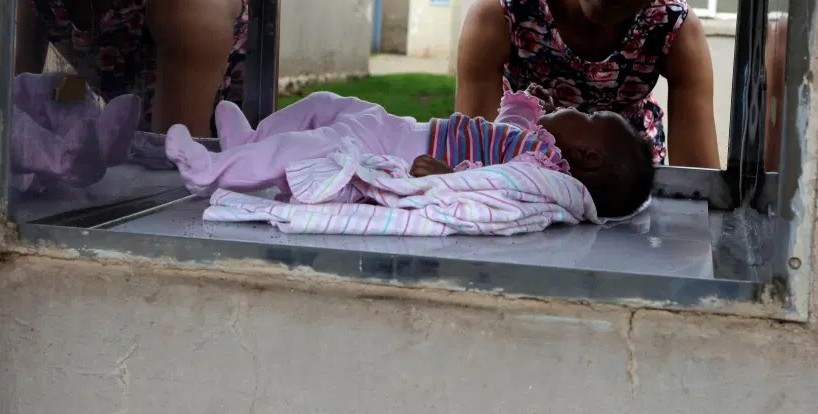
- The High Court in Pretoria is hearing this case from 5 to 7 May 2026, focusing on the legal treatment of infant relinquishment through baby saver mechanisms.
- Baby Savers South Africa NPO and Door of Hope Children’s Mission NPO are seeking legal relief to exempt baby saver providers from being considered accomplices to abandonment.
- The Centre for Human Rights and Lawyers for Human Rights argue that safely placing infants is both legally and morally different from abandonment.
The High Court in Pretoria is hearing a significant case from 5 to 7 May 2026 about how South African law treats newborn infants who are safely handed over using baby saver mechanisms.
The case asks whether South African law wrongly conflates this life-saving act with child abandonment, which is a crime under the Children’s Act.
Baby Savers South Africa NPO and Door of Hope Children’s Mission NPO started the proceedings, seeking a court order to exclude baby saver box providers from being held liable as accomplices to abandonment.
The Centre for Human Rights, represented by Lawyers for Human Rights, is participating as the first amicus curiae, or friend of the court, in this matter.
A distinction at the heart of the case
In their submissions, the Centre for Human Rights and Lawyers for Human Rights argue that the law must clearly distinguish between unsafe abandonment and the safe placement of infants. Treating these acts as the same, they contend, is irrational and can have harmful consequences.
Deborah Raduba from the Centre for Human Rights said, “This case raises a fundamental question about the purpose of our law. When a caregiver takes steps to ensure a child’s safety, the law should recognise that action for what it really is. Protecting life should never be treated as a crime. If the law does not draw that distinction, it risks punishing vulnerability instead of protecting children.”
Mechanisms that allow for the safe placement of infants are typically used in times of crisis and desperation. The Centre for Human Rights and Lawyers for Human Rights argue that, in these situations, having access to a safe alternative can be the difference between life and death for a newborn.
They argue that criminalising this conduct creates a dangerous deterrent. If caregivers fear arrest or prosecution, they may turn to unsafe options that put infants’ lives at risk.
Gender equality and fair labelling concerns
The Centre for Human Rights and Lawyers for Human Rights also point out that this issue raises important gender equality concerns. While laws may look neutral on paper, they argue that the burdens of pregnancy, childbirth, caregiving, and social stigma fall mainly on women, especially for those living with poverty and violence.
They further note that, in practice, it is mostly women who face the difficult conditions and impossible choices that lead to the placement of infants and who are most likely to be prosecuted.
The amicus submissions also address the principle of fair labelling in criminal law, which says that different types of actions should not be grouped under the same criminal label if they are not truly the same.
The Centre for Human Rights and Lawyers for Human Rights argue that abandoning a child and safely placing a child are morally and objectively distinct acts. One endangers life, while the other seeks to protect it.
Treating both actions as abandonment, they argue, attaches stigma and blame where it may not be justified, with serious consequences for dignity and a risk of people being wrongly detained.
The Centre for Human Rights and Lawyers for Human Rights emphasise that this case is not about endorsing child abandonment. Unsafe abandonment, they agree, is a serious harm that must be prevented and addressed.
The real issue before the court, they argue, is whether the law can recognise the difference between actions that put a child at risk and those that aim to secure a child’s rescue, care, and survival.
Get your news on the go. Click here to follow the Conviction WhatsApp channel.


