


Nestled in the rural Amazizi Village in KwaZulu-Natal, the Sakhile Centre of Learning once struggled to provide even the most basic facilities for its learners.
Housed in a dilapidated building with no reliable water or sanitation infrastructure, the school was disqualified from receiving government support. That changed dramatically thanks to a ground-breaking partnership led by the University of South Africa (Unisa).
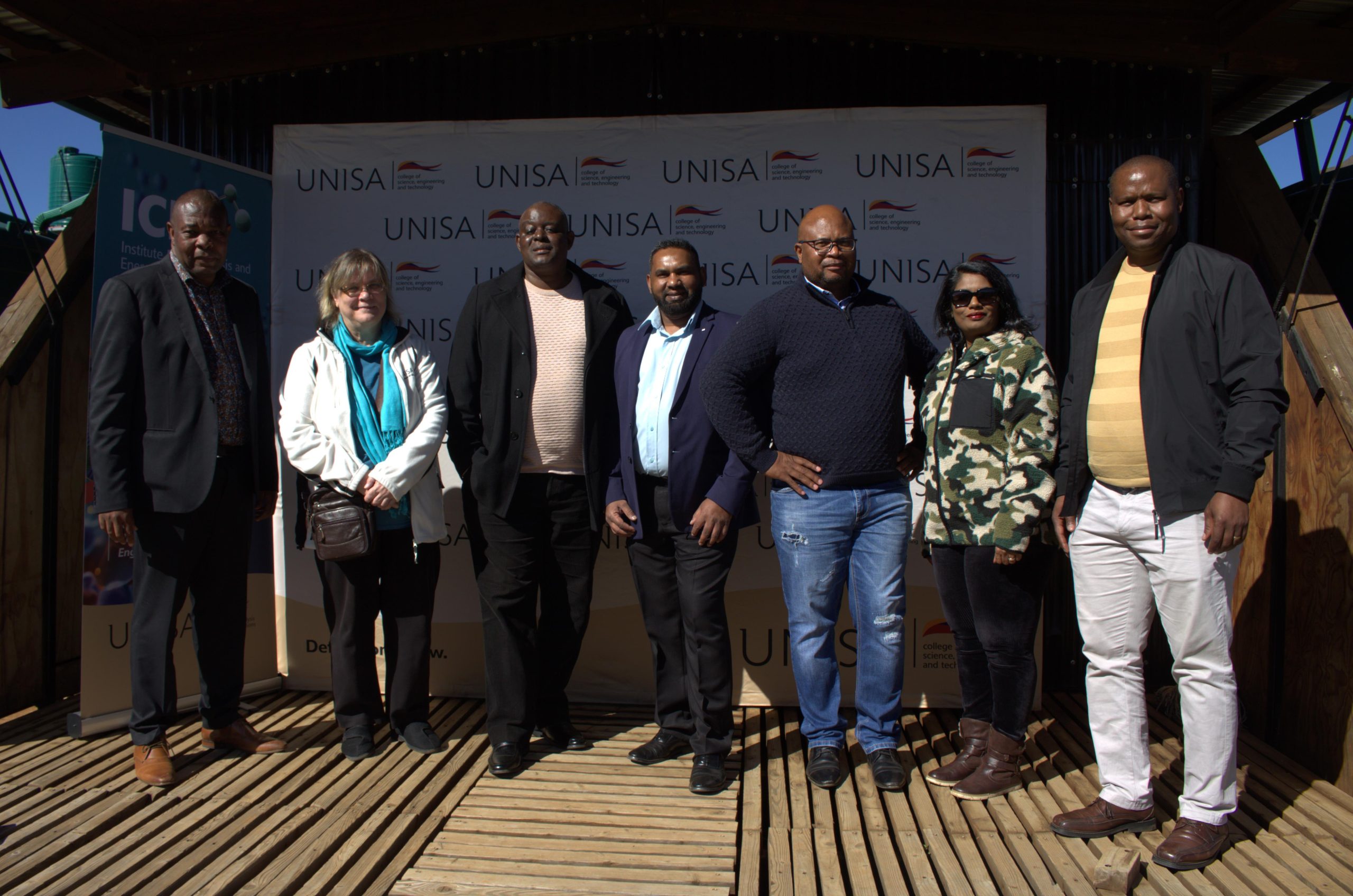
On 22 May 2025, Unisa officially handed over a biodigester and water system to the school, marking a transformative milestone in the journey toward self-sufficiency, sustainability, and community empowerment.
Collaboration sparks a green revolution
The transformation was made possible through a collaborative initiative between the Legacy of Grace Foundation, the Three Tree Hill Foundation, Unisa’s Institute for Catalysis and Energy Solutions (ICES) in the College of Science, Engineering and Technology (CSET), and Engineers Without Borders Unisa (EWB-Unisa).
Together, they rebuilt the school using recycled shipping containers and other sustainable materials to construct classrooms, a kitchen, and sanitation facilities. Beyond structural improvements, the project incorporated environmental innovation, making Sakhile a model for sustainable rural education.
Biogas brings big savings
A key innovation is the biodigester, which converts organic waste into clean biogas. This system has slashed the school’s energy costs by up to 90%, replacing the use of costly liquefied petroleum gas (LPG) with free, renewable energy for cooking and heating.
“Previously, we spent close to R2 000 a month on LPG just to cook meals for the learners. Now, with biogas, that cost is zero,” a staff member explained.
Installed at the community’s request, the biodigester also serves as an educational tool, introducing learners and residents to alternative energy solutions that can be adopted more widely in the area.


Clean water, powered by the sun
Water access had been another pressing challenge due to unreliable municipal supply. The school reached out to global pump manufacturer Grundfos, which responded with a €20,000 donation. This enabled the installation of a borehole, solar panels, and solar-powered pumps, ensuring a steady, independent water supply for both the school and nearby households.
Throughout the project, community members and Unisa students were actively involved, building local skills in green technology, engineering, and construction. The initiative demonstrates how education, infrastructure, and sustainability can work together to uplift rural communities that are often left behind.
With just five staff members and 90 learners, the school provided an ideal pilot site for testing these solutions and proving their impact.
Looking ahead: Unisa’s broader vision
The project forms part of Unisa’s broader Waste-to-Energy Engaged Scholarship initiative. As part of its 150-year celebration, ICES plans to install biodigesters at 10 sites across five provinces before the end of 2025.
According to ICES, this is only the beginning. In the coming months, the institute will be rolling out new partnerships, cutting-edge research, and additional clean energy initiatives, positioning itself as a leader in the national energy and sustainability space.


#Conviction
Get your news on the go. Click here to follow the Conviction WhatsApp channel


